
Top Stories
Nvidia Declares Generational Lead Over Google’s AI Chips NOW

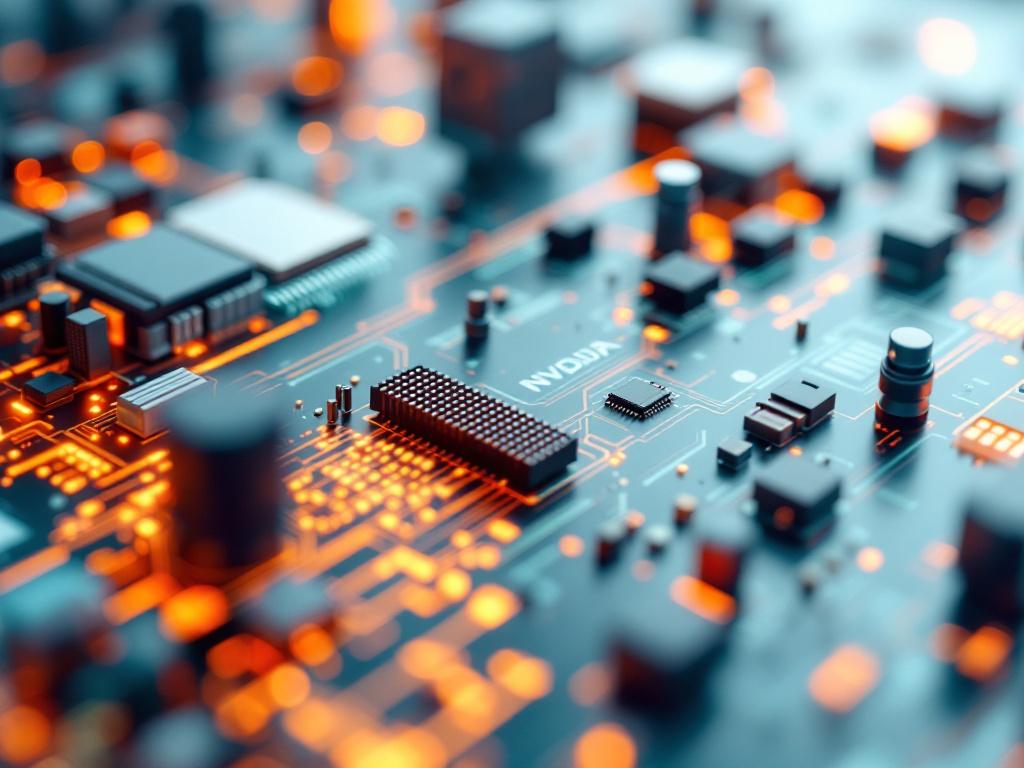
UPDATE: In a dramatic escalation in the AI arms race, Nvidia Corp. has just announced that its latest graphics processing units (GPUs) are a full generation ahead of Google’s internal chip efforts. This bold claim, reported by CNBC, signals a significant shift in the competitive landscape as Big Tech invests billions to reduce reliance on Nvidia’s technology.
This urgent development comes at a time when major tech giants, including Google, Microsoft, and Amazon, are racing to develop their own proprietary chips. While these companies have spent billions on Nvidia’s H100 and Blackwell GPUs, Nvidia’s new statements indicate it is no longer content to coexist with their custom silicon ambitions.
According to industry experts, Nvidia’s confidence stems from its technological edge in memory bandwidth and networking capabilities. Google’s Tensor Processing Unit (TPU), while highly efficient for specific tasks, struggles to match Nvidia’s architecture that allows thousands of GPUs to operate as a unified system. This performance advantage is critical as AI models expand into the trillions of parameters.
The implications of Nvidia’s declaration are profound. By positioning itself as “a generation ahead,” Nvidia is reinforcing its premium pricing strategy, asserting that the performance gap between its GPUs and Google’s custom chips justifies higher costs. Analysts suggest this could impact Wall Street perceptions of Nvidia’s market dominance.
As the data center landscape evolves, Nvidia is emphasizing the importance of “time-to-intelligence.” If Nvidia’s technology can train models three months faster than Google’s TPUs, the cost of waiting may outweigh any savings from using custom chips. This urgency underlines the fast-paced nature of AI development, where speed is the new currency.
The competition is not just about silicon; software plays a crucial role in this battle. Nvidia’s CUDA platform remains the industry standard, making it challenging for Google to shift the market toward its alternatives like JAX and XLA. Startups and enterprises often prefer Nvidia GPUs for their compatibility, further entrenching Nvidia’s position in AI infrastructure.
The financial markets are closely monitoring this clash. Analysts highlight that Nvidia’s aggressive claims aim to protect its gross margins, which are currently near historic highs. If the market perceives Google’s TPUs as viable substitutes, Nvidia’s pricing power could diminish.
Despite the heated rhetoric, experts suggest the future of AI infrastructure may not favor a single winner. Nvidia’s high-performance GPUs might dominate demanding training tasks, while Google’s TPUs could manage routine data processing. This duality reflects the maturation of the AI industry as it shifts focus toward sustainable infrastructure.
As Nvidia continues to assert its dominance, it is clear that this generational gap will be challenged with each new chip release from competitors like Google. For the moment, however, Nvidia maintains a critical edge in AI technology and market positioning, reinforcing the message that if you want to build the future today, you must invest in Nvidia.
This unfolding battle between Nvidia and Google highlights not only the technological advancements in AI but also the financial stakes at play in this rapidly evolving sector. As both companies push forward, the race for AI supremacy is far from over.

Boulder Faces Crisis: Rising Costs and Controversial Honors Spark Outrage

Wolves Attack: Nine Killed in Recent Spate of Incidents in India

Quadrature Capital Reduces Merck Holdings by 87.8% Amid Market Shifts

Discover the Top 5 Must-Watch Netflix Shows from December 1–7, 2025

Research Reveals Early Movements May Alleviate Back Pain

Community Mourns the Passing of Susan Kay Duncan, 74

Fisher Asset Management Boosts Alibaba Stake by 390,883 Shares

Easton Launches Free Business Consulting with Lehigh U. NOW!

Urgent Update: New Study Reveals Protein-Fiber Balance Crucial

Inventor Achieves Breakthrough with 2 Billion FPS Laser Video

Community Unites for 7th Annual Into the Light Walk for Mental Health

Charlie Sheen’s New Romance: ‘Glowing’ with Younger Partner

Dua Lipa Aces GCSE Spanish, Sparks Super Bowl Buzz with Fans

Mother Fights to Reunite with Children After Kidnapping in New Drama

Former Mozilla CMO Launches AI-Driven Cannabis Cocktail Brand Fast

Curium Group, PeptiDream, and PDRadiopharma Launch Key Cancer Trial

Tyler Technologies Set to Reveal Q3 Earnings on October 22

Israel Reopens Rafah Crossing After Hostage Remains Returned
-
 Science1 month ago
Inventor Achieves Breakthrough with 2 Billion FPS Laser Video
-
 Health2 months ago
Community Unites for 7th Annual Into the Light Walk for Mental Health
-
 Top Stories2 months ago
Charlie Sheen’s New Romance: ‘Glowing’ with Younger Partner
-
 Entertainment2 months ago
Dua Lipa Aces GCSE Spanish, Sparks Super Bowl Buzz with Fans
-
 Entertainment2 months ago
Mother Fights to Reunite with Children After Kidnapping in New Drama
-
 Top Stories1 month ago
Former Mozilla CMO Launches AI-Driven Cannabis Cocktail Brand Fast
-
 Health2 months ago
Curium Group, PeptiDream, and PDRadiopharma Launch Key Cancer Trial
-
 Business2 months ago
Tyler Technologies Set to Reveal Q3 Earnings on October 22
-
 World2 months ago
Israel Reopens Rafah Crossing After Hostage Remains Returned
-

 World2 months ago
R&B Icon D’Angelo Dies at 51, Leaving Lasting Legacy
-
 Health2 months ago
North Carolina’s Biotech Boom: Billions in New Investments
-

 Entertainment2 months ago
Red Sox’s Bregman to Become Free Agent; Tigers Commit to Skubal