
World
U.S. Envoy to Moscow for Peace Talks Amid Ongoing Conflict

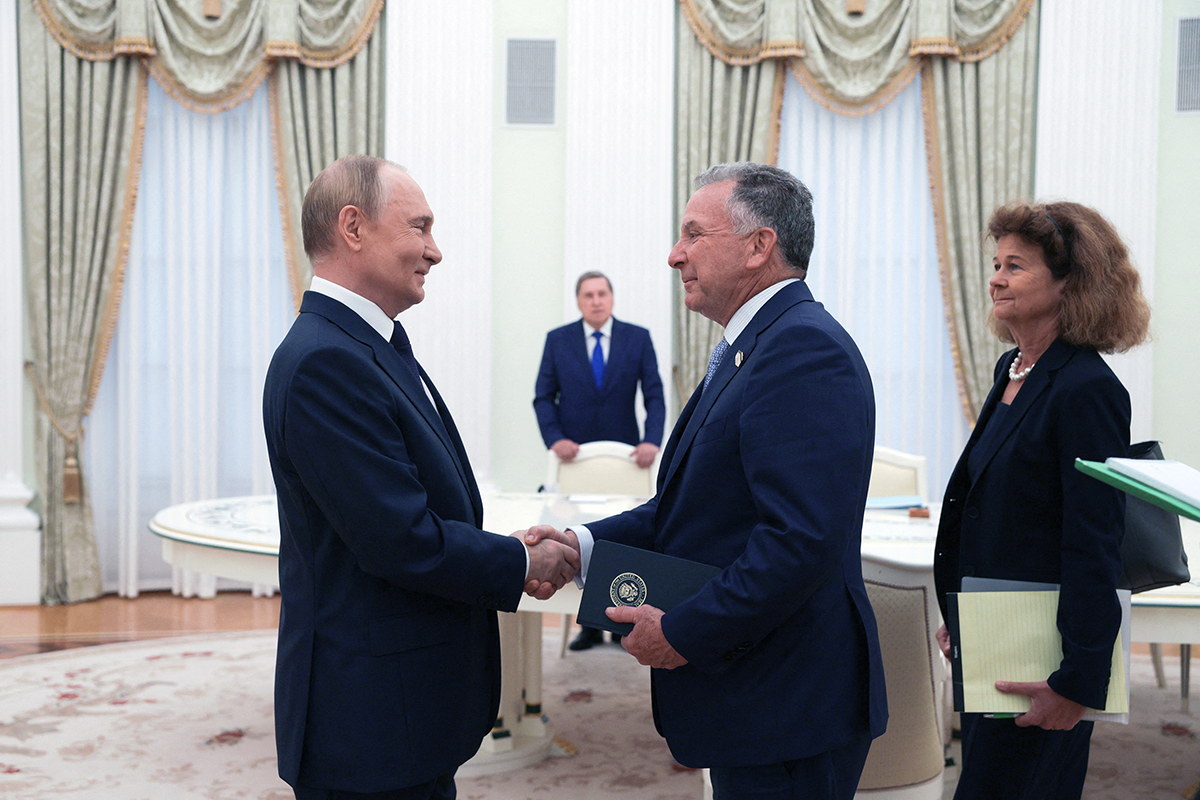
U.S. special envoy Steve Witkoff will visit Moscow next week as diplomatic efforts intensify to resolve the nearly four-year conflict between Russia and Ukraine. A senior official from the Kremlin confirmed the visit, indicating optimism about reaching a consensus on peace. However, Yuri Ushakov, foreign affairs adviser to President Vladimir Putin, stated that Russia has not formally received the initial U.S. peace proposal, despite having seen a version through unofficial channels.
Discussions involving representatives from the United States, Russia, and Ukraine took place earlier this week in the United Arab Emirates, underscoring a renewed focus on diplomacy. Ushakov noted that while communication is ongoing, including via telephone, no formal discussions have occurred to address the peace proposal in detail.
Kremlin officials have approached the prospects for peace with caution. President Donald Trump recently outlined a plan for ending the conflict, which appears to heavily favor Russian demands. Following weekend meetings in Geneva between U.S. and Ukrainian officials, President Volodymyr Zelenskyy expressed that the plan could be “workable,” although several critical aspects remain unresolved. A Ukrainian official indicated that Zelenskyy hopes to meet with Trump soon to discuss the matter further.
Witkoff’s involvement in the peace negotiations has come under scrutiny, particularly after reports suggested he advised Ushakov on how to present the peace plan to Trump. Trump described Witkoff’s approach as “standard” negotiating practice, emphasizing the need to persuade both Ukraine and Russia to agree to the terms.
Despite the ongoing discussions, Kremlin spokesperson Dmitry Peskov downplayed the significance of the leaked communication, asserting that many actors in various countries might attempt to undermine the peace efforts. He stated it was premature to determine whether a peace agreement is on the horizon.
Escalating Violence and European Concerns
In the backdrop of these negotiations, violence persists in Ukraine. The city of Zaporizhzhia recently experienced a significant Russian drone strike that damaged over 50 residential buildings, including a university dormitory, injuring at least 19 individuals. Russian air defenses reported intercepting 33 Ukrainian drones overnight in various regions, illustrating the continued military exchanges between the two nations.
European nations, alarmed by Russia’s aggressive actions, are eager to ensure their voices are heard in the peace talks. Friedrich Merz, Chancellor of Germany, emphasized the importance of including Ukrainian and European perspectives in any agreement. He stated that a deal negotiated solely by great powers would not foster a lasting peace.
European Commission President Ursula von der Leyen expressed optimism about recent developments, highlighting an “opportunity to make real progress” toward peace. She insisted that any settlement must guarantee Ukraine’s future security and not impose restrictions on its armed forces or its NATO aspirations.
The EU’s chief diplomat, Kaja Kallas, expressed skepticism regarding Russia’s commitment to genuine peace negotiations. Kallas indicated that there is currently no indication that Russia intends to cease its military operations. She advocated for increased pressure on Russia through economic sanctions and the seizure of frozen assets to compel Moscow to engage in substantive negotiations.
As diplomatic efforts continue in the coming weeks, the international community remains hopeful yet cautious about the potential for a resolution to the ongoing conflict in Ukraine. The situation remains fluid, with the next steps hinging on the outcomes of Witkoff’s discussions in Moscow and the broader geopolitical landscape.

Long Island Faces Wintry Mix Tuesday Morning, Commute Disruption Expected

Blackhawks Surge to 5-3 Victory Over Ducks, Ending 5-Game Winless Streak

Stanford Study Reveals Urgent Shark Extinction Clues Today

Church Members Unite After Devastating Thanksgiving Fire

Brock Purdy Shines with Hip-Hop Flair in 49ers’ 26-8 Win

Repurposed Drug Shows Promise in Reversing Alzheimer’s in Mice

Rams Suffer Humbling Loss, Fall from NFC’s Top Position

Trump Promises to Release MRI Results from October Scan

Tracy Davidson Transitions to Motivational Speaking After TV Career

Inventor Achieves Breakthrough with 2 Billion FPS Laser Video

Community Unites for 7th Annual Into the Light Walk for Mental Health

Charlie Sheen’s New Romance: ‘Glowing’ with Younger Partner

Dua Lipa Aces GCSE Spanish, Sparks Super Bowl Buzz with Fans

Mother Fights to Reunite with Children After Kidnapping in New Drama

Former Mozilla CMO Launches AI-Driven Cannabis Cocktail Brand Fast

Curium Group, PeptiDream, and PDRadiopharma Launch Key Cancer Trial

Tyler Technologies Set to Reveal Q3 Earnings on October 22

Israel Reopens Rafah Crossing After Hostage Remains Returned
-
 Science1 month ago
Inventor Achieves Breakthrough with 2 Billion FPS Laser Video
-
 Health2 months ago
Community Unites for 7th Annual Into the Light Walk for Mental Health
-
 Top Stories2 months ago
Charlie Sheen’s New Romance: ‘Glowing’ with Younger Partner
-
 Entertainment2 months ago
Dua Lipa Aces GCSE Spanish, Sparks Super Bowl Buzz with Fans
-
 Entertainment2 months ago
Mother Fights to Reunite with Children After Kidnapping in New Drama
-
 Top Stories1 month ago
Former Mozilla CMO Launches AI-Driven Cannabis Cocktail Brand Fast
-
 Health2 months ago
Curium Group, PeptiDream, and PDRadiopharma Launch Key Cancer Trial
-
 Business2 months ago
Tyler Technologies Set to Reveal Q3 Earnings on October 22
-
 World2 months ago
Israel Reopens Rafah Crossing After Hostage Remains Returned
-

 Health2 months ago
North Carolina’s Biotech Boom: Billions in New Investments
-

 World2 months ago
R&B Icon D’Angelo Dies at 51, Leaving Lasting Legacy
-

 Entertainment2 months ago
Red Sox’s Bregman to Become Free Agent; Tigers Commit to Skubal