
World
Trump Urges Japan to Tone Down Taiwan Rhetoric Following Xi Call

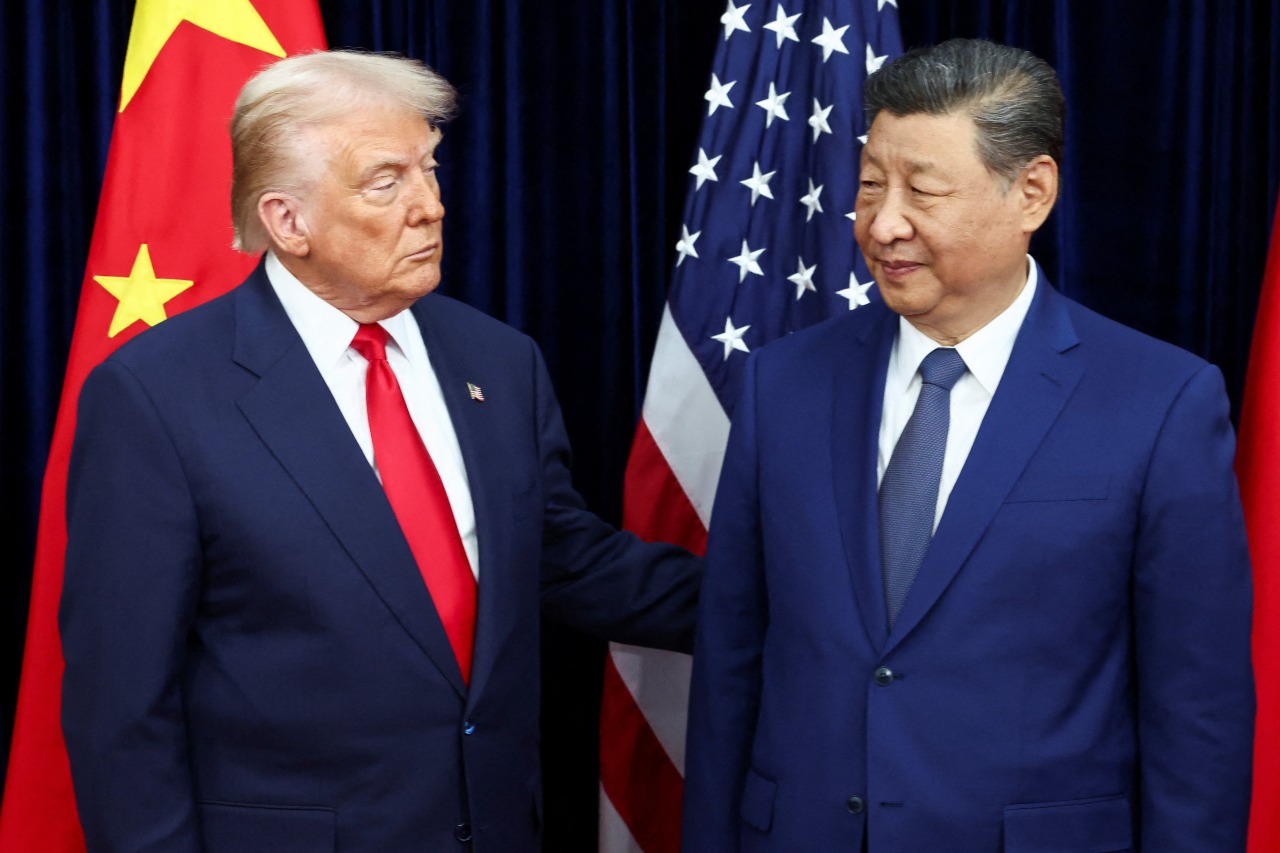
Former U.S. President Donald Trump recently advised Japan to moderate its stance on Taiwan during a call with Chinese President Xi Jinping. This conversation comes amidst rising tensions involving Taiwan, which has been a focal point in Sino-Japanese relations. Trump’s guidance reflects his desire to maintain a constructive dialogue with Beijing while navigating sensitive trade discussions.
Japan, a key ally of the United States, has expressed increasing support for Taiwan, a move that has not gone unnoticed by China. Following Trump’s suggestion, Japanese officials have voiced concerns about the implications of their stance on Taiwan. The Japanese government is now weighing its approach to the situation, balancing its support for Taiwan against the need to preserve economic ties with China.
Context of the U.S.-China Relationship
The relationship between the United States and China has undergone significant strain in recent years, marked by trade disputes and geopolitical tensions. According to analysts, Trump’s comments highlight a critical juncture in U.S. foreign policy, where trade interests must be carefully balanced against regional security concerns. The ongoing trade talks between the U.S. and China are particularly sensitive, given the economic interdependence of the two nations.
Trump’s call with Xi underscores the complex dynamics at play. While he seeks to foster a productive relationship with China, the U.S. continues to support Japan’s defense initiatives, particularly regarding its position on Taiwan. This dual approach aims to reinforce alliances in the Asia-Pacific region while managing the economic consequences of diplomatic relations with China.
Reactions from Japan and Implications for Regional Stability
In Japan, the government’s response to Trump’s message has been one of caution. Officials are concerned that any perceived withdrawal of support for Taiwan could embolden Chinese aggression in the region. As Japan navigates its foreign policy, the balance between supporting democratic allies and maintaining economic ties with China remains delicate.
The situation also raises questions about the future of U.S. involvement in Asia. As tensions continue to simmer, Japan may need to reassess its strategy regarding Taiwan and China. The implications of this recalibration could have far-reaching effects on regional stability and the broader geopolitical landscape.
As discussions unfold, both Japan and the United States will need to consider their next steps carefully. The need for a unified approach toward Taiwan, while managing trade relations with China, presents a formidable challenge. The outcome of these deliberations will shape not only U.S.-Japan relations but also the future of stability in the Asia-Pacific region.

Long Island Faces Wintry Mix Tuesday Morning, Commute Disruption Expected

Blackhawks Surge to 5-3 Victory Over Ducks, Ending 5-Game Winless Streak

Stanford Study Reveals Urgent Shark Extinction Clues Today

Church Members Unite After Devastating Thanksgiving Fire

Brock Purdy Shines with Hip-Hop Flair in 49ers’ 26-8 Win

Repurposed Drug Shows Promise in Reversing Alzheimer’s in Mice

Rams Suffer Humbling Loss, Fall from NFC’s Top Position

Trump Promises to Release MRI Results from October Scan

Tracy Davidson Transitions to Motivational Speaking After TV Career

Inventor Achieves Breakthrough with 2 Billion FPS Laser Video

Community Unites for 7th Annual Into the Light Walk for Mental Health

Charlie Sheen’s New Romance: ‘Glowing’ with Younger Partner

Dua Lipa Aces GCSE Spanish, Sparks Super Bowl Buzz with Fans

Mother Fights to Reunite with Children After Kidnapping in New Drama

Former Mozilla CMO Launches AI-Driven Cannabis Cocktail Brand Fast

Curium Group, PeptiDream, and PDRadiopharma Launch Key Cancer Trial

Tyler Technologies Set to Reveal Q3 Earnings on October 22

Israel Reopens Rafah Crossing After Hostage Remains Returned
-
 Science1 month ago
Inventor Achieves Breakthrough with 2 Billion FPS Laser Video
-
 Health2 months ago
Community Unites for 7th Annual Into the Light Walk for Mental Health
-
 Top Stories2 months ago
Charlie Sheen’s New Romance: ‘Glowing’ with Younger Partner
-
 Entertainment2 months ago
Dua Lipa Aces GCSE Spanish, Sparks Super Bowl Buzz with Fans
-
 Entertainment2 months ago
Mother Fights to Reunite with Children After Kidnapping in New Drama
-
 Top Stories1 month ago
Former Mozilla CMO Launches AI-Driven Cannabis Cocktail Brand Fast
-
 Health2 months ago
Curium Group, PeptiDream, and PDRadiopharma Launch Key Cancer Trial
-
 Business2 months ago
Tyler Technologies Set to Reveal Q3 Earnings on October 22
-
 World2 months ago
Israel Reopens Rafah Crossing After Hostage Remains Returned
-

 Health2 months ago
North Carolina’s Biotech Boom: Billions in New Investments
-

 World2 months ago
R&B Icon D’Angelo Dies at 51, Leaving Lasting Legacy
-

 Entertainment2 months ago
Red Sox’s Bregman to Become Free Agent; Tigers Commit to Skubal