
Science
Ancient Observations Reveal Earth’s Rotational Changes

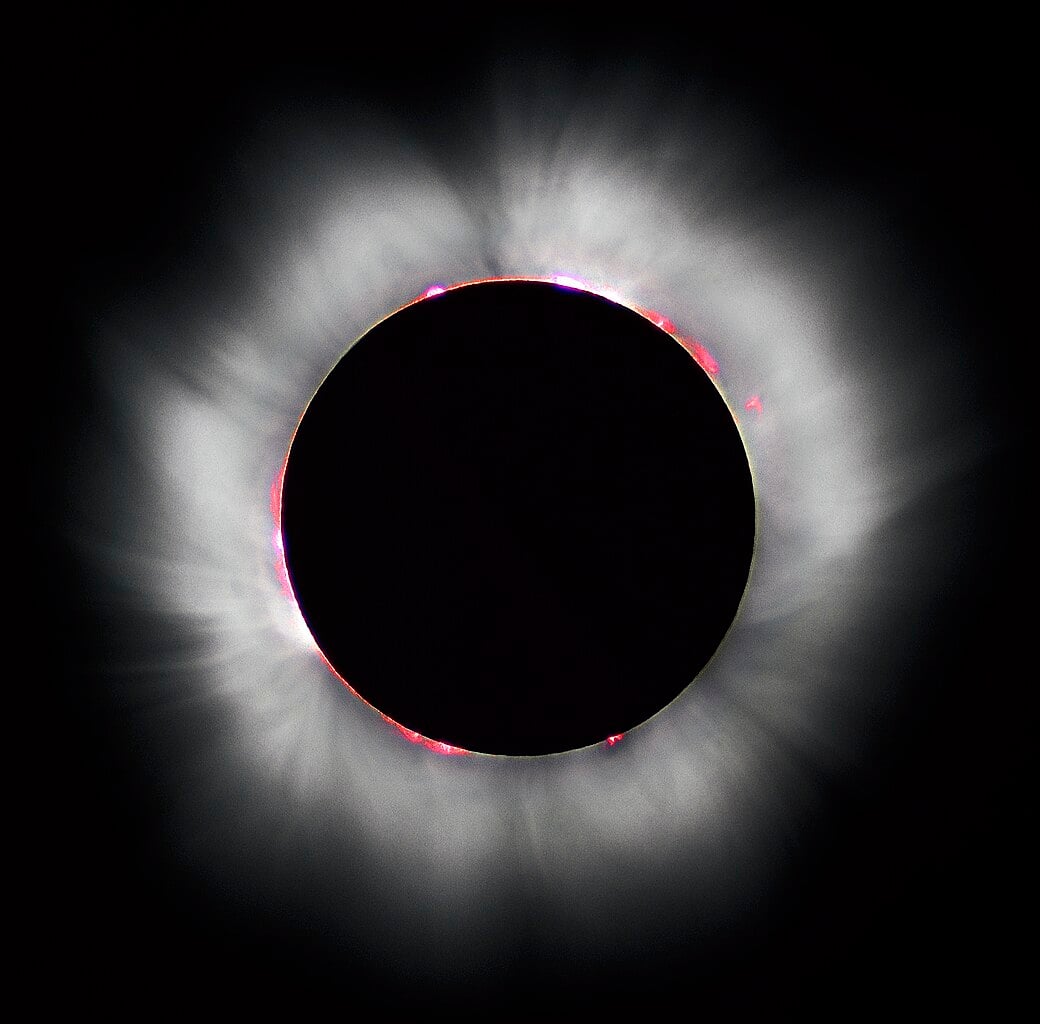
On a summer day in 709 BCE, scribes at the Lu Duchy Court in ancient China documented an extraordinary celestial event: a total solar eclipse. They meticulously recorded that, during the eclipse, the Sun appeared “completely yellow above and below.” This ancient observation, preserved in the Spring and Autumn Annals, has proven invaluable to modern scientists studying Earth’s rotation and solar activity.
Despite the significance of this record, researchers faced a challenge when attempting to verify the event using contemporary astronomical calculations. Initial assessments indicated that a total eclipse could not have been viewed from Qufu, the ancient capital where the scribes were situated. The discrepancy arose from incorrect geographical coordinates used in earlier studies.
Archaeology Provides Clarity
The breakthrough came from an unexpected avenue: archaeology. A research team led by Hisashi Hayakawa from Nagoya University discovered that previous researchers had miscalculated the location of ancient Qufu by eight kilometers. By consulting excavation reports, they identified the correct coordinates of the Lu Court. This adjustment allowed them to reassess the eclipse’s visibility from that location.
With the accurate coordinates, the team recalibrated their calculations, enabling them to measure Earth’s rotational speed during the eclipse with enhanced precision. They concluded that, 2,700 years ago, the planet was spinning slightly faster than it does today. The primary reason for this change is tidal friction caused by the Moon’s gravity, which gradually decelerates Earth’s rotation over millennia.
Insights into Solar Activity
The ancient scribes’ description of the Sun’s appearance may also hold remarkable implications. The phrase “completely yellow above and below” likely refers to the solar corona, the Sun’s faint outer atmosphere visible only during total eclipses. If this interpretation is correct, it represents one of the earliest known written descriptions of this phenomenon.
The morphology indicated by the ancient observers suggests notable solar activity in 709 BCE. The Sun undergoes approximately 11-year cycles of varying activity, occasionally interrupted by longer periods of low activity known as grand minima, during which sunspots are scarce. Radiocarbon measurements from tree rings indicate that the Sun had recently exited a quiet phase that lasted from 808 to 717 BCE.
The description of the solar corona aligns with the independent findings from tree ring data, suggesting that by 709 BCE, the Sun was re-entering its regular activity cycles and approaching peak activity. Trees absorb radiocarbon during photosynthesis, and the concentration of this element reflects cosmic ray levels, which decrease during periods of heightened solar activity.
The convergence of ancient observations and modern radiocarbon analysis validates both methods and enhances our understanding of historical solar phenomena.
China’s extensive astronomical records owe their existence to ancient dynasties that employed experts to monitor celestial events. These scholars believed that astronomical occurrences were omens that reflected the conduct of the imperial court. This belief system fostered systematic record-keeping that now provides modern scientists with invaluable data spanning millennia.
The work of Hayakawa and his team not only highlights the importance of accurate historical records but also underscores the potential for ancient observations to illuminate our understanding of natural phenomena. As researchers continue to explore the past, the interplay between archaeology and modern science will likely yield even more insights into the Earth’s history and the universe beyond.

Fashion Expert Reveals Key Dress Tips for Career Success NOW

Shocking ‘Stranger Things 5’ Twist Revealed: Will Becomes Sorcerer

Wealth Advisor Declares 401(k)s ‘Money Jail’—Reveals Alternatives

Users Transform Bookmark Chaos with NotebookLM: Here’s How

Ancient Observations Reveal Earth’s Rotational Changes

Brown Advisory Reduces Stake in Edwards Lifesciences by 10.5%

Global Markets Rise as U.S. Stocks Approach Historic Highs

Brown Advisory Increases Stake in Ferguson plc to $531.77 Million

Kim Cattrall Ties the Knot with Longtime Partner Russell Thomas

Inventor Achieves Breakthrough with 2 Billion FPS Laser Video

Community Unites for 7th Annual Into the Light Walk for Mental Health

Charlie Sheen’s New Romance: ‘Glowing’ with Younger Partner

Dua Lipa Aces GCSE Spanish, Sparks Super Bowl Buzz with Fans

Curium Group, PeptiDream, and PDRadiopharma Launch Key Cancer Trial

Mother Fights to Reunite with Children After Kidnapping in New Drama

Former Mozilla CMO Launches AI-Driven Cannabis Cocktail Brand Fast

Israel Reopens Rafah Crossing After Hostage Remains Returned

Tyler Technologies Set to Reveal Q3 Earnings on October 22
-
 Science2 months ago
Inventor Achieves Breakthrough with 2 Billion FPS Laser Video
-
 Health2 months ago
Community Unites for 7th Annual Into the Light Walk for Mental Health
-
 Top Stories2 months ago
Charlie Sheen’s New Romance: ‘Glowing’ with Younger Partner
-
 Entertainment2 months ago
Dua Lipa Aces GCSE Spanish, Sparks Super Bowl Buzz with Fans
-
 Health2 months ago
Curium Group, PeptiDream, and PDRadiopharma Launch Key Cancer Trial
-
 Entertainment2 months ago
Mother Fights to Reunite with Children After Kidnapping in New Drama
-
 Top Stories2 months ago
Former Mozilla CMO Launches AI-Driven Cannabis Cocktail Brand Fast
-
 World2 months ago
Israel Reopens Rafah Crossing After Hostage Remains Returned
-
 Business2 months ago
Tyler Technologies Set to Reveal Q3 Earnings on October 22
-

 Health2 months ago
North Carolina’s Biotech Boom: Billions in New Investments
-

 World2 months ago
R&B Icon D’Angelo Dies at 51, Leaving Lasting Legacy
-

 Entertainment2 months ago
Red Sox’s Bregman to Become Free Agent; Tigers Commit to Skubal