
Science
NASA Warns SpaceX Satellites Threaten Hubble’s Observations

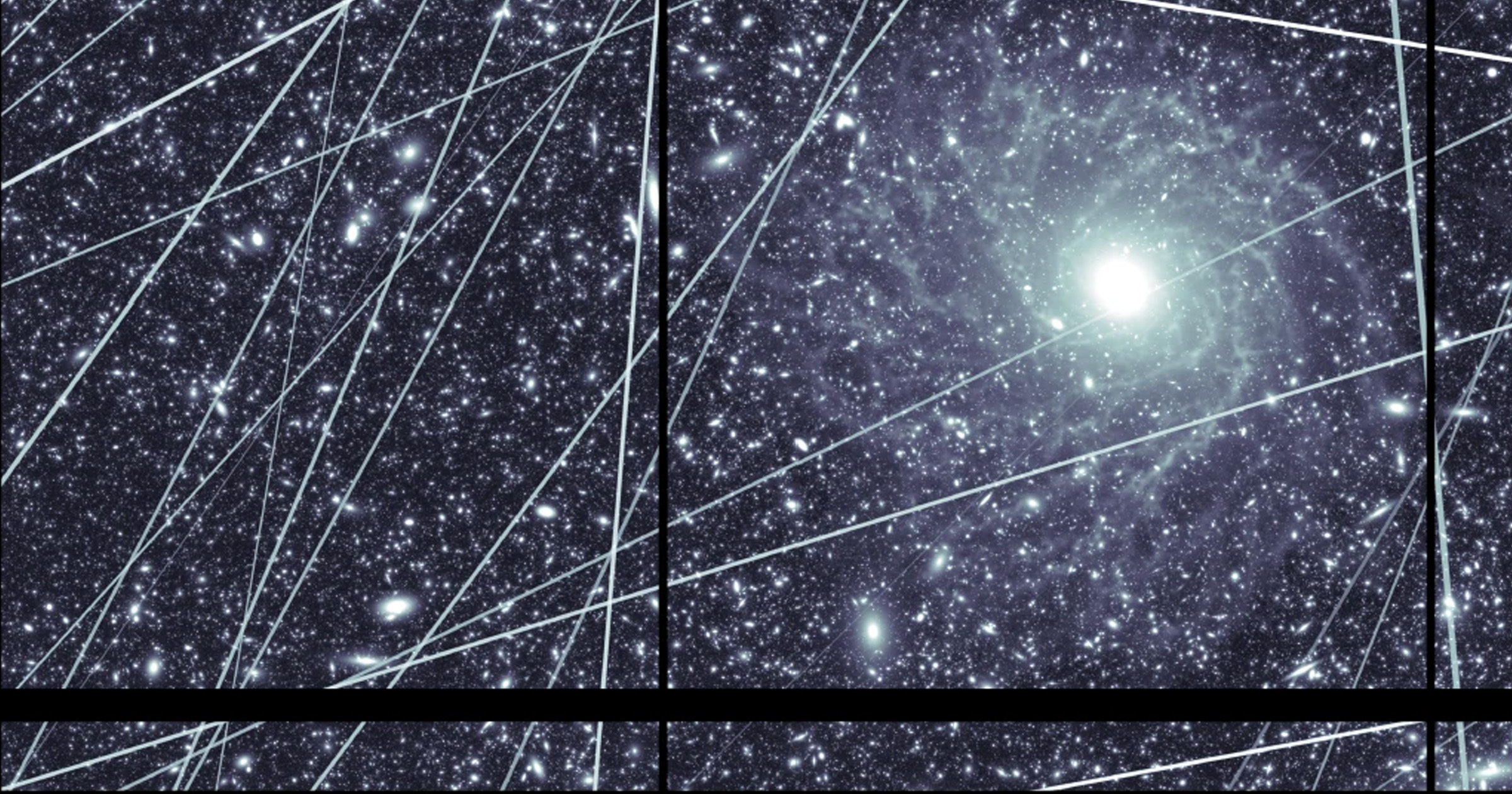
NASA researchers have issued a significant warning regarding the impact of SpaceX satellites on astronomical observations, specifically highlighting the potential threat to the Hubble Space Telescope. As the company launches more satellites into low Earth orbit (LEO), the interference caused by these crafts could severely compromise the quality of images captured by space telescopes.
Study Reveals Alarming Projections
The study, led by Spanish astrophysicist Alejandro Serrano Borlaff at NASA, indicates that if current satellite projects proceed as planned, one in every three images taken by Hubble will be contaminated by light pollution. This research underscores the growing concern among astronomers about the increasing number of satellites in LEO.
According to the study, reported by El Pais, SpaceX has been authorized by the U.S. Federal Communications Commission to deploy 12,000 satellites, with intentions to add another 30,000 in the near future. The researchers anticipate that the total number of satellites could reach as high as 500,000 within the next decade. Borlaff stated, “This is the first scientific study whose main objective is to investigate the effects of light pollution on space telescopes, taking into account these plans announced by the industry.”
Implications for Future Space Observatories
Hubble is not the only telescope at risk; future astronomical missions may face even greater challenges. The study predicts that up to 96 percent of images from the European Space Agency’s upcoming ARRAKIHS telescope, planned for launch in the 2030s, could be affected by bright streaks of light from satellites. Additionally, NASA’s recently launched SPHEREx could experience light pollution contamination in more than 99 percent of its images.
The researchers stress that this scenario could have dire consequences for astronomical research, impacting not only current observations but also the success of future missions designed to explore the universe.
As the number of satellites continues to rise, the need for international cooperation becomes increasingly critical. Effective regulation will require spacefaring countries, including the United States, to collaborate and implement measures to limit commercial satellite activities in LEO. Currently, there appears to be a reluctance to commit to such regulations, which could leave the astronomical community vulnerable to ongoing disruptions.
The findings of this study serve as a wake-up call to both policymakers and the private sector about the need to address the environmental impacts of satellite deployments. Without proactive measures, the future of astronomical exploration could be severely compromised.

Google Enhances NotebookLM with Deep Research Mode for Users

User Swaps Obsidian for Affine; Claims Major Productivity Boost

Transform Thrifting into Thoughtful Gifts This Holiday Season

Judge Orders Return of Man Deported by Trump Administration

Scientists Discover “Fire Amoeba” Thriving in Extreme Heat

Spring-Ford Boys Basketball Triumphs Over Wissahickon 59-48

Russian Drone and Missile Strikes Disrupt Ukraine’s Energy Sector

Buffalo Bills Stadium Construction Reaches 75% Completion

Memorial for Coach John Beam Draws Hundreds, Celebrates Legacy

Inventor Achieves Breakthrough with 2 Billion FPS Laser Video

Community Unites for 7th Annual Into the Light Walk for Mental Health

Charlie Sheen’s New Romance: ‘Glowing’ with Younger Partner

Dua Lipa Aces GCSE Spanish, Sparks Super Bowl Buzz with Fans

Curium Group, PeptiDream, and PDRadiopharma Launch Key Cancer Trial

Mother Fights to Reunite with Children After Kidnapping in New Drama

Former Mozilla CMO Launches AI-Driven Cannabis Cocktail Brand Fast

Israel Reopens Rafah Crossing After Hostage Remains Returned

Tyler Technologies Set to Reveal Q3 Earnings on October 22
-
 Science2 months ago
Inventor Achieves Breakthrough with 2 Billion FPS Laser Video
-
 Health2 months ago
Community Unites for 7th Annual Into the Light Walk for Mental Health
-
 Top Stories2 months ago
Charlie Sheen’s New Romance: ‘Glowing’ with Younger Partner
-
 Entertainment2 months ago
Dua Lipa Aces GCSE Spanish, Sparks Super Bowl Buzz with Fans
-
 Health2 months ago
Curium Group, PeptiDream, and PDRadiopharma Launch Key Cancer Trial
-
 Entertainment2 months ago
Mother Fights to Reunite with Children After Kidnapping in New Drama
-
 Top Stories2 months ago
Former Mozilla CMO Launches AI-Driven Cannabis Cocktail Brand Fast
-
 World2 months ago
Israel Reopens Rafah Crossing After Hostage Remains Returned
-
 Business2 months ago
Tyler Technologies Set to Reveal Q3 Earnings on October 22
-

 World2 months ago
R&B Icon D’Angelo Dies at 51, Leaving Lasting Legacy
-

 Health2 months ago
North Carolina’s Biotech Boom: Billions in New Investments
-

 Entertainment2 months ago
Red Sox’s Bregman to Become Free Agent; Tigers Commit to Skubal