
Politics
Noam Chomsky Reflects on 97 Years of Influence and Controversy

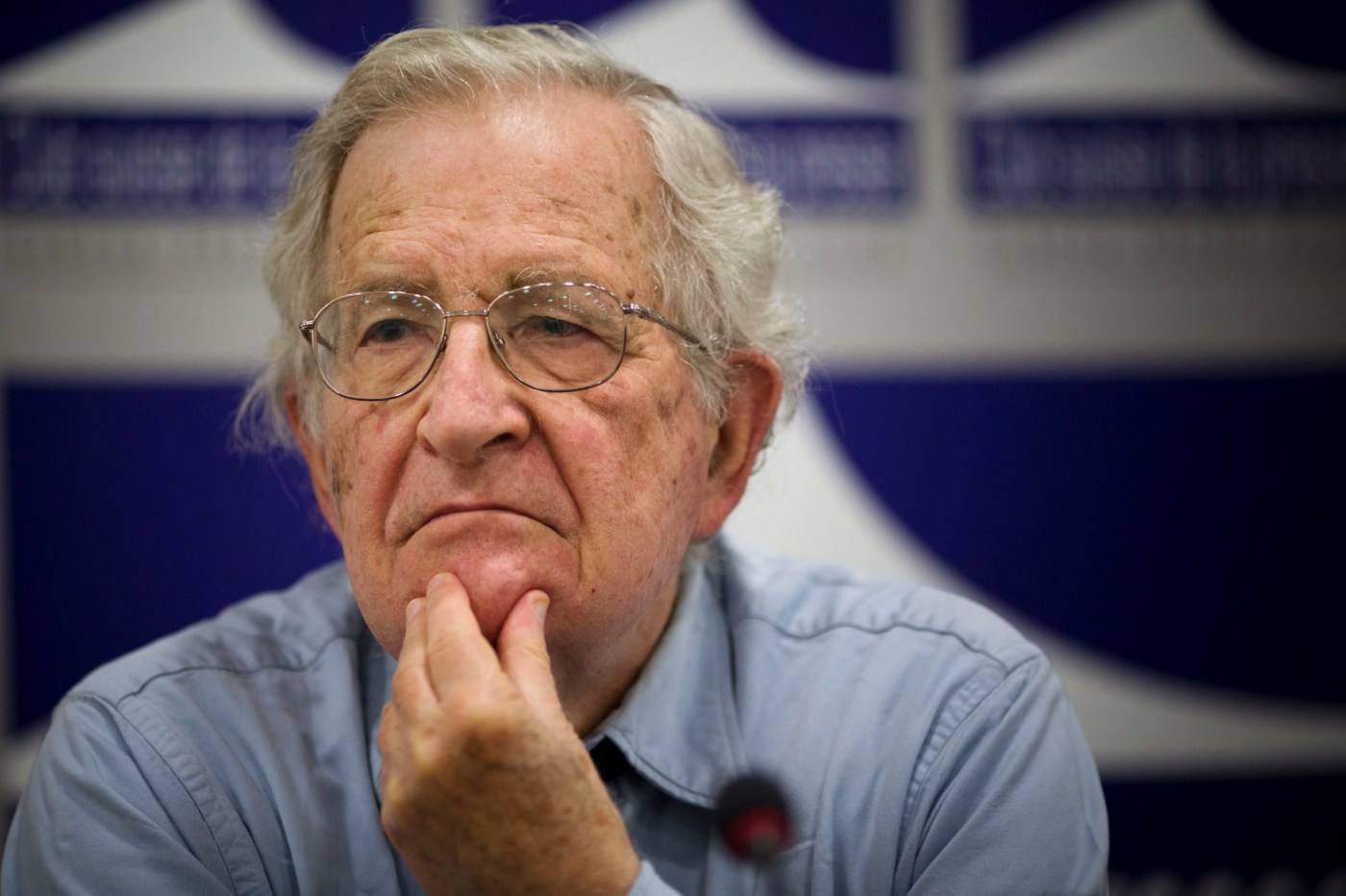
Today, Noam Chomsky, the renowned linguist and political commentator, celebrates his 97th birthday. Known as the “father of modern linguistics,” Chomsky has made significant contributions to both linguistic theory and political discourse. His work continues to provoke thought and debate across various fields, making him a pivotal figure in contemporary intellectual discussions.
Chomsky’s academic career spanned decades, primarily at the Massachusetts Institute of Technology (MIT) from 1955 through the 2000s. He fundamentally challenged prevailing notions about language acquisition, positing that it is an innate capability of the human mind rather than a learned behavior. This perspective has laid the groundwork for much of modern linguistics, although some of his theories have faced criticism over time.
In addition to his linguistic achievements, Chomsky is widely recognized for his political activism. Since the 1960s, he has been a vocal critic of American foreign policy, capitalism, and various systems of power. His critiques often frame U.S. foreign interventions as a form of modern imperialism, arguing that they serve corporate interests while undermining human rights. This perspective resonated with many during the presidency of George W. Bush, particularly among young adults questioning the motivations behind military actions abroad.
Most recently, Chomsky condemned the Russian invasion of Ukraine, labeling it a “criminal act of aggression.” He also critiqued U.S. policies that he believes provoked Russia, highlighting a pattern of interference that has strained international relations. Chomsky noted the unintended consequences of this conflict, such as increased military spending in Europe and a shift in power dynamics favoring the United States.
Beyond foreign policy, Chomsky’s views on capitalism are rooted in his advocacy for anarchism and a vision of a stateless society organized around liberty, solidarity, and equality. He has consistently criticized the concentration of power within corporations and the influence they wield over government and media. In a statement from 1992, he remarked, “Societies differ, but in ours, the major decisions over what happens in the society — decisions over investment and production and distribution — are in the hands of a relatively concentrated network of major corporations and conglomerates.”
Chomsky’s commitment to free speech also stands out in his body of work. In 2020, he endorsed the Harper’s Letter, which defends the principles of open discourse, stating, “The way to defeat bad ideas is by exposure, argument, and persuasion, not by trying to silence or wish them away.” He emphasizes that true support for free speech includes protecting the rights of those whose views one may disagree with.
As he marks this significant milestone, Chomsky’s legacy continues to spark both admiration and controversy. While many may not align with his views, his ideas remain vital for anyone attempting to navigate the complexities of modern society. Engaging with Chomsky’s work offers a pathway to understanding the intricate interplay of language, power, and politics in today’s world.
Despite differing opinions on his theories and critiques, there is little doubt that Chomsky’s contributions to linguistics and political thought will endure. As the world confronts ongoing challenges, grappling with his ideas may provide valuable insights and perspectives.

Funko’s Price Target Increased to $4.00 as Analysts React

Humboldt Celebrates as ‘One Battle After Another’ Claims Best Picture

GSK Faces Backlash Over Asthma Inhaler Scrapping, Children Suffer

Adorable Sandhill Crane Colt Hugs Mom in The Villages

USA Unveils Star-Spangled Jerseys Ahead of March Friendlies

Newport Plans Colorful Lighting for Fourth Street Bridge

Sandia Scientists Honored for Innovative Career Journeys

Urgent: Charles M. Payment Passes Away at 78, Memorial Details Inside

NFL Free Agency: Key Moves and Player Signings in Week One

Researchers Launch $1.25M Project for Real-Time Hazard Monitoring in Hawaiʻi

Send It South Revives Culture and Community at The Momentary

UK Government Borrowing Hits £20.2 Billion in September Surge

Flipkart Republic Day Sale: iPhone 16 Plus Price Slashed by ₹23,900

Adecco SA Secures Mixed Ratings from Analysts Amid Earnings Update

Researchers Achieve Record 15.1 mA/cm² Hydrogen Production Efficiency

Globant Reveals Key Tech Forces Shaping Business in 2026

Dua Lipa Aces GCSE Spanish, Sparks Super Bowl Buzz with Fans

Inventor Achieves Breakthrough with 2 Billion FPS Laser Video
-
 Science8 months ago
Researchers Launch $1.25M Project for Real-Time Hazard Monitoring in Hawaiʻi
-
 Entertainment7 months ago
Send It South Revives Culture and Community at The Momentary
-
 World10 months ago
UK Government Borrowing Hits £20.2 Billion in September Surge
-
 Business6 months ago
Flipkart Republic Day Sale: iPhone 16 Plus Price Slashed by ₹23,900
-
 Sports8 months ago
Adecco SA Secures Mixed Ratings from Analysts Amid Earnings Update
-
 Top Stories5 months ago
Researchers Achieve Record 15.1 mA/cm² Hydrogen Production Efficiency
-
 Business8 months ago
Globant Reveals Key Tech Forces Shaping Business in 2026
-
 Entertainment10 months ago
Dua Lipa Aces GCSE Spanish, Sparks Super Bowl Buzz with Fans
-
 Science10 months ago
Inventor Achieves Breakthrough with 2 Billion FPS Laser Video
-

 Top Stories10 months ago
Charlie Sheen’s New Romance: ‘Glowing’ with Younger Partner
-

 Top Stories8 months ago
JSerra Names Hardy Nickerson as First Black Football Coach
-

 Health10 months ago
Community Unites for 7th Annual Into the Light Walk for Mental Health