
Science
Comprehensive Analysis of Astrometric Instrument for HWO Launches

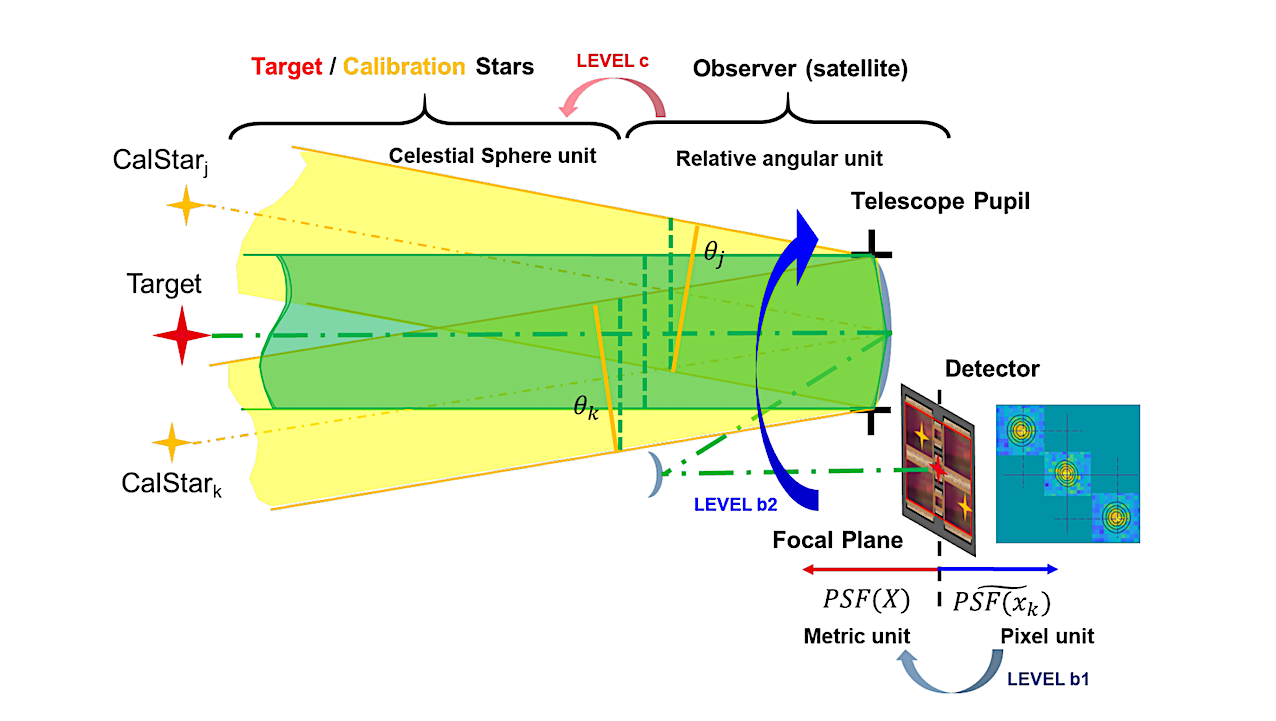
A new study has unveiled an in-depth system analysis of an advanced instrument for the **Habitable Worlds Observatory (HWO)**. This instrument is specifically designed for **high-precision** and **high-accuracy** differential astrometry. Its primary scientific aim is to determine the mass of Earth-like planets orbiting the nearest Sun-like stars.
The analysis details the mission profile, the architectural design of the instrument, and a comprehensive error budget that identifies key factors contributing to the **sub-micro arcsecond** precision necessary for individual measurements. A significant part of this budget focuses on estimating the photo-center for both target stars and calibration stars utilized in differential astrometry.
Key contributors to the precision include the control of instrumental systematics which affects the reconstruction of differential angle measurements from pixel data. This involves two critical calibration processes: **focal plane calibration** and **telescope distortion calibration**. Achieving the required astrometric precision will necessitate multiple observations—typically around **100**—of each target throughout the mission’s duration.
Mission Profile and Instrument Architecture
The mission profile has been carefully assessed to estimate the proportion of survey time needed for the astrometric survey to fulfill its scientific objectives. The proposed instrument architecture stems from the error budget and mission constraints, featuring a large visible detector array. This array comprises a collection of multiple **CMOS sensor chips**, resulting in an overall **gigapixel** focal plane.
The study evaluates the **Technology Readiness Level (TRL)** of the key technologies involved and outlines a pathway to reach **TRL 5** by the **Mission Consolidation Review** scheduled for **2029**. This level indicates that the technology is well-established and can be reliably implemented in a space mission.
Researchers involved in this extensive analysis include notable figures such as **Jérôme Amiaux**, **Fabien Malbet**, **Florence Ardellier-Desages**, and others. Their collaborative effort highlights the importance of meticulous planning and technological advancement in the quest for understanding distant celestial bodies.
According to the study, achieving the planned precision will significantly enhance our ability to detect and analyze planets similar to Earth, paving the way for future discoveries in the field of astrobiology. The findings are detailed in the research available on **arXiv** under the citation **arXiv:2511.07113 [astro-ph.IM]**.
This analytical approach not only reinforces the mission’s scientific objectives but also underlines the collaborative effort required to develop cutting-edge astronomical instruments. As the HWO project progresses, researchers remain committed to refining their methodologies to uncover the mysteries of our universe.

Players Create Unique Endgame in Arc Raiders Amid Discontent

Stream ‘Password’ Holiday Special Live Tonight Without Cable!

California’s Redistricting Obliterates GOP, Candidates Scramble

Major Sales Surge Ahead of Holidays: Up to 77% Off Top Brands!

Comprehensive Analysis of Astrometric Instrument for HWO Launches

EU Official Critiques US Influence in European Politics

Insider Acquires A$21,700 in Manhattan Co. Stock Purchase

PuroClean Earns Top Honors as a Franchise for Veterans

Polio Survivors Highlight Vaccine Importance in New Research

Inventor Achieves Breakthrough with 2 Billion FPS Laser Video

Community Unites for 7th Annual Into the Light Walk for Mental Health

Charlie Sheen’s New Romance: ‘Glowing’ with Younger Partner

Dua Lipa Aces GCSE Spanish, Sparks Super Bowl Buzz with Fans

Curium Group, PeptiDream, and PDRadiopharma Launch Key Cancer Trial

Former Mozilla CMO Launches AI-Driven Cannabis Cocktail Brand Fast

Mother Fights to Reunite with Children After Kidnapping in New Drama

Israel Reopens Rafah Crossing After Hostage Remains Returned

Tyler Technologies Set to Reveal Q3 Earnings on October 22
-
 Science2 months ago
Inventor Achieves Breakthrough with 2 Billion FPS Laser Video
-
 Health2 months ago
Community Unites for 7th Annual Into the Light Walk for Mental Health
-
 Top Stories2 months ago
Charlie Sheen’s New Romance: ‘Glowing’ with Younger Partner
-
 Entertainment2 months ago
Dua Lipa Aces GCSE Spanish, Sparks Super Bowl Buzz with Fans
-
 Health2 months ago
Curium Group, PeptiDream, and PDRadiopharma Launch Key Cancer Trial
-
 Top Stories2 months ago
Former Mozilla CMO Launches AI-Driven Cannabis Cocktail Brand Fast
-
 Entertainment2 months ago
Mother Fights to Reunite with Children After Kidnapping in New Drama
-
 World2 months ago
Israel Reopens Rafah Crossing After Hostage Remains Returned
-
 Business2 months ago
Tyler Technologies Set to Reveal Q3 Earnings on October 22
-

 World2 months ago
R&B Icon D’Angelo Dies at 51, Leaving Lasting Legacy
-
 Health2 months ago
North Carolina’s Biotech Boom: Billions in New Investments
-

 Health2 months ago
YouTube Launches New Mental Health Tools for Teen Users