
Science
Astronomers Discover Exoplanet Orbiting Twin Stars Like Tatooine

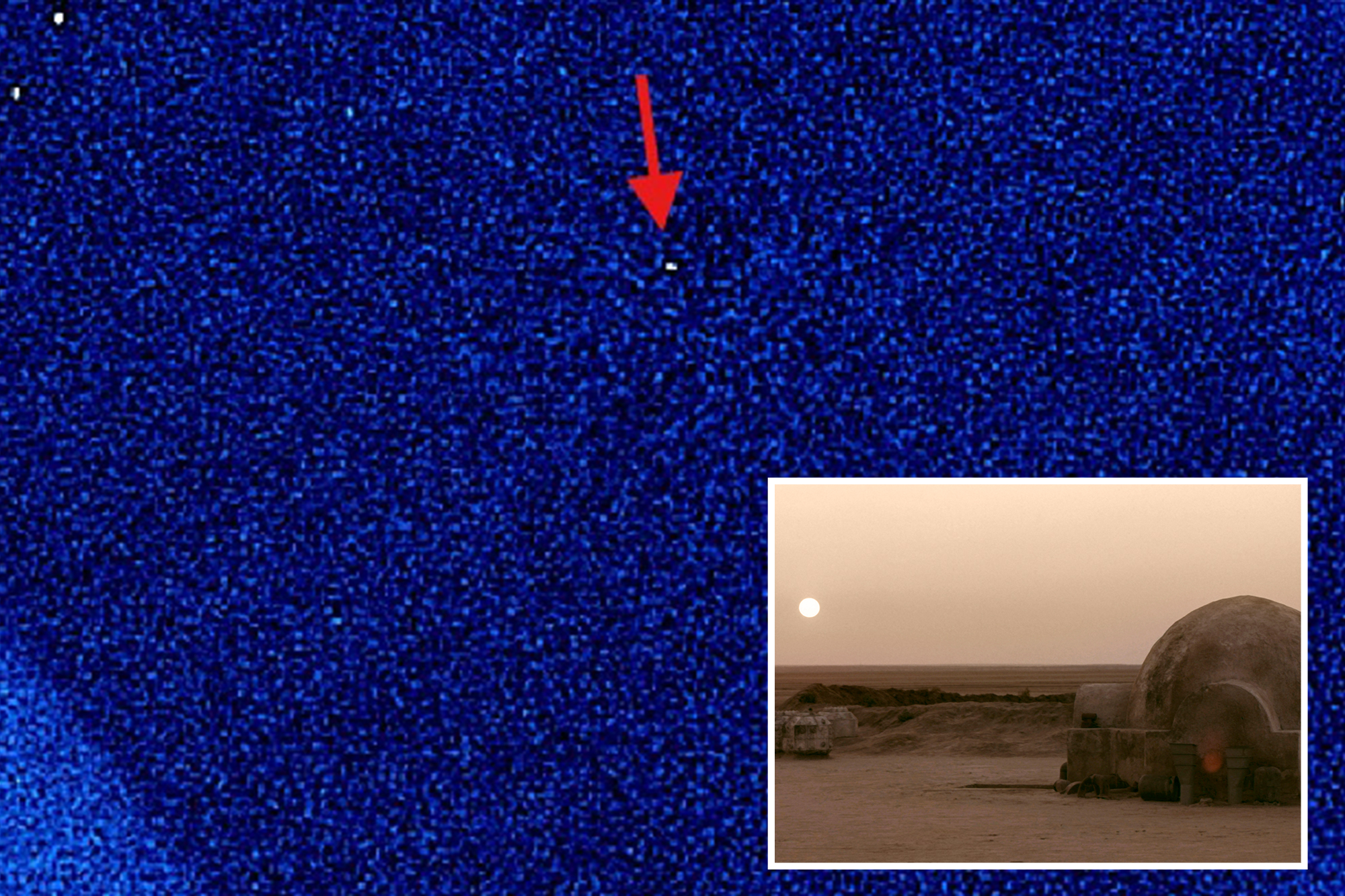
Astronomers have made a groundbreaking discovery of an exoplanet that orbits two suns, similar to the fictional planet Tatooine from the “Star Wars” franchise. The planet, designated HD 143811 AB b, is located approximately 446 light-years from Earth in a binary star system. This finding was published in a study in the journal Astronomy & Astrophysics by researchers from Northwestern University in Chicago, Illinois.
The newly identified exoplanet is a gas giant that orbits its twin stars at a distance closer than any other previously observed in a binary system. The unique characteristics of HD 143811 AB b allow astronomers to study the movements of both the planet and its stars, providing invaluable insights into their interactions. As noted by Jason Wang, an exoplanet imaging expert at Northwestern University, “Of the 6,000 exoplanets that we know of, only a very small fraction of them orbit binaries. Of those, we only have a direct image of a handful of them.”
The planet’s proximity to its twin stars is remarkable. While it is six times closer to its light sources than any other exoplanet previously imaged, it remains approximately 80 times further from its suns than Earth is from the Sun. This means that HD 143811 AB b takes about 300 years to complete a single orbit, while its binary stars revolve around each other every 18 days. Notably, the exoplanet is estimated to be six times the size of Jupiter.
The discovery of HD 143811 AB b is not entirely new; it was identified using archival data collected a decade ago by the Gemini South telescope and its Gemini Planet Imager (GPI). Wang and his team revisited this data, originally gathered between 2016 and 2019, and cross-referenced it with information from the W.M. Keck Observatory. They detected a faint object that appeared to be moving in tandem with a star, leading them to conclude that it was indeed a planet.
Wang emphasized the significance of this movement: “If a planet is bound to a star, then it will move with the star. Sometimes, when we revisit a ‘planet,’ we find it’s not moving with its star. Then, we know it was just a photobombing star passing through.” The team confirmed the presence of the planet, a conclusion later verified independently by astronomers from the University of Exeter in the UK.
One striking characteristic of HD 143811 AB b is its extreme temperature, recorded at 1,416°F (around 780°C), nearly double that of Venus. The planet is relatively young, at approximately 13 million years old, compared to Earth’s formation around 4.6 billion years ago. The formation mechanisms of such planets in binary systems remain unclear, with Wang stating, “Exactly how it works is still uncertain. Because we have only detected a few dozen planets like this, we don’t have enough data yet to put the picture together.”
The research team plans to continue monitoring the orbits of both the planet and its stars to deepen their understanding of the dynamics within binary star systems. This ongoing investigation could shed light on the complex interactions between stars and their orbiting planets, opening new avenues for astronomical research.

Putin Expands Security as Secret Family Guarded by 20 Systems

Urgent Donations Needed for Empty Stocking Fund by Dec. 12

Aimee Semple McPherson’s Legacy Continues with New Church Dedication

South Carolina Gamecocks’ Dawn Staley Confirms 10 Players Ready

Air Force Accelerates Delivery Date for New Presidential Jet

Blue Grotto Capital Expands Stake in Okta, Acquires 112,801 Shares

Local News Initiative Launches to Keep Communities Informed

Oreo Launches Zero-Sugar Cookies for Health-Conscious Consumers

Jewish Federation of Cleveland Raises Record $39 Million for Community

Inventor Achieves Breakthrough with 2 Billion FPS Laser Video

Community Unites for 7th Annual Into the Light Walk for Mental Health

Charlie Sheen’s New Romance: ‘Glowing’ with Younger Partner

Dua Lipa Aces GCSE Spanish, Sparks Super Bowl Buzz with Fans

Curium Group, PeptiDream, and PDRadiopharma Launch Key Cancer Trial

Israel Reopens Rafah Crossing After Hostage Remains Returned

Former Mozilla CMO Launches AI-Driven Cannabis Cocktail Brand Fast

Mother Fights to Reunite with Children After Kidnapping in New Drama

R&B Icon D’Angelo Dies at 51, Leaving Lasting Legacy
-
 Science2 months ago
Inventor Achieves Breakthrough with 2 Billion FPS Laser Video
-
 Health2 months ago
Community Unites for 7th Annual Into the Light Walk for Mental Health
-
 Top Stories2 months ago
Charlie Sheen’s New Romance: ‘Glowing’ with Younger Partner
-
 Entertainment2 months ago
Dua Lipa Aces GCSE Spanish, Sparks Super Bowl Buzz with Fans
-
 Health2 months ago
Curium Group, PeptiDream, and PDRadiopharma Launch Key Cancer Trial
-
 World2 months ago
Israel Reopens Rafah Crossing After Hostage Remains Returned
-
 Top Stories2 months ago
Former Mozilla CMO Launches AI-Driven Cannabis Cocktail Brand Fast
-
 Entertainment2 months ago
Mother Fights to Reunite with Children After Kidnapping in New Drama
-
 World2 months ago
R&B Icon D’Angelo Dies at 51, Leaving Lasting Legacy
-

 Business2 months ago
Tyler Technologies Set to Reveal Q3 Earnings on October 22
-

 Health2 months ago
North Carolina’s Biotech Boom: Billions in New Investments
-

 Health2 months ago
YouTube Launches New Mental Health Tools for Teen Users