
Health
Gaza’s Amputees Face Dire Shortages Amid Ongoing Struggles

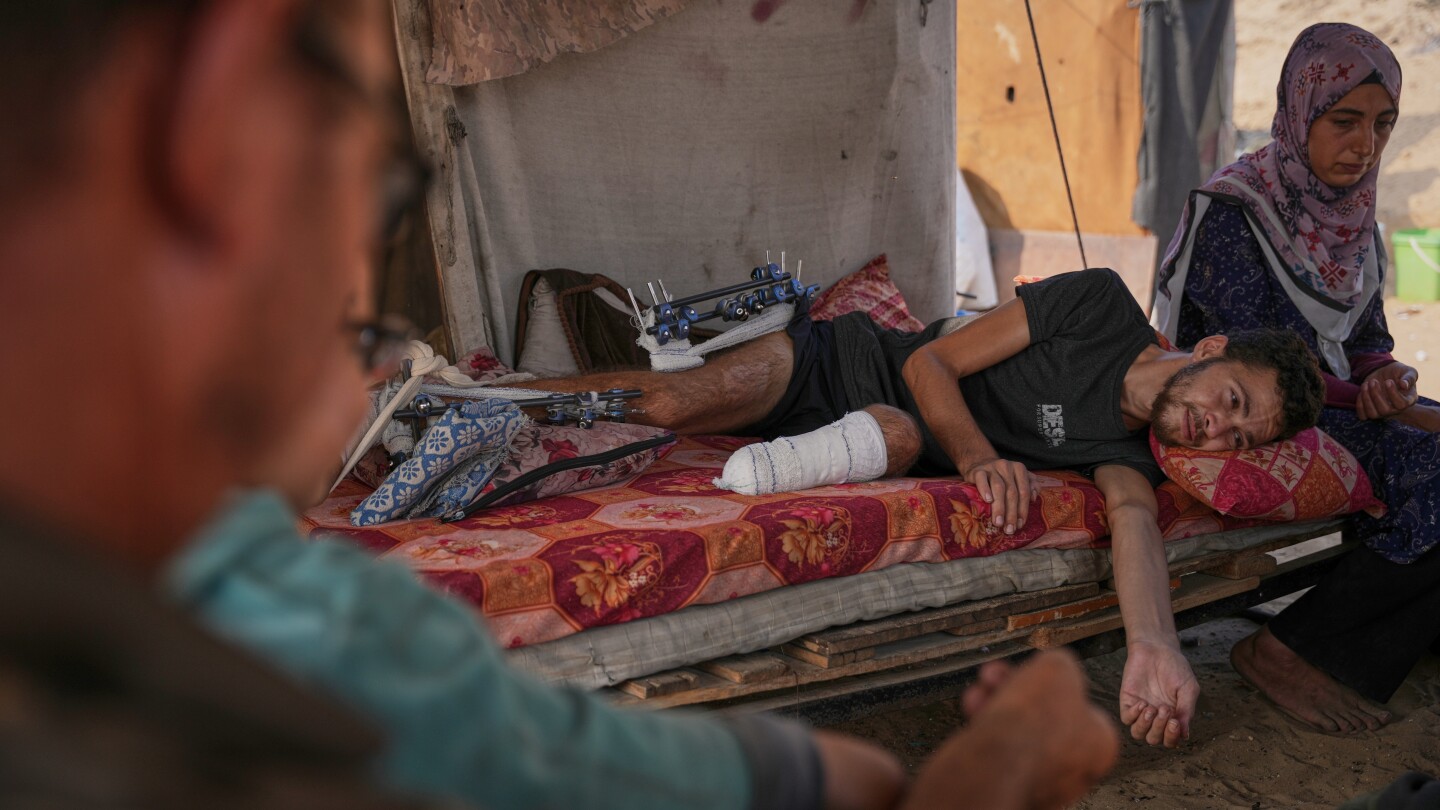
In the Gaza Strip, thousands of amputees are grappling with the harsh realities of life following severe injuries from ongoing conflicts. As they wait for crucial medical treatment and prosthetic limbs, their hopes for a better future remain dim. The situation is particularly dire for individuals like Haneen al-Mabhouh, who lost her leg and her four daughters during an Israeli airstrike in July 2024.
Al-Mabhouh, now confined to a wheelchair, longs to walk again and dreams of starting a family anew. “For the past year and a half, I have been unable to move around, to live like others,” she expressed from her parents’ home in Nuseirat. “Now my future is paralyzed. They destroyed my dreams.” The aftermath of conflict has left her awaiting medical evacuation for treatment that is unavailable in Gaza.
The World Health Organization estimates that there are between 5,000 and 6,000 amputees in Gaza, with approximately 25% being children. Despite a two-month ceasefire, progress in delivering medical aid and evacuating patients has been minimal. Al-Mabhouh has been on the list for evacuation for ten months but has yet to receive permission to leave the territory.
Medical Evacuations Slow Despite Ceasefire
Since the ceasefire began in October, only 235 patients have been evacuated from Gaza, averaging fewer than five per day. This is a slight increase from the average of three per day prior to the ceasefire. The Israeli authorities have indicated a willingness to allow patients to leave through the Rafah crossing into Egypt, but logistical challenges continue to impede progress.
Dr. Richard Peeperkorn, the WHO’s representative in the occupied Palestinian territory, highlighted the lack of available countries to host evacuated patients as a significant hurdle. New evacuation routes need to be established, particularly to areas such as the Israeli-occupied West Bank, where hospitals are prepared to receive patients.
As the medical evacuations remain sluggish, many individuals are left in a state of limbo. Yassin Marouf, a 23-year-old who lost his left foot to Israeli shelling, describes his grim situation. “If I want to go to the bathroom, I need two or three people to carry me,” he said, highlighting the day-to-day struggles faced by amputees in Gaza.
Prosthetic Limb Shortage Intensifies Suffering
The humanitarian crisis extends beyond medical evacuations. The WHO reported that around 42,000 Palestinians have sustained life-altering injuries, including amputations, during the ongoing conflict. There is a significant shortage of assistive products, such as wheelchairs and prosthetic limbs, exacerbating the plight of those in need.
The Artificial Limbs and Polio Center in Gaza City, one of the few facilities still operational, has struggled to meet the demand. It has provided prosthetic limbs to only 250 cases since the war began, with supplies running critically low. Al Ghussein, the center’s director, noted that while some essential supplies were recently allowed into Gaza, no pre-made prosthetics have entered.
Individuals like Ibrahim Khalif, who lost his leg in an airstrike while out for food, face an uncertain future. “I used to be the provider for my kids, but now I’m sitting here,” he lamented, emphasizing the profound impact of the conflict on his ability to support his family.
As the situation in Gaza continues to evolve, the urgent need for comprehensive medical assistance and support for amputees remains a critical concern. The hopes of many, like al-Mabhouh and her fellow amputees, rest on the international community’s response to their pleas for aid and the restoration of their lives.

Putin Expands Security as Secret Family Guarded by 20 Systems

Urgent Donations Needed for Empty Stocking Fund by Dec. 12

Aimee Semple McPherson’s Legacy Continues with New Church Dedication

South Carolina Gamecocks’ Dawn Staley Confirms 10 Players Ready

Air Force Accelerates Delivery Date for New Presidential Jet

Blue Grotto Capital Expands Stake in Okta, Acquires 112,801 Shares

Local News Initiative Launches to Keep Communities Informed

Oreo Launches Zero-Sugar Cookies for Health-Conscious Consumers

Jewish Federation of Cleveland Raises Record $39 Million for Community

Inventor Achieves Breakthrough with 2 Billion FPS Laser Video

Community Unites for 7th Annual Into the Light Walk for Mental Health

Charlie Sheen’s New Romance: ‘Glowing’ with Younger Partner

Dua Lipa Aces GCSE Spanish, Sparks Super Bowl Buzz with Fans

Curium Group, PeptiDream, and PDRadiopharma Launch Key Cancer Trial

Israel Reopens Rafah Crossing After Hostage Remains Returned

Former Mozilla CMO Launches AI-Driven Cannabis Cocktail Brand Fast

Mother Fights to Reunite with Children After Kidnapping in New Drama

R&B Icon D’Angelo Dies at 51, Leaving Lasting Legacy
-
 Science2 months ago
Inventor Achieves Breakthrough with 2 Billion FPS Laser Video
-
 Health2 months ago
Community Unites for 7th Annual Into the Light Walk for Mental Health
-
 Top Stories2 months ago
Charlie Sheen’s New Romance: ‘Glowing’ with Younger Partner
-
 Entertainment2 months ago
Dua Lipa Aces GCSE Spanish, Sparks Super Bowl Buzz with Fans
-
 Health2 months ago
Curium Group, PeptiDream, and PDRadiopharma Launch Key Cancer Trial
-
 World2 months ago
Israel Reopens Rafah Crossing After Hostage Remains Returned
-
 Top Stories2 months ago
Former Mozilla CMO Launches AI-Driven Cannabis Cocktail Brand Fast
-
 Entertainment2 months ago
Mother Fights to Reunite with Children After Kidnapping in New Drama
-
 World2 months ago
R&B Icon D’Angelo Dies at 51, Leaving Lasting Legacy
-

 Business2 months ago
Tyler Technologies Set to Reveal Q3 Earnings on October 22
-

 Health2 months ago
YouTube Launches New Mental Health Tools for Teen Users
-

 Health2 months ago
North Carolina’s Biotech Boom: Billions in New Investments