
Science
New Study Reveals How Moon Dust Affects Resource Mapping

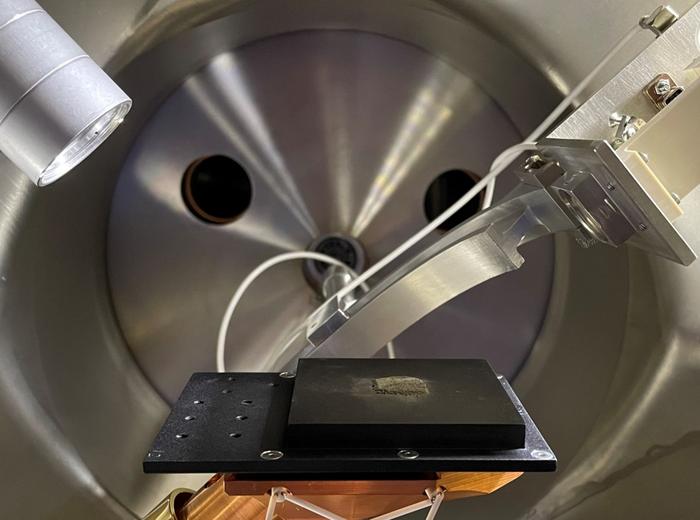
Research on the Moon’s surface has taken a significant turn with a new study from the Southwest Research Institute (SwRI). The findings reveal that “old” lunar regolith, or soil, can obscure the presence of vital resources like titanium, complicating future efforts for sustainable lunar habitation. This study provides insights into how space weathering affects the spectral data collected by the Lunar Reconnaissance Orbiter (LRO), a key satellite in lunar resource assessment.
Understanding the Moon’s surface composition is crucial for any future missions aimed at establishing a permanent human presence. The LRO uses a variety of wavelengths to scan the lunar environment, but the impact of space weathering—caused by solar wind and micrometeorite bombardment—has raised questions about data accuracy. The SwRI researchers focused on how these changes in the lunar surface affect the interpretation of Far Ultraviolet (FUV) light data.
The research team examined soil samples collected during the Apollo missions, particularly looking at two highly weathered samples and one relatively young sample obtained from a trench. By employing FUV imaging and scanning electron microscopy, they aimed to identify how the physical attributes of these soils influence their spectral signatures.
Three significant findings emerged from their analysis. First, the older soil samples were covered in nanoscale iron particles, resulting from long-term exposure to solar wind. This phenomenon, termed “iron acne,” made the surfaces of older regolith rougher compared to the smoother, younger sample. Second, this roughness altered light reflection patterns; the newer regolith exhibited “forward scattering” in FUV, making it appear approximately twice as bright as the older samples. In contrast, the older regolith backscattered light towards the source, complicating brightness comparisons.
Most importantly, the research indicated that space weathering effects might mask the chemical signatures of the lunar soil in FUV. Notably, two old Apollo samples—one from a dark mare with high titanium content and the other from a bright highland with lower titanium—appeared nearly identical under FUV inspection despite their different mineral compositions.
This discrepancy poses challenges for scientists interpreting data from the LRO. Interestingly, the lab results contradict physical observations, which suggest that fresh lunar soil appears “redder” than older soil, implying it should be less bright in FUV wavelengths. The authors propose that this inconsistency may stem from specific lunar surface characteristics, such as the “fluffiness” of the soil at the sampling site or the presence of shocked materials caused by micrometeorite impacts.
As humanity prepares to explore and possibly settle on the Moon, understanding the implications of these findings is essential. The age of lunar soil plays a critical role in remote sensing, and recognizing its influence on chemical composition is vital for accurate resource mapping.
The study emphasizes the necessity of collecting diverse data across various wavelengths to enhance our understanding of lunar resources. As research advances, it will become increasingly important to unravel the complexities of lunar soil to facilitate future exploration and utilization efforts.
For further insights, refer to the original publication by C.J. Gimar et al. and related studies on lunar soil analyses available through SwRI and EurekaAlert.

Allen Mustangs Sweep Wetumka in Thrilling Doubleheader Victory

EU Implements €3 Fee on Small Parcels to Curb E-Commerce Surge

Major Casting Changes Announced for Tracker Season 3

Leading GP Urges Mask-Wearing to Combat Flu Spread

Ugandan Program Aims to Lift Families from Poverty, Faces Challenges

Advocate Calls for Investigation into Instacart’s Pricing Practices

Blue Origin Progresses in Certification for National Security Launches

Ohio State’s Caleb Downs Wins Jim Thorpe Award, Sets Sights on NFL

Devils Backbone Unveils Bold New Look for Smash Cocktail Cans

Inventor Achieves Breakthrough with 2 Billion FPS Laser Video

Community Unites for 7th Annual Into the Light Walk for Mental Health

Charlie Sheen’s New Romance: ‘Glowing’ with Younger Partner

Dua Lipa Aces GCSE Spanish, Sparks Super Bowl Buzz with Fans

Curium Group, PeptiDream, and PDRadiopharma Launch Key Cancer Trial

Former Mozilla CMO Launches AI-Driven Cannabis Cocktail Brand Fast

Israel Reopens Rafah Crossing After Hostage Remains Returned

Mother Fights to Reunite with Children After Kidnapping in New Drama

R&B Icon D’Angelo Dies at 51, Leaving Lasting Legacy
-
 Science2 months ago
Inventor Achieves Breakthrough with 2 Billion FPS Laser Video
-
 Health2 months ago
Community Unites for 7th Annual Into the Light Walk for Mental Health
-
 Top Stories2 months ago
Charlie Sheen’s New Romance: ‘Glowing’ with Younger Partner
-
 Entertainment2 months ago
Dua Lipa Aces GCSE Spanish, Sparks Super Bowl Buzz with Fans
-
 Health2 months ago
Curium Group, PeptiDream, and PDRadiopharma Launch Key Cancer Trial
-
 Top Stories2 months ago
Former Mozilla CMO Launches AI-Driven Cannabis Cocktail Brand Fast
-
 World2 months ago
Israel Reopens Rafah Crossing After Hostage Remains Returned
-
 Entertainment2 months ago
Mother Fights to Reunite with Children After Kidnapping in New Drama
-
 World2 months ago
R&B Icon D’Angelo Dies at 51, Leaving Lasting Legacy
-

 Business2 months ago
Tyler Technologies Set to Reveal Q3 Earnings on October 22
-

 Health2 months ago
North Carolina’s Biotech Boom: Billions in New Investments
-

 Health2 months ago
YouTube Launches New Mental Health Tools for Teen Users