
Business
U.S. Housing Market: Vacancy Rates Show Mixed Signals for Renters

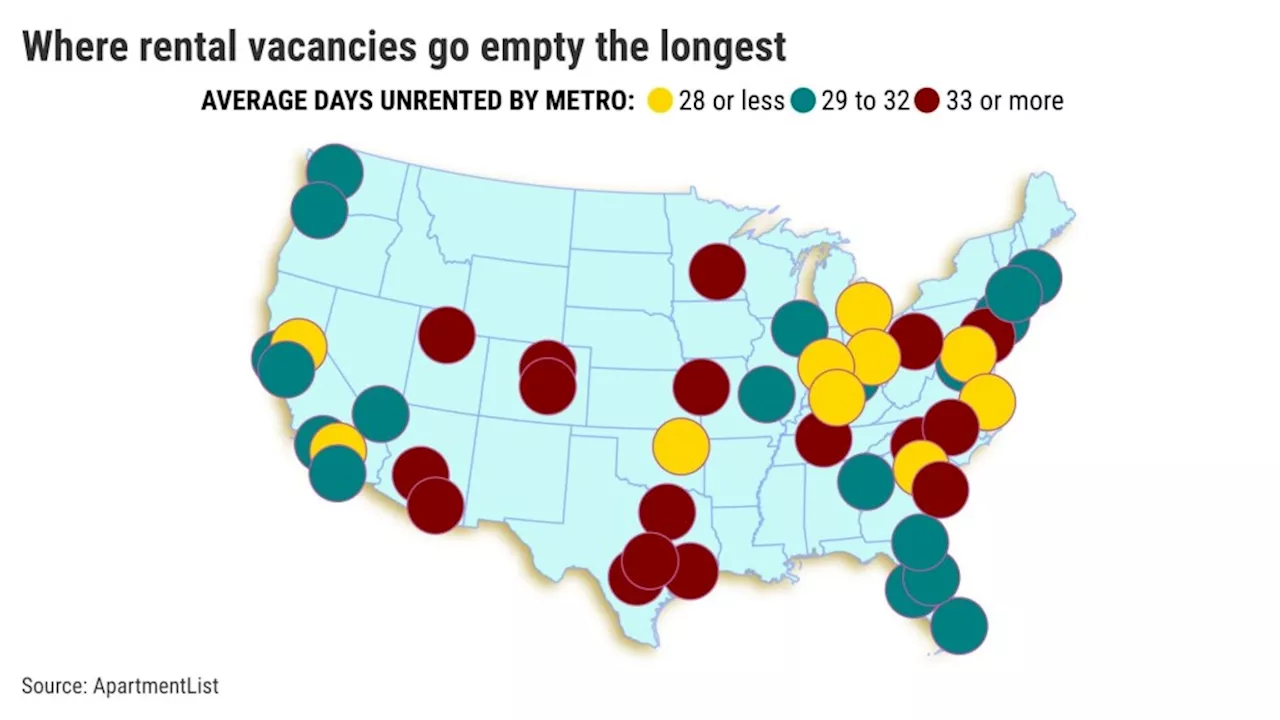
An analysis of vacancy rates across 46 major U.S. metropolitan areas reveals trends that impact renters as of November 2023. This report, which focuses on the six-month average, compares current data with figures from a year ago and highlights regional variations within the housing market. It aims to provide insights into how quickly rental units are being leased and the broader implications for prospective tenants.
The national average for vacant rental units stood at 31 days over the past six months, which is just two days shorter than the same period last year. While this indicates a slight improvement in competition, it is three days longer than the seven-year average, suggesting a slower market overall.
Regional Variations and Rental Trends
In examining regional trends, California’s rental market reflects a faster pace compared to national metrics. All six California metropolitan areas included in the study experienced quicker rental times than the national average. For instance, the average rental time in Columbia, South Carolina, and Virginia Beach, Virginia, was notably low at just 20 days. Conversely, Tucson, Arizona, registered the slowest rentals, taking an average of 43 days to lease a unit.
In the Southern U.S., a surge in apartment construction has resulted in a renter-friendly environment, characterized by numerous available units. Areas such as these are seeing an average of just 22 days for vacant units to rent, slightly slower than last year but still one day faster than the seven-year average.
Statewide, California’s overall rental speed averaged 28 days, ranking it as the 10th-fastest among 34 states tracked. This is a notable shift as it reflects a three-day slowdown over the past year, although it remains one day quicker than the seven-year average. The landscape of rental competition across different regions underscores the dynamics of local markets, where tenants may need to adjust their decision-making based on the speed of unit availability.
Implications for Renters and Future Outlook
Understanding these trends provides renters with critical context for navigating their housing decisions. When vacancy rates are low, units tend to rent quickly, indicating a tight market. Conversely, when vacancies are high, prospective tenants have more leverage, leading to longer times on the market.
As the U.S. housing market continues to evolve, factors such as economic conditions, shifts in population density, and local housing policies will play significant roles in shaping rental dynamics. The findings from this report, including data from Realtor.com, suggest that while some areas are experiencing a resurgence in rental speed, others remain challenged by excess inventory and slower leasing activity.
In conclusion, the current landscape of the U.S. housing market reveals a complex picture, with varying conditions across regions. Renters are encouraged to stay informed and adapt to these trends as they make housing decisions in a fluctuating market.

Funko’s Price Target Increased to $4.00 as Analysts React

Humboldt Celebrates as ‘One Battle After Another’ Claims Best Picture

GSK Faces Backlash Over Asthma Inhaler Scrapping, Children Suffer

Adorable Sandhill Crane Colt Hugs Mom in The Villages

USA Unveils Star-Spangled Jerseys Ahead of March Friendlies

Newport Plans Colorful Lighting for Fourth Street Bridge

Sandia Scientists Honored for Innovative Career Journeys

Urgent: Charles M. Payment Passes Away at 78, Memorial Details Inside

NFL Free Agency: Key Moves and Player Signings in Week One

Researchers Launch $1.25M Project for Real-Time Hazard Monitoring in Hawaiʻi

Send It South Revives Culture and Community at The Momentary

UK Government Borrowing Hits £20.2 Billion in September Surge

Flipkart Republic Day Sale: iPhone 16 Plus Price Slashed by ₹23,900

Adecco SA Secures Mixed Ratings from Analysts Amid Earnings Update

Researchers Achieve Record 15.1 mA/cm² Hydrogen Production Efficiency

Globant Reveals Key Tech Forces Shaping Business in 2026

Dua Lipa Aces GCSE Spanish, Sparks Super Bowl Buzz with Fans

Inventor Achieves Breakthrough with 2 Billion FPS Laser Video
-
 Science8 months ago
Researchers Launch $1.25M Project for Real-Time Hazard Monitoring in Hawaiʻi
-
 Entertainment7 months ago
Send It South Revives Culture and Community at The Momentary
-
 World10 months ago
UK Government Borrowing Hits £20.2 Billion in September Surge
-
 Business6 months ago
Flipkart Republic Day Sale: iPhone 16 Plus Price Slashed by ₹23,900
-
 Sports8 months ago
Adecco SA Secures Mixed Ratings from Analysts Amid Earnings Update
-
 Top Stories5 months ago
Researchers Achieve Record 15.1 mA/cm² Hydrogen Production Efficiency
-
 Business8 months ago
Globant Reveals Key Tech Forces Shaping Business in 2026
-
 Entertainment10 months ago
Dua Lipa Aces GCSE Spanish, Sparks Super Bowl Buzz with Fans
-
 Science10 months ago
Inventor Achieves Breakthrough with 2 Billion FPS Laser Video
-

 Top Stories10 months ago
Charlie Sheen’s New Romance: ‘Glowing’ with Younger Partner
-

 Top Stories8 months ago
JSerra Names Hardy Nickerson as First Black Football Coach
-

 Health10 months ago
Community Unites for 7th Annual Into the Light Walk for Mental Health