
Top Stories
US Allies Deploy Anti-Ship Missiles Near China, Heightening Tensions

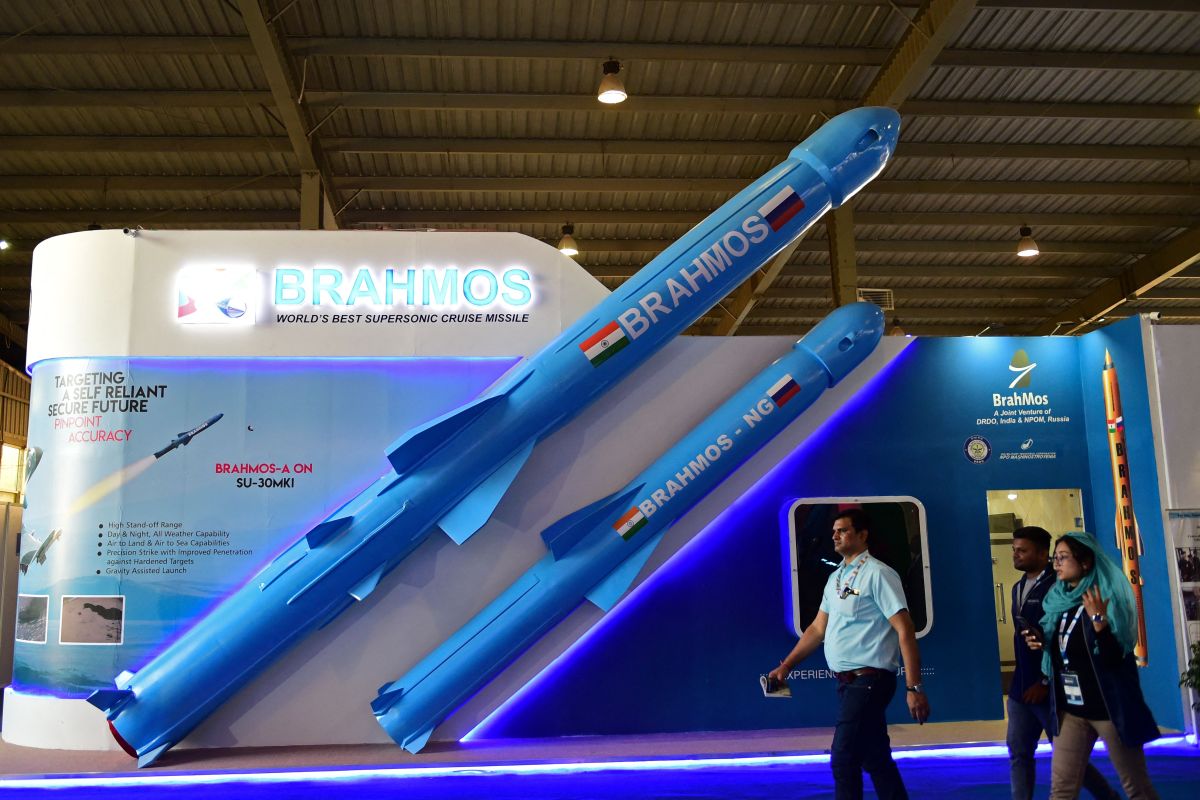
BREAKING: Taiwan’s National Security Bureau has revealed that Japan and the Philippines are actively deploying anti-ship missiles in a bold response to escalating tensions with China. This urgent move, disclosed during a presentation on Wednesday, highlights the growing military collaboration among U.S. allies in the region.
The missile deployments come at a critical time as the regional environment grows increasingly volatile. Both Japan and the Philippines face territorial disputes with China, which boasts the world’s largest navy and frequently sends vessels into contested waters, raising the stakes for potential conflicts.
Beijing’s assertive military posture is not only pressuring Taiwan, which it claims as its own, but is also compelling neighboring countries to bolster their defenses. President Xi Jinping’s intention to unify Taiwan with the mainland, potentially by force, has heightened fears across the region.
In its presentation, Taiwan’s security agency emphasized that China’s military expansion poses a direct threat to its neighbors, fostering an urgent need for “common deterrence.” U.S. partners in the region are increasingly forming security agreements to reinforce the so-called “first island chain”, crucial for containing Chinese military forces during potential conflicts.
Recent deployments include the U.S. Army’s Mid-Range Capability (MRC) system, also known as Typhon. This system was stationed in the Philippines’ Zambales province in April 2024 and in Japan’s Yamaguchi Prefecture in September 2025 for joint military exercises. These actions have drawn strong condemnation from China, which deems the missile systems a significant threat to regional stability.
The MRC system can launch both Standard Missile-6 (SM-6) interceptors and Tomahawk cruise missiles, capable of hitting targets along China’s eastern coastline. Additionally, the U.S. has moved the Navy-Marine Expeditionary Ship Interdiction System (NMESIS) to the Batanes province in the Philippines. This strategic location serves as a chokepoint for Chinese naval vessels accessing the Pacific.
In September, the mobile NMESIS, which fires the advanced Naval Strike Missile, was relocated to Japan’s Okinawa Prefecture for U.S. Marine Corps training to enhance land-based anti-ship capabilities.
Officials are voicing their concerns. Chinese Foreign Ministry spokesperson Lin Jian labeled the missile deployments “provocative and dangerous,” warning that they jeopardize regional security. Meanwhile, the U.S. Congressional Research Service noted that the presence of Mid-Range Capability batteries could escalate tensions, potentially leading to an arms race in the Indo-Pacific region.
Looking ahead, the Philippines plans to deploy BrahMos supersonic cruise missiles to western Luzon and Palawan, its westernmost major island. Japan is also advancing its own military capabilities, aiming to station Hypersonic Glide Vehicles (HVGPs) on Kyushu and Hokkaido. The Philippines has already acquired two batches of BrahMos missiles, becoming the first foreign operator of this cutting-edge system.
The HVGP system, equipped with maneuverable warheads and capable of exceeding speeds of Mach 5, is designed to penetrate advanced defense systems, making it a formidable asset against potential adversaries. With China also developing hypersonic weapons, concerns about military balance are intensifying.
As these developments unfold, the regional dynamics are shifting rapidly. The situation continues to evolve, with both Japan and the Philippines enhancing their military readiness to counteract China’s aggressive posture. As tensions heighten, the implications of these deployments resonate not just in East Asia but globally, making this a critical moment for international security and stability.
Stay tuned for further updates as this story develops.

Trump Just Signed Law Repealing Key Sanctions on Syria

Ancient DNA Reveals True Identity of ‘First Black Briton’

Innovator U.S. Equity Power Buffer ETF Hits New 12-Month High

REAL Shows Network Launches “Selling 215” to Celebrate Philadelphia

KBC Group Shares Reach New High: Analysts Weigh In on Future

Maya Hawke Turns Heads in Daring Sheer Lace Skirt at Event

Nurse Fails to Administer CPR, Leading to Resident’s Death

Ex-Prince Andrew Faces Financial Crisis, Could Write Tell-All

Indiana Lawmakers Propose Firing Squads for Death Penalty

Inventor Achieves Breakthrough with 2 Billion FPS Laser Video

Community Unites for 7th Annual Into the Light Walk for Mental Health

Charlie Sheen’s New Romance: ‘Glowing’ with Younger Partner

Dua Lipa Aces GCSE Spanish, Sparks Super Bowl Buzz with Fans

Curium Group, PeptiDream, and PDRadiopharma Launch Key Cancer Trial

Former Mozilla CMO Launches AI-Driven Cannabis Cocktail Brand Fast

Mother Fights to Reunite with Children After Kidnapping in New Drama

R&B Icon D’Angelo Dies at 51, Leaving Lasting Legacy

Israel Reopens Rafah Crossing After Hostage Remains Returned
-
 Science2 months ago
Inventor Achieves Breakthrough with 2 Billion FPS Laser Video
-
 Health2 months ago
Community Unites for 7th Annual Into the Light Walk for Mental Health
-
 Top Stories2 months ago
Charlie Sheen’s New Romance: ‘Glowing’ with Younger Partner
-
 Entertainment2 months ago
Dua Lipa Aces GCSE Spanish, Sparks Super Bowl Buzz with Fans
-
 Health2 months ago
Curium Group, PeptiDream, and PDRadiopharma Launch Key Cancer Trial
-
 Top Stories2 months ago
Former Mozilla CMO Launches AI-Driven Cannabis Cocktail Brand Fast
-
 Entertainment2 months ago
Mother Fights to Reunite with Children After Kidnapping in New Drama
-
 World2 months ago
R&B Icon D’Angelo Dies at 51, Leaving Lasting Legacy
-
 World2 months ago
Israel Reopens Rafah Crossing After Hostage Remains Returned
-

 Health2 months ago
YouTube Launches New Mental Health Tools for Teen Users
-

 Business2 months ago
Tyler Technologies Set to Reveal Q3 Earnings on October 22
-

 Entertainment2 months ago
Red Sox’s Bregman to Become Free Agent; Tigers Commit to Skubal