
Science
Innovative Leaf-Scanning Technology Helps Farmers Assess Fruit Ripeness

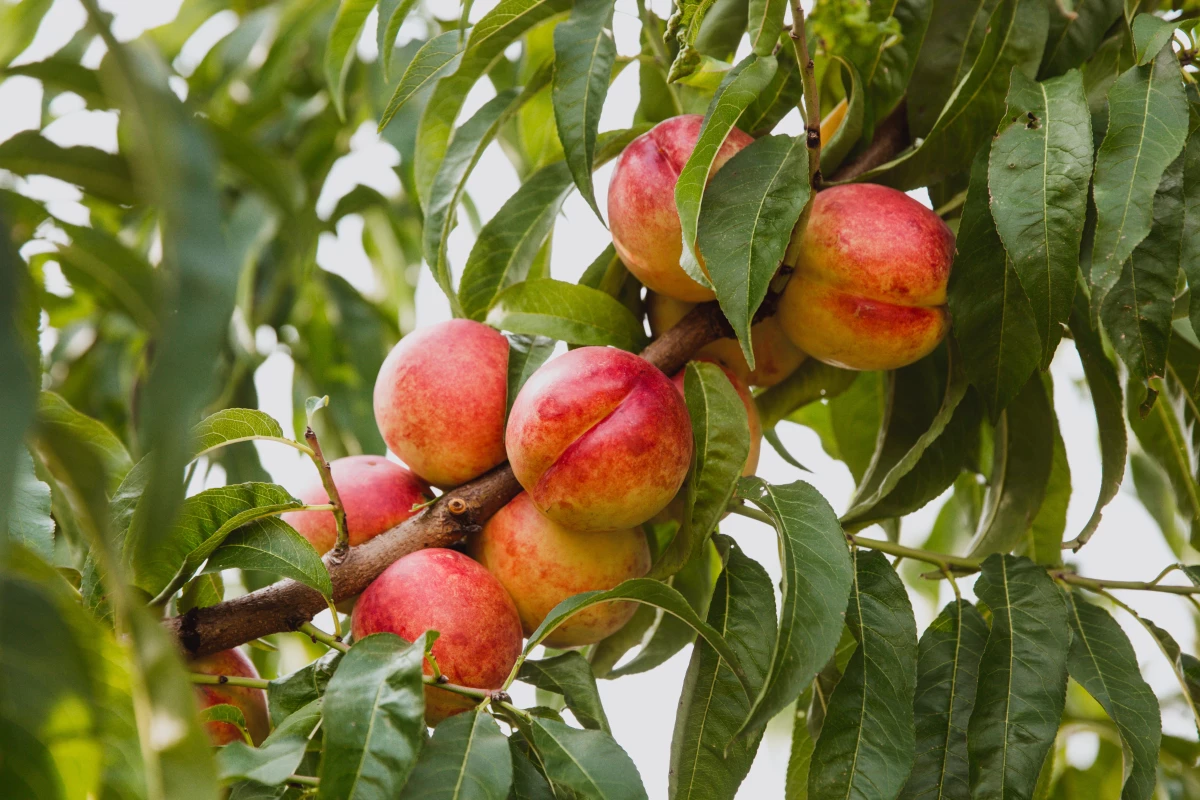
Farmers may soon have a revolutionary way to determine fruit ripeness without sacrificing yield. Researchers at Universitat Rovira i Virgili in Spain have developed a technique that analyzes the leaves of fruit trees rather than the fruit itself. This innovative method could significantly enhance agricultural efficiency by allowing farmers to assess ripeness without harvesting fruit prematurely.
During an 11-week study, scientists tested the technology on 12 nectarine trees in a commercial orchard. The technology employs two spectrometers, which perform scans using near-infrared and mid-infrared light. By examining the top and underside of leaves adjacent to the fruit, the system can determine ripeness based on how leaves absorb or reflect the emitted light.
Dr. Daniel Schorn, a member of the research team, explained that “the leaves undergo physiological and biochemical changes as the fruit ripens, due to the direct connection between the metabolism of the leaves and that of the fruit.” This relationship is captured in what researchers refer to as the leaves’ “spectral fingerprint.”
The early results demonstrate that this method effectively indicates key ripeness metrics such as fruit weight and firmness. While other important factors, including sugar content, pH, and acidity, are not as reliably measured at this stage, the researchers are optimistic that future developments will enhance these capabilities.
Currently, conventional methods for assessing fruit ripeness involve scanning the fruit itself, which can leave marks on the skin and diminish market value. The new leaf-scanning technology presents a more efficient solution that retains the integrity of the fruit while providing accurate assessments.
Looking ahead, the researchers aim to utilize portable scanners for field assessments. This advancement would allow farmers to evaluate entire crops based on representative samples and enable selective picking of ripe fruits from individual trees, leaving unripe fruits to mature further.
The findings of this research have been detailed in a paper published in the journal ACS Agricultural Science & Technology. As the agricultural sector increasingly seeks sustainable practices, this leaf-scanning technology could represent a significant step forward in optimizing fruit harvesting and reducing waste.

NotebookLM Transforms Self-Hosting LLMs: A Game Changer for Users

Kate Middleton’s 4-Word Query Leaves Queen Camilla Emotional

Bears vs. Packers: High-Stakes Showdown Kicks Off Tonight!

Discover Andorra’s Coronallacs Trail: A Hiker’s Paradise

Discover Five Homes Near Chicago’s $360K Median Price

Stalker 2 Expands Gameplay with New Update, Adding Missions and Locations

Discover the Timeless Appeal of Evergreen Holly This Winter

StrongBox Wealth Reduces Stake in Alphabet Inc. by 9.3%

Texas Mom’s Nighttime Surprise: Toddler’s Late-Night Escape Shocks Family

Inventor Achieves Breakthrough with 2 Billion FPS Laser Video

Community Unites for 7th Annual Into the Light Walk for Mental Health

Charlie Sheen’s New Romance: ‘Glowing’ with Younger Partner

Dua Lipa Aces GCSE Spanish, Sparks Super Bowl Buzz with Fans

Curium Group, PeptiDream, and PDRadiopharma Launch Key Cancer Trial

Mother Fights to Reunite with Children After Kidnapping in New Drama

Former Mozilla CMO Launches AI-Driven Cannabis Cocktail Brand Fast

R&B Icon D’Angelo Dies at 51, Leaving Lasting Legacy

Israel Reopens Rafah Crossing After Hostage Remains Returned
-
 Science2 months ago
Inventor Achieves Breakthrough with 2 Billion FPS Laser Video
-
 Health2 months ago
Community Unites for 7th Annual Into the Light Walk for Mental Health
-
 Top Stories2 months ago
Charlie Sheen’s New Romance: ‘Glowing’ with Younger Partner
-
 Entertainment2 months ago
Dua Lipa Aces GCSE Spanish, Sparks Super Bowl Buzz with Fans
-
 Health2 months ago
Curium Group, PeptiDream, and PDRadiopharma Launch Key Cancer Trial
-
 Entertainment2 months ago
Mother Fights to Reunite with Children After Kidnapping in New Drama
-
 Top Stories2 months ago
Former Mozilla CMO Launches AI-Driven Cannabis Cocktail Brand Fast
-
 World2 months ago
R&B Icon D’Angelo Dies at 51, Leaving Lasting Legacy
-
 World2 months ago
Israel Reopens Rafah Crossing After Hostage Remains Returned
-

 Health2 months ago
YouTube Launches New Mental Health Tools for Teen Users
-

 Business2 months ago
Tyler Technologies Set to Reveal Q3 Earnings on October 22
-

 Entertainment2 months ago
Red Sox’s Bregman to Become Free Agent; Tigers Commit to Skubal