
Science
Acoustic Radiometer Spins Using Sound, Not Light Pressure

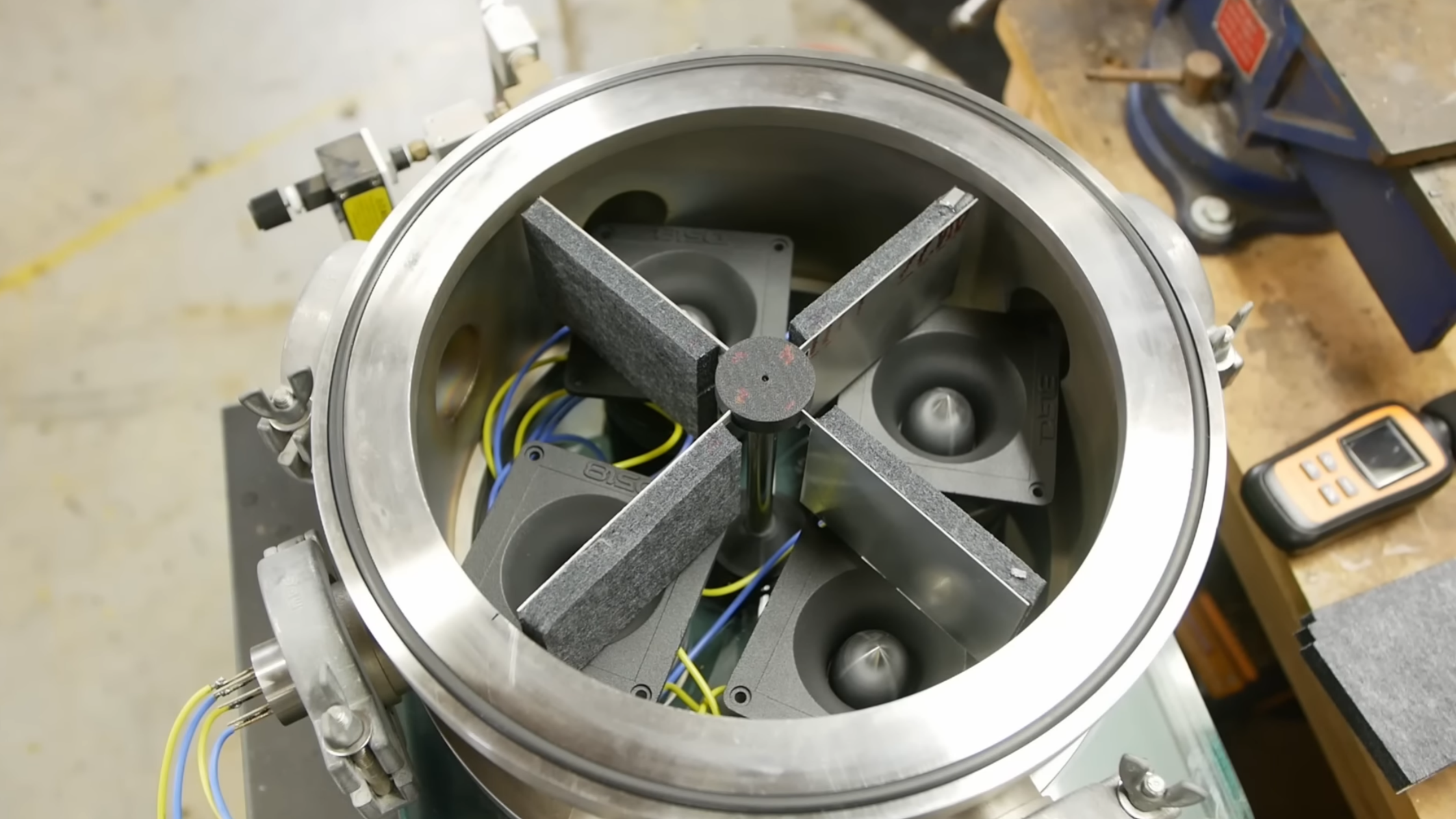
A new method of building an acoustic radiometer has emerged, showcasing how sound waves, rather than light, can create motion. Inventor Ben Krasnow developed this innovative device, which utilizes acoustic radiation differences to achieve rotation. This approach contrasts with the traditional Crookes radiometer, which many mistakenly believe operates solely on radiation pressure from light.
Krasnow constructed two sets of vanes using laser-cut aluminium, attaching sound-absorbing foam to one side of each vane. These vanes were mounted around a jewel bearing sourced from an analog voltmeter. Positioned strategically above four speakers in an acoustically sealed chamber, the setup played a continuous stream of 130-decibel white noise. This intense sound pressure caused the aluminium sides of the vanes, which reflect more sound, to experience greater pressure than the foam sides, resulting in a spinning motion.
Testing revealed that the two sets of vanes, with the foam mounted on opposite sides, spun in opposite directions. This observation supports the conclusion that the pressure difference between the two sides was indeed responsible for the movement, rather than an acoustic streaming effect.
Challenges and Solutions in Acoustic Radiometry
During the experimentation, Krasnow faced challenges, particularly related to the speakers used to generate the sound. The high volume caused several speakers to burn out. To mitigate this issue, he monitored the temperature of the speaker coil while adjusting power levels. He discovered that as the coil heated up, its resistance increased. By measuring this resistance, he could effectively calculate the coil’s temperature, ensuring it remained within safe limits.
Further tests involved introducing various gases into the chamber, including hydrogen, helium, carbon dioxide, and sulfur hexafluoride. Surprisingly, none of these alternatives outperformed air in terms of radiometer efficiency. This outcome is noteworthy, as speakers are specifically designed to transfer energy effectively to air, illustrating the unique properties of sound waves in this context.
Potential Applications and Insights
While this acoustic radiometer may not represent the most efficient method for converting electrical power into motion, it does open avenues for exploring other applications of acoustic resonance. The principles demonstrated by Krasnow‘s work could inspire future innovations in energy conversion technologies.
For those interested in the historical context, Krasnow has also provided explanations regarding the original Crookes radiometers, highlighting the evolution of thought surrounding these fascinating devices.
The exploration of sound as a driving force in machinery not only underscores the adaptability of scientific principles but also encourages further investigation into the practical implications of sound energy. As researchers delve deeper into this field, the potential for new technologies and applications continues to expand.

Trump Issues Ultimatum to Maduro; Venezuela Closes Airspace

Microsoft Faces Urgent Windows 11 Crisis Amid Core Failures

Engineering Legend Professor Ted de Winter Passes at 93

The Game Reacts to Celeste Rivas’ Death, Calls for Justice

Global Psoriasis Rates Climb Steadily, Especially in Wealthy Areas

$500,000 Grant Fuels Development of Children’s Imagination Station

OMERS Administration Corp Increases Stake in Qualcomm by 2.4%

ISOLDE Celebrates a Decade of Advances in Nuclear Research

OMERS Boosts Stake in Merck as Institutional Investors Rally

Inventor Achieves Breakthrough with 2 Billion FPS Laser Video

Community Unites for 7th Annual Into the Light Walk for Mental Health

Charlie Sheen’s New Romance: ‘Glowing’ with Younger Partner

Dua Lipa Aces GCSE Spanish, Sparks Super Bowl Buzz with Fans

Former Mozilla CMO Launches AI-Driven Cannabis Cocktail Brand Fast

Mother Fights to Reunite with Children After Kidnapping in New Drama

Curium Group, PeptiDream, and PDRadiopharma Launch Key Cancer Trial

Tyler Technologies Set to Reveal Q3 Earnings on October 22

North Carolina’s Biotech Boom: Billions in New Investments
-
 Science1 month ago
Inventor Achieves Breakthrough with 2 Billion FPS Laser Video
-
 Health2 months ago
Community Unites for 7th Annual Into the Light Walk for Mental Health
-
 Top Stories2 months ago
Charlie Sheen’s New Romance: ‘Glowing’ with Younger Partner
-
 Entertainment2 months ago
Dua Lipa Aces GCSE Spanish, Sparks Super Bowl Buzz with Fans
-
 Top Stories2 months ago
Former Mozilla CMO Launches AI-Driven Cannabis Cocktail Brand Fast
-
 Entertainment2 months ago
Mother Fights to Reunite with Children After Kidnapping in New Drama
-
 Health2 months ago
Curium Group, PeptiDream, and PDRadiopharma Launch Key Cancer Trial
-
 Business2 months ago
Tyler Technologies Set to Reveal Q3 Earnings on October 22
-
 Health2 months ago
North Carolina’s Biotech Boom: Billions in New Investments
-

 World2 months ago
Israel Reopens Rafah Crossing After Hostage Remains Returned
-

 World2 months ago
R&B Icon D’Angelo Dies at 51, Leaving Lasting Legacy
-

 Entertainment2 months ago
Red Sox’s Bregman to Become Free Agent; Tigers Commit to Skubal