
Science
Researchers Unveil Innovative Heat Engine to Boost Energy Efficiency

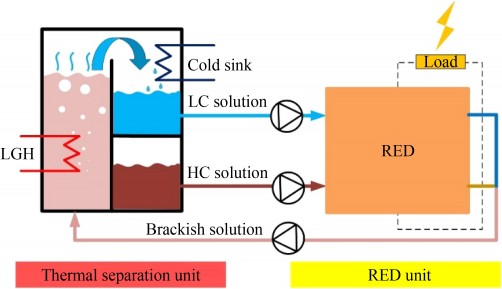
Researchers at Taiyuan University of Technology in China have developed a groundbreaking reverse electrodialysis heat engine (REDHE) that utilizes helium-gap diffusion distillation (HGDD) to enhance energy efficiency. This innovative approach aims to tackle the pressing issues of energy resource depletion and the underutilization of low-grade heat (LGH), typically below 100 °C. The findings were published in the journal Frontiers in Energy.
The study addresses the challenge of converting wasted low-grade heat into electricity through the application of REDHE technology. The integration of HGDD plays a critical role, functioning as a thermal separation unit that operates effectively at normal atmospheric pressure. This compatibility with the reverse electrodialysis (RED) process is a key advancement in the research.
Research findings indicate that by optimizing various parameters—including the molality of the cold stream, inlet temperatures, and the physical dimensions of helium gaps and stream channels—maximum energy conversion efficiency can reach 2.96%. This efficiency was achieved by reducing the helium gap thickness to 3 mm and extending the stream channels to 5 meters. Through the use of a validated mathematical model, the researchers analyzed the impacts of these parameters on the performance of the REDHE, confirming the potential role of HGDD in boosting the conversion of LGH to electricity.
The implications of this research are significant. The advancements in REDHE technology could play a crucial role in alleviating energy shortages and contributing to efforts aimed at reducing carbon emissions. According to Junyong Hu, who led the study, the focus on cleaner, intelligent control in coal and electricity generation is essential for sustainable energy practices.
This work received support from the Fundamental Research Program of Shanxi Province, China, as well as the China Postdoctoral Science Foundation. The research underscores a commitment to innovative solutions that not only improve energy efficiency but also promote environmental sustainability.
The complete study can be found in the journal Frontiers in Energy and is accessible at the following link: https://link.springer.com/article/10.1007/s11708-024-0947-3.

Easton Launches Free Business Consulting with Lehigh U. NOW!

Urgent Update: New Study Reveals Protein-Fiber Balance Crucial

NSW Government Orders Six-Hour Shutdown of Pokies After 4 AM

Chicago Remembers Deadly Our Lady of Angels Fire, 92 Lives Lost

Small Business Healthcare Gap Threatens Employee Well-being

Claret Asset Management Cuts Stake in Johnson & Johnson

Ed Sheeran and Taylor Swift Reconnect After Engagement News

Organ Transplant Waitlist Integrity Questioned Amid New Rules

Capricorn’s December 2025: A Month of Growth and Reflection

Inventor Achieves Breakthrough with 2 Billion FPS Laser Video

Community Unites for 7th Annual Into the Light Walk for Mental Health

Charlie Sheen’s New Romance: ‘Glowing’ with Younger Partner

Dua Lipa Aces GCSE Spanish, Sparks Super Bowl Buzz with Fans

Mother Fights to Reunite with Children After Kidnapping in New Drama

Former Mozilla CMO Launches AI-Driven Cannabis Cocktail Brand Fast

Tyler Technologies Set to Reveal Q3 Earnings on October 22

Curium Group, PeptiDream, and PDRadiopharma Launch Key Cancer Trial

Israel Reopens Rafah Crossing After Hostage Remains Returned
-
 Science1 month ago
Inventor Achieves Breakthrough with 2 Billion FPS Laser Video
-
 Health2 months ago
Community Unites for 7th Annual Into the Light Walk for Mental Health
-
 Top Stories2 months ago
Charlie Sheen’s New Romance: ‘Glowing’ with Younger Partner
-
 Entertainment2 months ago
Dua Lipa Aces GCSE Spanish, Sparks Super Bowl Buzz with Fans
-
 Entertainment2 months ago
Mother Fights to Reunite with Children After Kidnapping in New Drama
-
 Top Stories1 month ago
Former Mozilla CMO Launches AI-Driven Cannabis Cocktail Brand Fast
-
 Business2 months ago
Tyler Technologies Set to Reveal Q3 Earnings on October 22
-
 Health2 months ago
Curium Group, PeptiDream, and PDRadiopharma Launch Key Cancer Trial
-
 World2 months ago
Israel Reopens Rafah Crossing After Hostage Remains Returned
-

 World2 months ago
R&B Icon D’Angelo Dies at 51, Leaving Lasting Legacy
-

 Health2 months ago
North Carolina’s Biotech Boom: Billions in New Investments
-

 Entertainment2 months ago
Red Sox’s Bregman to Become Free Agent; Tigers Commit to Skubal