
World
EU Strengthens Defense Ties with Ukraine Amid Ongoing Conflict

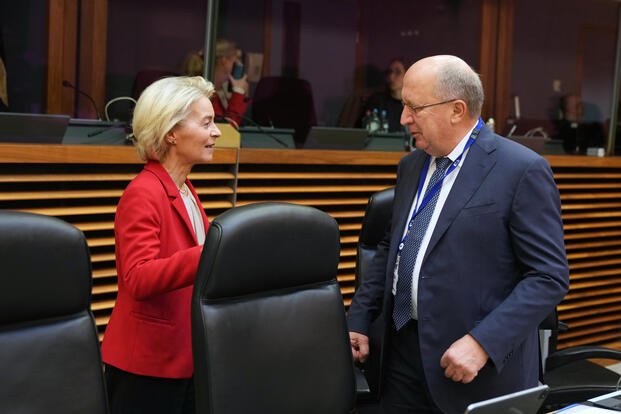
European Union lawmakers voted on October 24, 2023, to enhance the integration of the bloc’s defense industry with Ukraine. This decision comes as the United States’ peace plan remains uncertain and Russia continues its unconventional military actions, stirring concerns across the 27-nation bloc. The European Parliament approved a significant defense program valued at €1.5 billion (approximately $1.7 billion), with €300 million allocated specifically for the Ukraine Support Instrument.
In a statement following the vote, Raphaël Glucksmann, an EU lawmaker from France’s S&D party, emphasized that this program will help build a more resilient and sovereign Europe. He remarked, “This is key to making sure we can protect our democracies effectively and autonomously,” highlighting the importance of collaboration with Ukraine to develop a modern military industrial complex.
EU Defense Commissioner Andrius Kubilius addressed lawmakers before the vote, stressing that Ukraine’s defense industry requires support from the EU, while also noting that the bloc needs Ukraine’s defense innovations. He stated that integration into the EU’s Defence Investment Program would facilitate the procurement of defense equipment “in, with and for Ukraine.”
The urgency for increased defense spending is evident, as EU defense expenditures are projected to reach approximately €392 billion (over $450 billion) this year, nearly double the amount from four years ago, prior to Russia’s large-scale invasion of Ukraine on February 24, 2022. The shift in focus comes as the Trump administration has indicated a preference for prioritizing U.S. security domestically and in Asia, encouraging European nations to take more responsibility for their own defense and that of Ukraine.
Shifting Defense Landscape in Europe
Originally established to promote trade and prevent conflict, the EU is now adjusting its defense strategies in response to the ongoing war in Ukraine. The European Commission estimates that approximately €3.4 trillion (around $4 trillion) will be spent on defense over the next decade. To support this, a proposal is being developed to increase the EU’s long-term budget for defense and space to €131 billion (about $153 billion).
Kubilius remarked, “We shall be powerful geopolitically if we shall be strong in our defense, and we shall be strong in defense if we shall be strong in our defense industry.” He called for greater industrial independence and less fragmentation within the EU defense sector. Member states are being encouraged to procure military equipment from within the bloc, primarily from European suppliers, unless external sources present significant cost advantages or supply reliability.
To further support these initiatives, EU-based defense companies can apply for financial incentives, including tax breaks, to fund collaborative defense projects deemed essential for the collective security of Europe. As Kubilius explained, this approach allows for the integration of Ukrainian military innovations within the European defense industry.
New Defense Initiatives and Future Goals
Last week, the European Commission introduced a new defense package designed to facilitate the rapid deployment of tanks and troops across Europe. Additionally, the EU Defense Industry Transformation Roadmap aims to simplify and unify regulations governing the defense sector while promoting domestic production of essential military assets.
Before the vote, Kubilius shared his personal connection to the importance of a robust European defense strategy, recalling Lithuania’s experiences under Soviet occupation. He asserted, “That is why I am for a strong Europe and a strong European defense industry.”
As the EU moves forward with its enhanced defense collaboration with Ukraine, the ongoing conflict and shifting geopolitical landscape will undoubtedly shape the future of European security and military cooperation.

ChatGPT Surges to 800 Million Users in Just 3 Years!

Im Si Wan’s Viral Photos Spark Heated Debate Online

Cyber Monday 2025 Deals: Limited-Time Savings on Top Items!

SoftBank and Yaskawa Join Forces to Develop Advanced Office Robots

Analysts Set Price Target of $25.11 for Ingram Micro Shares

Winter Storm Hits Northern Pennsylvania; Drivers Urged to Stay Off Roads

Wall Street Analysts Adjust Ratings for Deere & Company Stock

Josh Brolin Reflects on Friendship with Donald Trump Before New Film

Dallas Pension Crisis Escalates as Board Rejects City’s Plan

Inventor Achieves Breakthrough with 2 Billion FPS Laser Video

Community Unites for 7th Annual Into the Light Walk for Mental Health

Charlie Sheen’s New Romance: ‘Glowing’ with Younger Partner

Dua Lipa Aces GCSE Spanish, Sparks Super Bowl Buzz with Fans

Mother Fights to Reunite with Children After Kidnapping in New Drama

Former Mozilla CMO Launches AI-Driven Cannabis Cocktail Brand Fast

Curium Group, PeptiDream, and PDRadiopharma Launch Key Cancer Trial

Tyler Technologies Set to Reveal Q3 Earnings on October 22

Israel Reopens Rafah Crossing After Hostage Remains Returned
-
 Science1 month ago
Inventor Achieves Breakthrough with 2 Billion FPS Laser Video
-
 Health2 months ago
Community Unites for 7th Annual Into the Light Walk for Mental Health
-
 Top Stories2 months ago
Charlie Sheen’s New Romance: ‘Glowing’ with Younger Partner
-
 Entertainment2 months ago
Dua Lipa Aces GCSE Spanish, Sparks Super Bowl Buzz with Fans
-
 Entertainment2 months ago
Mother Fights to Reunite with Children After Kidnapping in New Drama
-
 Top Stories1 month ago
Former Mozilla CMO Launches AI-Driven Cannabis Cocktail Brand Fast
-
 Health2 months ago
Curium Group, PeptiDream, and PDRadiopharma Launch Key Cancer Trial
-
 Business2 months ago
Tyler Technologies Set to Reveal Q3 Earnings on October 22
-
 World2 months ago
Israel Reopens Rafah Crossing After Hostage Remains Returned
-

 Health2 months ago
North Carolina’s Biotech Boom: Billions in New Investments
-

 World2 months ago
R&B Icon D’Angelo Dies at 51, Leaving Lasting Legacy
-

 Entertainment2 months ago
Red Sox’s Bregman to Become Free Agent; Tigers Commit to Skubal