
Health
Cooling-Triggered Drug Delivery System Could Revolutionize Pain Management

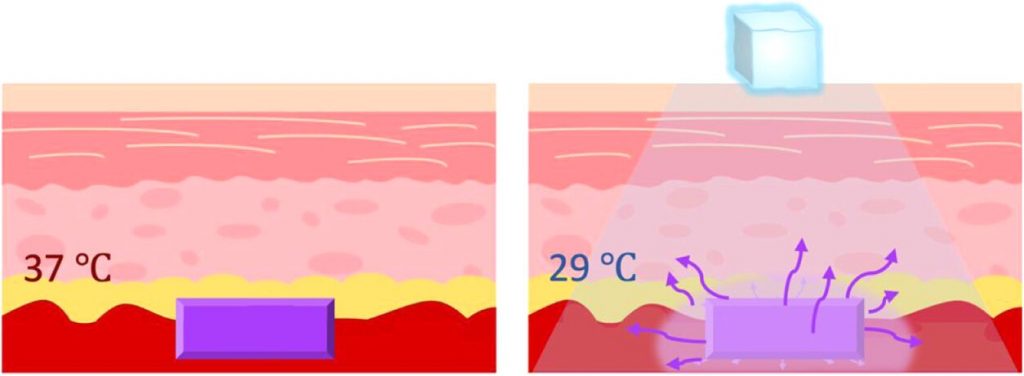
Research conducted at Vanderbilt University has led to the development of an innovative drug delivery system that could transform pain management. Led by Leon Bellan, an associate professor of mechanical and biomedical engineering, the team has created a cooling-triggered device designed to deliver medication precisely when needed. This breakthrough was detailed in a recent paper titled “Cooling-Triggered Release of Celecoxib from Implantable Alginate-Soluplus Composite Devices,” published in ACS Biomaterials Science & Engineering.
The current landscape for pain management often relies on opioids, which are associated with significant addiction risks. In fact, in the United States, five individuals die every hour from opioid-related overdoses. As a result, researchers are increasingly turning to nonsteroidal anti-inflammatory drugs (NSAIDs) such as Ibuprofen and Celecoxib as viable alternatives. NSAIDs can alleviate pain without the same addictive qualities, but a method for on-demand local delivery has been lacking.
Bellan’s team has addressed this gap by developing an implantable device that releases medication in response to a localized drop in temperature. The system, approximately the size of a watch battery, can be activated simply by applying an ice pack to the area where it is implanted. This mechanism allows for targeted pain relief without the need for complex equipment or energy input.
“Cooling can be used more broadly as an external stimulus for targeted, patient-controlled delivery of drugs for pain relief or to treat other conditions,” Bellan stated. “Unlike most other methods for external triggering of drug release, cooling does not require any energy input or complex apparatus; simple application of an ice pack to the region of interest could be sufficient to trigger release of a payload sequestered within an implanted device.”
The innovative drug delivery system utilizes a hydrogel—a sponge-like material—that liquefies upon cooling, enabling the precise release of medication to the targeted area. This feature holds significant promise for enhancing the quality of life for patients seeking pain relief, allowing them to manage their treatment more effectively.
The Bellan Lab for Advanced Materials at Vanderbilt is at the forefront of combining traditional and advanced microfabrication techniques with smart materials and biomaterials. The team is dedicated to developing engineered tissues, drug delivery platforms, and microfluidic devices that address critical biomedical challenges.
This new cooling-triggered drug delivery system may represent a pivotal advancement in pain management, potentially reducing reliance on addictive opioids while providing effective, localized treatment options. As this research progresses, it could significantly impact how patients manage pain and improve their overall health outcomes.

Alex Hall Reacts to Tyler Stanaland’s Shocking Elopement

Aurora Christian Students Engage in Urgent Mock Congress Event

Cavaliers Hit with $250K Fine for Resting Darius Garland on TV

Sandusky State Theatre Hosts Festive Community Walk Through with Santa

Cooling-Triggered Drug Delivery System Could Revolutionize Pain Management

Thomasville Planner Collaborates on Urban Revitalization in Colusa

Dallas Chefs Unite to Support Detained Cook Chih-Ming Feng

Shingles Vaccine Shows Promise in Reducing Dementia Outcomes

Investment Analysts Update Ratings for Arrow Financial Shares

Inventor Achieves Breakthrough with 2 Billion FPS Laser Video

Community Unites for 7th Annual Into the Light Walk for Mental Health

Charlie Sheen’s New Romance: ‘Glowing’ with Younger Partner

Dua Lipa Aces GCSE Spanish, Sparks Super Bowl Buzz with Fans

Mother Fights to Reunite with Children After Kidnapping in New Drama

Curium Group, PeptiDream, and PDRadiopharma Launch Key Cancer Trial

Israel Reopens Rafah Crossing After Hostage Remains Returned

Former Mozilla CMO Launches AI-Driven Cannabis Cocktail Brand Fast

Tyler Technologies Set to Reveal Q3 Earnings on October 22
-
 Science2 months ago
Inventor Achieves Breakthrough with 2 Billion FPS Laser Video
-
 Health2 months ago
Community Unites for 7th Annual Into the Light Walk for Mental Health
-
 Top Stories2 months ago
Charlie Sheen’s New Romance: ‘Glowing’ with Younger Partner
-
 Entertainment2 months ago
Dua Lipa Aces GCSE Spanish, Sparks Super Bowl Buzz with Fans
-
 Entertainment2 months ago
Mother Fights to Reunite with Children After Kidnapping in New Drama
-
 Health2 months ago
Curium Group, PeptiDream, and PDRadiopharma Launch Key Cancer Trial
-
 World2 months ago
Israel Reopens Rafah Crossing After Hostage Remains Returned
-
 Top Stories2 months ago
Former Mozilla CMO Launches AI-Driven Cannabis Cocktail Brand Fast
-
 Business2 months ago
Tyler Technologies Set to Reveal Q3 Earnings on October 22
-

 Health2 months ago
North Carolina’s Biotech Boom: Billions in New Investments
-

 World2 months ago
R&B Icon D’Angelo Dies at 51, Leaving Lasting Legacy
-

 Entertainment2 months ago
Red Sox’s Bregman to Become Free Agent; Tigers Commit to Skubal