
Health
Costume Designer Infuses Emotion in ‘Hamnet’ Through Color

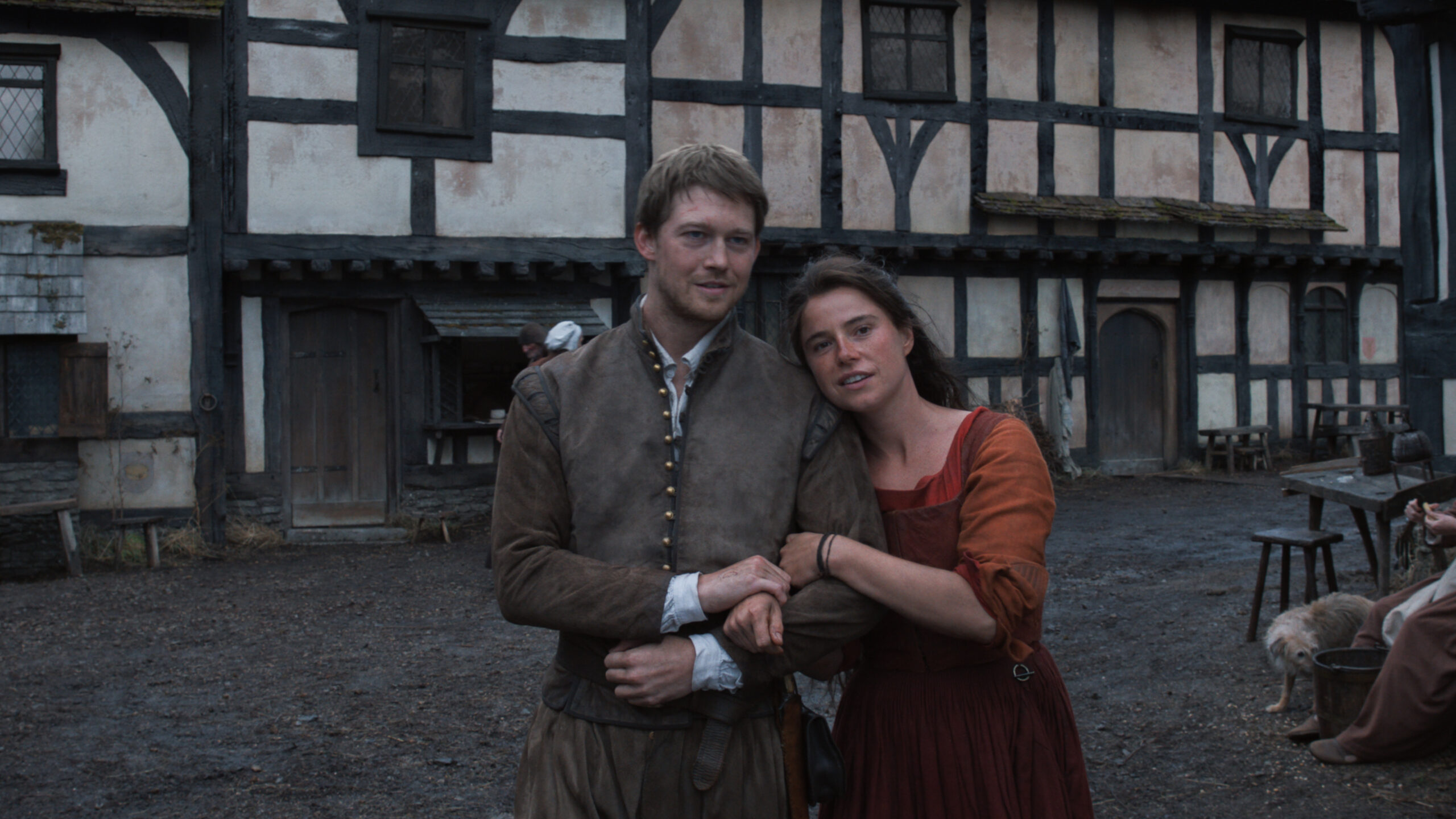
The film “Hamnet,” adapted from Maggie O’Farrell’s acclaimed novel, showcases a poignant exploration of grief, brought to life through the intricate costume design of Malgosia Turzanska. Set against the backdrop of William Shakespeare’s life, the story dives deep into the emotional turmoil experienced by Shakespeare and his wife, Agnes, portrayed by Jessie Buckley. The costumes play a vital role in reflecting the evolution of Agnes throughout the narrative, which is now screening in theaters.
The visual aesthetic of the film heavily relies on the color red, symbolizing various aspects of Agnes’s journey. Turzanska revealed, “The first image in my head was a giant beating heart muscle, throbbing and pulsing with blood.” This emphasis on blood not only serves as a metaphor for life and loss but also informs the color palette that defines Agnes’s character.
Costume Evolution Reflects Emotional Journey
The audience first encounters Agnes as a young woman clad in vibrant red bark cloth amid a forest setting. As her life transitions to motherhood, the red hues become muted, illustrating her shifting identity. Turzanska elaborates, “She’s less herself and more about her kids,” highlighting the transformation in Agnes’s character once she starts a family.
The narrative takes a dark turn with the devastating loss of their 11-year-old son, Hamnet, to the plague. Following this tragedy, Agnes’s attire darkens, mirroring her profound grief. When Shakespeare departs for London, the stark contrast in their clothing choices emphasizes their emotional distance. Turzanska describes a scene where Agnes wears a brown smock and gray bodice, while Shakespeare dons layered leathers. This sartorial divide visually represents the chasm that has formed between them.
As the story progresses, Turzanska uses various shades of red and other colors to illustrate Agnes’s emotional state. At one poignant moment, she is seen in a prune-colored skirt, which Turzanska likens to “a dried scab.” This imagery encapsulates the heartache Agnes endures as she grapples with the loss of her son.
Innovative Inspirations Behind Shakespeare’s Wardrobe
Turzanska also reimagined Shakespeare’s costumes, breaking from traditional depictions of the iconic playwright. “The images that we have in our heads were painted years after his death,” she stated, explaining that this perspective liberated her from historical constraints. Instead, Shakespeare’s clothing features Tudor elements, with emotional layers represented through the design’s pinking and slashing.
The first doublet he wears when meeting Agnes is quilted, with small slashes that grow larger following Hamnet’s death, reflecting his deteriorating mental state. For his ghostly appearance, Turzanska explored various artistic representations of “Hamlet,” ultimately drawing inspiration from a sculpture of cracked clay. This choice symbolizes Shakespeare’s raw and vulnerable state, as he is shrouded in dried clay that disintegrates, enhancing the ghostly effect.
As the film concludes, Agnes’s character evolves, signaling a return to life. When she travels to London to witness her husband’s play at the Globe Theater, she dons a dress reminiscent of one she wore during her pregnancy. Turzanska notes, “She’s going back to herself and trying to reconnect,” emphasizing the character’s journey toward healing.
Through Turzanska’s thoughtful design, “Hamnet” not only tells a story of love and loss but also underscores the powerful role that costumes play in conveying character depth and emotional resonance. The film, directed by Chloe Zhao, invites audiences to reflect on the complexities of grief and the enduring bond between a couple facing unimaginable loss.

ECB’s de Guindos Confirms Current Interest Rates Will Remain Steady

Fatal Motorcycle Crash Closes I-80 in Berkeley, Major Delays Expected

University of Arizona Identifies Immune Cell Linked to Fibrosis

Alex Singleton Shines in Comeback Game After Cancer Diagnosis

Four Arrested in Australia for Sharing Disturbing Child Abuse Material

Ethereum Could Be on the Brink of a Supercycle Despite Price Dip

George Clooney Reflects on Losing Iconic Role to Brad Pitt

Experts Reframe Lung Cancer as a Treatable Condition, Not a Stigma

Urgent Update: Fire Erupts at Indigo Apartments in OKC

Inventor Achieves Breakthrough with 2 Billion FPS Laser Video

Community Unites for 7th Annual Into the Light Walk for Mental Health

Charlie Sheen’s New Romance: ‘Glowing’ with Younger Partner

Dua Lipa Aces GCSE Spanish, Sparks Super Bowl Buzz with Fans

Mother Fights to Reunite with Children After Kidnapping in New Drama

Former Mozilla CMO Launches AI-Driven Cannabis Cocktail Brand Fast

Curium Group, PeptiDream, and PDRadiopharma Launch Key Cancer Trial

Tyler Technologies Set to Reveal Q3 Earnings on October 22

Israel Reopens Rafah Crossing After Hostage Remains Returned
-
 Science1 month ago
Inventor Achieves Breakthrough with 2 Billion FPS Laser Video
-
 Health2 months ago
Community Unites for 7th Annual Into the Light Walk for Mental Health
-
 Top Stories2 months ago
Charlie Sheen’s New Romance: ‘Glowing’ with Younger Partner
-
 Entertainment2 months ago
Dua Lipa Aces GCSE Spanish, Sparks Super Bowl Buzz with Fans
-
 Entertainment2 months ago
Mother Fights to Reunite with Children After Kidnapping in New Drama
-
 Top Stories1 month ago
Former Mozilla CMO Launches AI-Driven Cannabis Cocktail Brand Fast
-
 Health2 months ago
Curium Group, PeptiDream, and PDRadiopharma Launch Key Cancer Trial
-
 Business2 months ago
Tyler Technologies Set to Reveal Q3 Earnings on October 22
-
 World2 months ago
Israel Reopens Rafah Crossing After Hostage Remains Returned
-

 World2 months ago
R&B Icon D’Angelo Dies at 51, Leaving Lasting Legacy
-

 Health2 months ago
North Carolina’s Biotech Boom: Billions in New Investments
-

 Entertainment2 months ago
Red Sox’s Bregman to Become Free Agent; Tigers Commit to Skubal