
Health
Experts Warn of Global Crisis as Women in Prison Near One Million

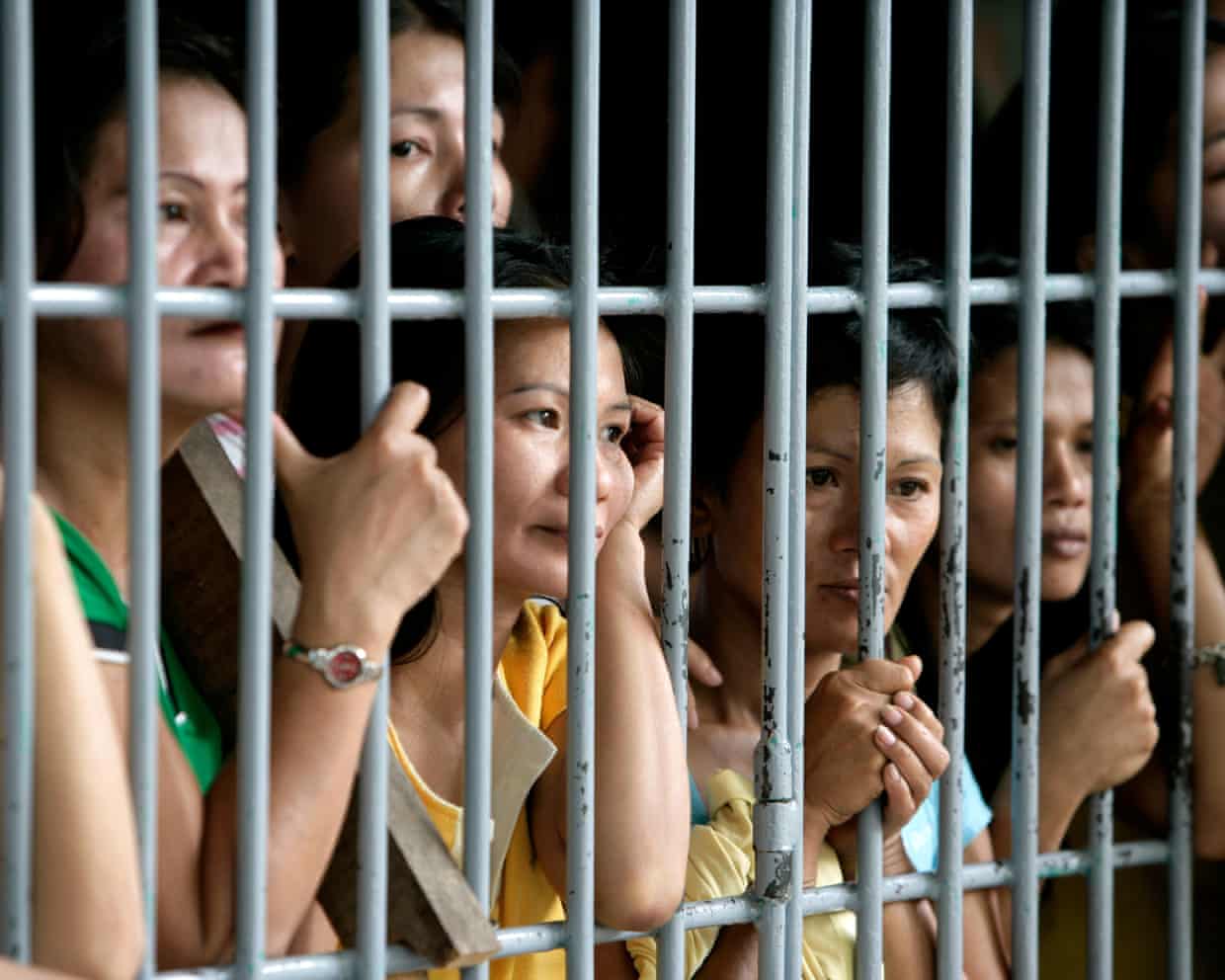
Up to one million women across the globe face sexual violence and forced labour in prisons, highlighting a troubling trend in the growing number of incarcerated women. This situation has been labelled a “global crisis” as the rate of female imprisonment is rising significantly faster than that of men. Since 2000, the number of women incarcerated has surged by 57%, while the male prison population has increased by just 22%.
Olivia Rope, executive director at Penal Reform International, stated, “We are facing a global crisis. If you look at the rate of growth compared to men in prison, it is really alarming.” She emphasized that women are often treated as an afterthought, leading to harsh and unmet needs in prison conditions.
Research conducted by The Guardian revealed harrowing accounts of abuse, including instances of women being beaten, sexually assaulted, and subjected to forced labour, often for minor offenses. These stories emerged from interviews with prisoners, lawyers, and advocates in countries such as El Salvador, Kenya, the United States, Argentina, and Iran.
In 2008, UN member states adopted the Bangkok Rules, the first international guidelines aimed at improving the treatment of women prisoners and considering alternatives to incarceration. Despite some advancements, Rope noted that many aspects of these guidelines remain neglected. “It is not acceptable that these rules are being flouted,” she asserted, adding that accountability has diminished over the past 15 years.
The increase in the female prison population can be attributed to several factors, including poverty, abuse, and discriminatory laws. Women are disproportionately incarcerated for non-violent crimes such as petty theft, often related to caring for children, begging, and involvement in the informal economy. According to the latest edition of the World Female Imprisonment List, more than 733,000 women and girls are currently imprisoned worldwide, though the true figure is likely higher due to inadequate data collection.
The United States holds the highest number of incarcerated women globally, with approximately 174,607 individuals. China follows with around 145,000 women in prisons, not including those in pre-trial or administrative detention. In England and Wales, there are 3,566 women in prison, constituting only 4% of the total prison population. As of 2020, 72% of these women were serving sentences for non-violent offences, according to the Prison Reform Trust. In Australia, the female prison population stands at 3,743, which amounts to 8% of the overall total.
Women face unique challenges within a criminal justice system primarily designed for men. A significant number of incarcerated women have a history of mental health issues and trauma. Data from the World Health Organization indicates that suicide rates among women in prison are nine times higher than those in the general population. Many female prisoners report that the prison environment exacerbates their mental health struggles.
Sabrina Mahtani, a Zambian-British lawyer and member of Women Beyond Walls, advocates for a reevaluation of current justice practices. “After 20 years of working with women in prison and seeing how this plays out across the world, I don’t think that prison works. It’s really harmful,” she stated. Mahtani emphasized that many incarcerated women pose little threat to society and urged for alternative options to incarceration.
The impact on families can be devastating. It is estimated that 1.45 million children worldwide have a mother in prison. “When a mother goes to prison, the family usually falls apart, and the children have to go to social services or other family,” Rope explained. For pregnant women, inadequate care is another serious concern, with reports of women giving birth alone in prison cells or being restrained while in labour.
Sexual violence in prisons remains pervasive, particularly in conflict-affected regions. Reports indicate that women are often sexually abused and exploited for prostitution while incarcerated. In India, female prisoners have been frequently subjected to sexual abuse, leading to numerous children born in prison.
Furthermore, many incarcerated women are forced to work for little or no pay, often performing maintenance and cleaning tasks under unregulated conditions. In Cambodia, there have been instances where women were illegally employed to produce garments for export.
Access to accurate data on female imprisonment is challenging due to the secretive nature of prisons. Helen Fair, a research fellow at the Institute for Criminal Policy Research, stated that obtaining reliable prison population figures is difficult and highlighted significant data gaps.
The situation calls for urgent attention and action to ensure the rights and needs of incarcerated women are recognized and addressed.

Long Island Faces Wintry Mix Tuesday Morning, Commute Disruption Expected

Blackhawks Surge to 5-3 Victory Over Ducks, Ending 5-Game Winless Streak

Stanford Study Reveals Urgent Shark Extinction Clues Today

Church Members Unite After Devastating Thanksgiving Fire

Brock Purdy Shines with Hip-Hop Flair in 49ers’ 26-8 Win

Repurposed Drug Shows Promise in Reversing Alzheimer’s in Mice

Rams Suffer Humbling Loss, Fall from NFC’s Top Position

Trump Promises to Release MRI Results from October Scan

Tracy Davidson Transitions to Motivational Speaking After TV Career

Inventor Achieves Breakthrough with 2 Billion FPS Laser Video

Community Unites for 7th Annual Into the Light Walk for Mental Health

Charlie Sheen’s New Romance: ‘Glowing’ with Younger Partner

Dua Lipa Aces GCSE Spanish, Sparks Super Bowl Buzz with Fans

Mother Fights to Reunite with Children After Kidnapping in New Drama

Former Mozilla CMO Launches AI-Driven Cannabis Cocktail Brand Fast

Curium Group, PeptiDream, and PDRadiopharma Launch Key Cancer Trial

Tyler Technologies Set to Reveal Q3 Earnings on October 22

Israel Reopens Rafah Crossing After Hostage Remains Returned
-
 Science1 month ago
Inventor Achieves Breakthrough with 2 Billion FPS Laser Video
-
 Health2 months ago
Community Unites for 7th Annual Into the Light Walk for Mental Health
-
 Top Stories2 months ago
Charlie Sheen’s New Romance: ‘Glowing’ with Younger Partner
-
 Entertainment2 months ago
Dua Lipa Aces GCSE Spanish, Sparks Super Bowl Buzz with Fans
-
 Entertainment2 months ago
Mother Fights to Reunite with Children After Kidnapping in New Drama
-
 Top Stories1 month ago
Former Mozilla CMO Launches AI-Driven Cannabis Cocktail Brand Fast
-
 Health2 months ago
Curium Group, PeptiDream, and PDRadiopharma Launch Key Cancer Trial
-
 Business2 months ago
Tyler Technologies Set to Reveal Q3 Earnings on October 22
-
 World2 months ago
Israel Reopens Rafah Crossing After Hostage Remains Returned
-

 World2 months ago
R&B Icon D’Angelo Dies at 51, Leaving Lasting Legacy
-

 Health2 months ago
North Carolina’s Biotech Boom: Billions in New Investments
-

 Entertainment2 months ago
Red Sox’s Bregman to Become Free Agent; Tigers Commit to Skubal