
Politics
G20 Summit in South Africa Concludes Amid U.S. Boycott

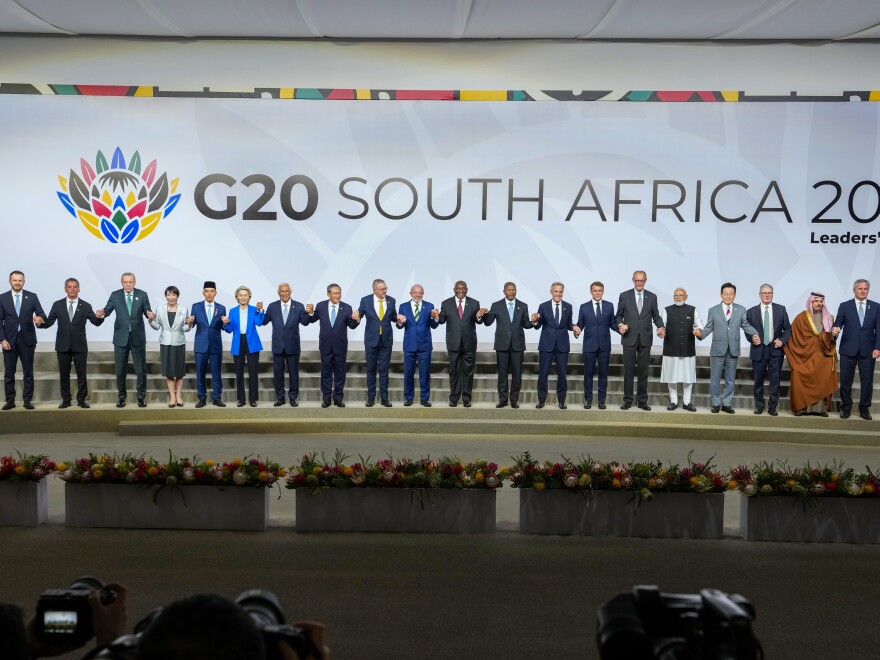
The G20 Leaders’ Summit in Johannesburg, South Africa, concluded this weekend, marked by the notable absence of the United States. This summit, the first held on the African continent, also witnessed an unusual procedural shift, as a joint declaration was issued at the beginning rather than the end of the meeting. The U.S. decision to boycott the event raised tensions, as it represented the first time a sitting American administration has opted out of this gathering of the world’s largest economies.
The Trump administration’s boycott stemmed from several factors, including accusations against the South African government regarding land confiscation and concerns over the summit’s focus on diversity, equity, and inclusion (DEI). Despite these challenges, South African Minister of International Relations, Ronald Lamola, expressed optimism at the summit’s close. “In a nutshell … this has been a great success for our country,” he stated, highlighting the significance of the event for Africa.
Significant Developments and Procedural Changes
The closing of the summit was marked by a ceremonial gavel bang from host President Cyril Ramaphosa, who declared the event officially closed. Traditionally, the outgoing chair would pass the gavel to the incoming chair, but without the U.S. president present, Ramaphosa was instructed to hand it over to a junior embassy official, a request the South African officials declined. “It’s a breach of protocol. It has never happened before,” said Ramaphosa’s spokesperson, Vincent Magwenya.
In a break from precedent, the leaders achieved a consensus on a joint declaration at the summit’s opening. Ramaphosa had previously asserted that South Africa would not be “bullied” into altering the summit’s agenda. The statement was released without U.S. input, reflecting a commitment to issues such as climate change and gender equality, which have faced criticism from the Trump administration.
White House spokesperson Anna Kelly criticized the issuance of the declaration, accusing Ramaphosa of hindering a smooth transition of the G20 presidency. Kelly indicated that President Trump looks forward to restoring legitimacy to the group during next year’s summit in Florida.
Global Reactions and Issues on the Agenda
While the summit showcased South Africa’s leadership, challenges remained evident. French President Emmanuel Macron acknowledged the divisions that persisted throughout the discussions, even as he praised Ramaphosa. The focus on developing economies was a central theme for South Africa, which sought to position the Global South at the forefront of the agenda. Nonetheless, issues such as the ongoing conflict in Ukraine and military build-up near Venezuela dominated conversations on the sidelines.
Brazilian President Luiz Inácio Lula da Silva voiced concerns regarding the U.S. military presence near Venezuela, reflecting broader geopolitical tensions that have surfaced in recent months. European leaders also expressed reservations about U.S. proposals related to Ukraine, stressing that adjustments were necessary to avoid leaving the nation vulnerable.
As the summit wrapped up, the diverse range of perspectives highlighted ongoing global challenges while underscoring the importance of multilateral dialogue. The G20 will reconvene next year under U.S. leadership, with expectations for a shift in dynamics as the Trump administration seeks to influence the agenda.

Upgrade Your Home Lab NOW: All-SSD NAS Revolutionizes Storage

Carolina Herrera Unveils Vibrant Resort 2026 Collection in New York

Bra Fitting in Melbourne Sparks Reflections on Connection

Celebrities Showcase Cartier’s Panthère: A Timeless Fashion Icon

Virtus Advisers Acquires Boston Scientific Shares Worth $157,000

Octave Bioscience Partners with Quest Diagnostics to Enhance MS Testing Access

Sepio Capital Reduces Stake in Costco by 6.8% Amid Investor Activity

Jim Chanos Warns Nvidia’s Debt Could Trigger Defaults Now

Sister Steps In to Buy Brother’s House Amid Financial Crisis

Inventor Achieves Breakthrough with 2 Billion FPS Laser Video

Community Unites for 7th Annual Into the Light Walk for Mental Health

Charlie Sheen’s New Romance: ‘Glowing’ with Younger Partner

Dua Lipa Aces GCSE Spanish, Sparks Super Bowl Buzz with Fans

Mother Fights to Reunite with Children After Kidnapping in New Drama

Former Mozilla CMO Launches AI-Driven Cannabis Cocktail Brand Fast

Curium Group, PeptiDream, and PDRadiopharma Launch Key Cancer Trial

Tyler Technologies Set to Reveal Q3 Earnings on October 22

Israel Reopens Rafah Crossing After Hostage Remains Returned
-
 Science1 month ago
Inventor Achieves Breakthrough with 2 Billion FPS Laser Video
-
 Health2 months ago
Community Unites for 7th Annual Into the Light Walk for Mental Health
-
 Top Stories2 months ago
Charlie Sheen’s New Romance: ‘Glowing’ with Younger Partner
-
 Entertainment2 months ago
Dua Lipa Aces GCSE Spanish, Sparks Super Bowl Buzz with Fans
-
 Entertainment2 months ago
Mother Fights to Reunite with Children After Kidnapping in New Drama
-
 Top Stories1 month ago
Former Mozilla CMO Launches AI-Driven Cannabis Cocktail Brand Fast
-
 Health2 months ago
Curium Group, PeptiDream, and PDRadiopharma Launch Key Cancer Trial
-
 Business2 months ago
Tyler Technologies Set to Reveal Q3 Earnings on October 22
-
 World2 months ago
Israel Reopens Rafah Crossing After Hostage Remains Returned
-

 World2 months ago
R&B Icon D’Angelo Dies at 51, Leaving Lasting Legacy
-

 Health2 months ago
North Carolina’s Biotech Boom: Billions in New Investments
-

 Health2 months ago
YouTube Launches New Mental Health Tools for Teen Users