
Politics
Trump Reports Positive Meeting Between Kushner, Witkoff and Putin

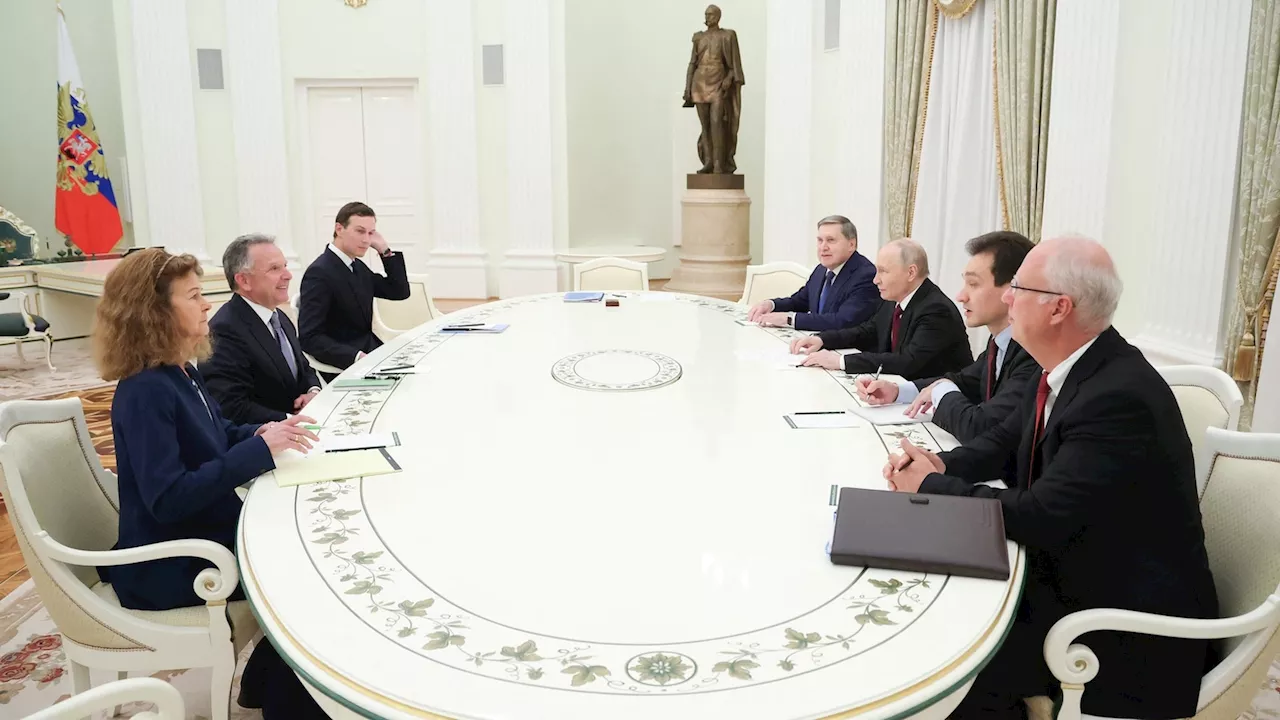
U.S. President Donald Trump stated that a meeting held on December 2, 2025, between U.S. Special Envoy Steve Witkoff, Trump’s son-in-law Jared Kushner, and Russian President Vladimir Putin was “reasonably good,” although it did not yield any immediate breakthroughs. The meeting took place in the Kremlin, where discussions reportedly focused on ending the ongoing conflict in Ukraine.
Trump described the Kremlin’s position as uncertain, saying, “What comes out of that meeting? I can’t tell you.” He emphasized that both sides need to be willing to negotiate for any progress to occur. “It takes two to tango,” he remarked, suggesting that while Putin might be inclined to reach an agreement, the path to peace remains complex.
During the meeting, Trump noted that the impression given by Putin was a desire to conclude the war, which he referred to as a conflict that “should have never been started.” Trump elaborated that Putin is interested in returning to normalcy and resuming trade with the United States, rather than continuing to suffer military losses.
In a significant development following the Moscow meeting, Witkoff and Kushner have invited Rustem Umerov, Secretary of the Ukrainian National Security and Defense Council, to Miami for further discussions on peace. This initiative indicates a commitment to continued dialogue, even in the absence of a formal agreement.
Details of the Negotiation
The discussions involved lengthy negotiations where the U.S. delegation presented four documents outlining Washington’s proposals for peace. Despite the lack of a conclusive deal, both sides acknowledged that some American proposals were seen as potentially acceptable, as stated by Yuri Ushakov, Putin’s top foreign policy aide. Ushakov confirmed that while there were points of contention, the meeting was deemed “very useful.”
Ukrainian President Volodymyr Zelenskyy responded to the Moscow meeting by indicating that Ukrainian negotiators would meet with European leaders to assess the situation and prepare for discussions with U.S. envoys. The complexity of the peace process remains evident, with critical issues such as territorial concessions and security guarantees still unresolved.
In recent comments, Marco Rubio, U.S. Secretary of State, indicated that while “some progress” had been made on a truce proposal, significant obstacles remain, particularly regarding Russia’s insistence on a complete withdrawal of Ukrainian forces from the Donbas region. Ukraine has consistently rejected the idea of ceding territory.
Challenges Ahead
Geopolitical analysts assert that the success of any peace plan hinges on the Kremlin’s willingness to compromise. John Hardie, Deputy Director at the Foundation for Defense of Democracies, highlighted that without significant concessions from Russia, a lasting peace remains elusive. He urged the U.S. to collaborate with allies to enhance diplomatic and economic pressure on Moscow.
Rubio emphasized the importance of both Ukraine and Russia finding common ground, stating, “Ultimately, it’s going to be up to them.” He praised Trump’s role as a mediator, suggesting that his unique position could facilitate a deal if both parties are willing.
In a broader context, experts like Michael Froman, president of the Council on Foreign Relations, expressed skepticism about Putin’s intentions, suggesting that the Russian leader may prefer a prolonged negotiation process while continuing military operations in Ukraine.
As the situation develops, the international community will closely monitor the outcomes of the ongoing discussions and the potential for a resolution to a conflict that has persisted for nearly four years.

Former Russian General Slams Intelligence, Issues Failing Grade

Urgent: Social Media Friendship Confusion Sparks Emotional Debate

Honolulu Honors Spencer Allen and Alakai Hudgens for Heroic Rescue

Trump Reports Positive Meeting Between Kushner, Witkoff and Putin

Scientists Unveil ‘OCTOID,’ a Color-Changing Soft Robot

Washington Dominates San Jose with 7-1 Victory in NHL Match

Delta Air Lines Projects $200 Million Loss Due to Shutdown

Solana Blockchain Fuels Growth as Kalshi Launches New Contracts

Min Hee Jin Addresses Ongoing Lawsuits with HYBE in Urgent Broadcast

Inventor Achieves Breakthrough with 2 Billion FPS Laser Video

Community Unites for 7th Annual Into the Light Walk for Mental Health

Charlie Sheen’s New Romance: ‘Glowing’ with Younger Partner

Dua Lipa Aces GCSE Spanish, Sparks Super Bowl Buzz with Fans

Curium Group, PeptiDream, and PDRadiopharma Launch Key Cancer Trial

Mother Fights to Reunite with Children After Kidnapping in New Drama

Tyler Technologies Set to Reveal Q3 Earnings on October 22

Israel Reopens Rafah Crossing After Hostage Remains Returned

Former Mozilla CMO Launches AI-Driven Cannabis Cocktail Brand Fast
-
 Science2 months ago
Inventor Achieves Breakthrough with 2 Billion FPS Laser Video
-
 Health2 months ago
Community Unites for 7th Annual Into the Light Walk for Mental Health
-
 Top Stories2 months ago
Charlie Sheen’s New Romance: ‘Glowing’ with Younger Partner
-
 Entertainment2 months ago
Dua Lipa Aces GCSE Spanish, Sparks Super Bowl Buzz with Fans
-
 Health2 months ago
Curium Group, PeptiDream, and PDRadiopharma Launch Key Cancer Trial
-
 Entertainment2 months ago
Mother Fights to Reunite with Children After Kidnapping in New Drama
-
 Business2 months ago
Tyler Technologies Set to Reveal Q3 Earnings on October 22
-
 World2 months ago
Israel Reopens Rafah Crossing After Hostage Remains Returned
-
 Top Stories2 months ago
Former Mozilla CMO Launches AI-Driven Cannabis Cocktail Brand Fast
-

 Health2 months ago
North Carolina’s Biotech Boom: Billions in New Investments
-

 World2 months ago
R&B Icon D’Angelo Dies at 51, Leaving Lasting Legacy
-
 Entertainment2 months ago
Red Sox’s Bregman to Become Free Agent; Tigers Commit to Skubal