
Science
Blue Origin Progresses in Certification for National Security Launches

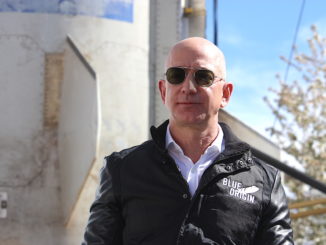
Blue Origin is advancing in its certification process to launch national security missions, with the company currently halfway through a four-launch path for its New Glenn rocket. This announcement came during a briefing at the Space Force Association’s annual SpacePower Conference, where Lt. Gen. Philip Garrant, Commander of the U.S. Space Force’s Space Systems Command (SSC), confirmed the company’s progress.
The New Glenn rocket has successfully completed two of its four required launches, with the second flight in 2025 resulting in the successful recovery of its first stage booster, known as Glenn Stage 1 (GS1). Garrant expressed optimism regarding Blue Origin’s trajectory, stating, “So two out of the four have been successful, and we’re working very closely and anticipating a third launch earlier in the new year than later. If that goes well, and they get that fourth one on, I think they’re going to be in a fantastic place to become our third certified provider and compete for missions.”
In April 2025, the SSC announced that Blue Origin, alongside SpaceX and United Launch Alliance (ULA), was selected as one of the three companies qualified to launch payloads for the government’s national security needs. Officially designated as NSSL Phase 3 Lane 2, SpaceX was awarded approximately 60 percent of the missions, while ULA secured about 40 percent. Blue Origin, as the newest player in the orbital launch sector, is set to conduct seven missions under this contract once it achieves certification.
After completing the necessary certification flights, Garrant noted there would be a review process before Blue Origin receives the formal approval to launch national security payloads. “It’s a collaborative effort with the government and the launch service provider. So absolutely, after the fourth launch, it won’t be like the next day they get certified,” he explained. “There’ll be a significant amount of review, but at the same time, we won’t take a long time. If the next two flights go as well as the first two flights go, I anticipate timely and quick certification.”
The certification process has undergone some evolution over the years, but the foundational elements remain consistent. Tom Martin, Senior Director of National Security Programs at Blue Origin, spoke at the conference on the importance of adapting the certification process to the evolving capabilities of launch providers. He expressed hope that improvements in technology could lead to a more flexible certification framework, allowing for the onboarding of new capabilities more smoothly.
Recently, Blue Origin also introduced a super-heavy lift version of the New Glenn rocket, featuring nine BE-4 engines instead of the current seven. This innovation is expected to enhance the rocket’s launch capacity and further solidify Blue Origin’s position in the competitive landscape of space exploration and national security missions.
As Blue Origin continues its efforts towards certification, the implications for national security payloads could be significant, providing the U.S. government with additional options for its crucial space missions.

Avalanche Safety Courses Launch on Western Slope for Winter 2023

Husteel Supports Splendora Police’s Blue Santa Toy Drive

NYC Unveils $1 Billion Revitalization Plan for Coney Island

Scientists Develop Microrobot for Future Medical Applications

Justin Jefferson and Key DFS Picks for Week 15 Showdown

Israel Airstrike Kills Hamas Commander Raad Saad in Gaza

Silver Prices Surge, Analysts Predict Potential Peak Ahead

Leaked Memo Reveals VA Plans to Cut 35,000 Jobs, Urging Concern

Central Florida Braces for Warm Day with Chance of Storms

Inventor Achieves Breakthrough with 2 Billion FPS Laser Video

Community Unites for 7th Annual Into the Light Walk for Mental Health

Charlie Sheen’s New Romance: ‘Glowing’ with Younger Partner

Dua Lipa Aces GCSE Spanish, Sparks Super Bowl Buzz with Fans

Curium Group, PeptiDream, and PDRadiopharma Launch Key Cancer Trial

Former Mozilla CMO Launches AI-Driven Cannabis Cocktail Brand Fast

Israel Reopens Rafah Crossing After Hostage Remains Returned

Mother Fights to Reunite with Children After Kidnapping in New Drama

R&B Icon D’Angelo Dies at 51, Leaving Lasting Legacy
-
 Science2 months ago
Inventor Achieves Breakthrough with 2 Billion FPS Laser Video
-
 Health2 months ago
Community Unites for 7th Annual Into the Light Walk for Mental Health
-
 Top Stories2 months ago
Charlie Sheen’s New Romance: ‘Glowing’ with Younger Partner
-
 Entertainment2 months ago
Dua Lipa Aces GCSE Spanish, Sparks Super Bowl Buzz with Fans
-
 Health2 months ago
Curium Group, PeptiDream, and PDRadiopharma Launch Key Cancer Trial
-
 Top Stories2 months ago
Former Mozilla CMO Launches AI-Driven Cannabis Cocktail Brand Fast
-
 World2 months ago
Israel Reopens Rafah Crossing After Hostage Remains Returned
-
 Entertainment2 months ago
Mother Fights to Reunite with Children After Kidnapping in New Drama
-
 World2 months ago
R&B Icon D’Angelo Dies at 51, Leaving Lasting Legacy
-

 Business2 months ago
Tyler Technologies Set to Reveal Q3 Earnings on October 22
-

 Health2 months ago
YouTube Launches New Mental Health Tools for Teen Users
-

 Health2 months ago
North Carolina’s Biotech Boom: Billions in New Investments