
Science
Earth’s Magnetic Field Moves: Implications for Technology and Life

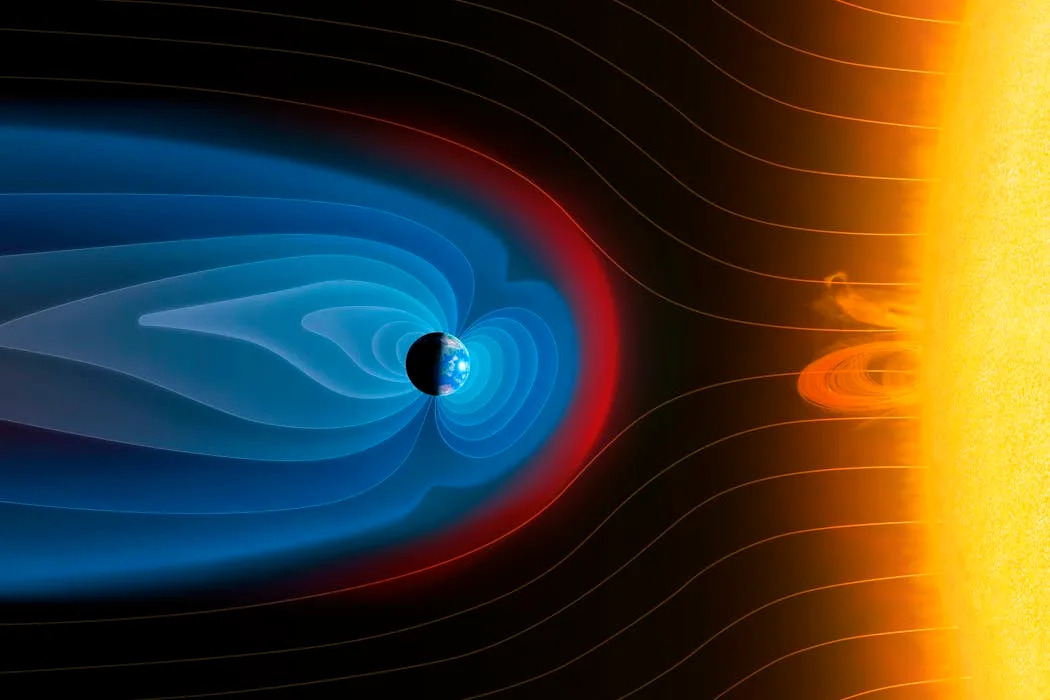
The Earth’s magnetic field is a vital protector against harmful radiation and geomagnetic disruptions that can impact satellite communication and power grids. Recent research indicates that the north magnetic pole has shifted significantly, moving roughly 600 miles (965 kilometers) since the first measurements were recorded in 1831. This change has raised questions among scientists about the potential for a magnetic field reversal, where the magnetic poles switch places.
The Earth’s magnetic field operates like a shield, known as the magnetosphere, which deflects high-energy cosmic rays generated by stellar explosions. It also interacts with solar wind, a stream of charged particles released from the Sun. This interaction can lead to “space weather,” which typically remains mild but can escalate during events such as coronal mass ejections. These massive bursts of solar material can trigger geomagnetic storms that pose risks to satellites and astronauts, as well as disrupt GPS and power systems.
Understanding Magnetic Field Dynamics
The movement of the magnetic poles, particularly the north pole, has accelerated from about 10 miles per year to 34 miles per year (approximately 16 kilometers to 54 kilometers). This rapid migration might suggest the onset of a field reversal, a process that can unfold over thousands of years. According to scientists, the magnetic field reverses on a geological timescale ranging from 100,000 to 1,000,000 years.
Ofer Cohen, a physicist at the University of Massachusetts Lowell, explains that while the gradual movement of the north magnetic pole is not alarming, a complete reversal could have significant implications for Earth’s climate and technological infrastructure. The changes in the magnetic field could expose the planet to higher levels of cosmic radiation, potentially affecting the ozone layer and altering atmospheric conditions.
The generation of Earth’s magnetic field stems from the movement of electric charges within its liquid iron core. This core acts as a conductor, allowing currents to flow and produce the magnetic field. Other planets, such as Jupiter, also possess magnetic fields due to similar processes, where layers of conducting material generate magnetic effects.
The Future of Earth’s Magnetic Field
Scientists utilize a combination of local measurements and models to monitor the shape and orientation of the magnetic field. The north magnetic pole’s rapid movement has prompted researchers to assess the potential for a reversal. Although they have less than 200 years of data on this phenomenon, insights gained from studying volcanic rocks in the ocean—which preserve the orientation of the magnetic field when formed—offer valuable clues about historical changes.
While the exact timing of the next reversal remains uncertain, ongoing tracking of the magnetic field’s movement is essential. A reversal could reshape the magnetosphere’s orientation, potentially exposing Earth to increased cosmic radiation and impacting various technological systems. As researchers continue to map this dynamic field, understanding its implications is crucial for preparing for any future challenges it may pose to life on Earth.
This article draws upon the work of Ofer Cohen, whose research contributes to our understanding of the intricate relationship between the Earth’s magnetic field and cosmic phenomena.

Macron Warns of Tariffs on China in Urgent Trade Stand-off

AM4 Gaming Combos Break Through 2026 Hardware Barriers Now

Walmart Slashes Price on 32-Piece Cookware Set to $79 NOW!

Kremlin Praises Trump’s “Strong” Strategy Amid Ukraine Talks

Create Gourmet Meals at Home with Affordable Pantry Staples

EUR/USD Holds Steady at 1.1650 Amid US Data and ECB Concerns

Six Spicy Book Adaptations Set to Heat Up Your Screens

Virtual Program Targets Lymphoma Treatment Side Effects

Jabari Walker Embraces Veteran Influence with Sixers

Inventor Achieves Breakthrough with 2 Billion FPS Laser Video

Community Unites for 7th Annual Into the Light Walk for Mental Health

Charlie Sheen’s New Romance: ‘Glowing’ with Younger Partner

Dua Lipa Aces GCSE Spanish, Sparks Super Bowl Buzz with Fans

Curium Group, PeptiDream, and PDRadiopharma Launch Key Cancer Trial

Former Mozilla CMO Launches AI-Driven Cannabis Cocktail Brand Fast

Mother Fights to Reunite with Children After Kidnapping in New Drama

Israel Reopens Rafah Crossing After Hostage Remains Returned

Tyler Technologies Set to Reveal Q3 Earnings on October 22
-
 Science2 months ago
Inventor Achieves Breakthrough with 2 Billion FPS Laser Video
-
 Health2 months ago
Community Unites for 7th Annual Into the Light Walk for Mental Health
-
 Top Stories2 months ago
Charlie Sheen’s New Romance: ‘Glowing’ with Younger Partner
-
 Entertainment2 months ago
Dua Lipa Aces GCSE Spanish, Sparks Super Bowl Buzz with Fans
-
 Health2 months ago
Curium Group, PeptiDream, and PDRadiopharma Launch Key Cancer Trial
-
 Top Stories2 months ago
Former Mozilla CMO Launches AI-Driven Cannabis Cocktail Brand Fast
-
 Entertainment2 months ago
Mother Fights to Reunite with Children After Kidnapping in New Drama
-
 World2 months ago
Israel Reopens Rafah Crossing After Hostage Remains Returned
-
 Business2 months ago
Tyler Technologies Set to Reveal Q3 Earnings on October 22
-

 World2 months ago
R&B Icon D’Angelo Dies at 51, Leaving Lasting Legacy
-

 Health2 months ago
North Carolina’s Biotech Boom: Billions in New Investments
-

 Entertainment2 months ago
Red Sox’s Bregman to Become Free Agent; Tigers Commit to Skubal