
Science
Mars Missions Impacted by Time Dilation: An In-Depth Analysis

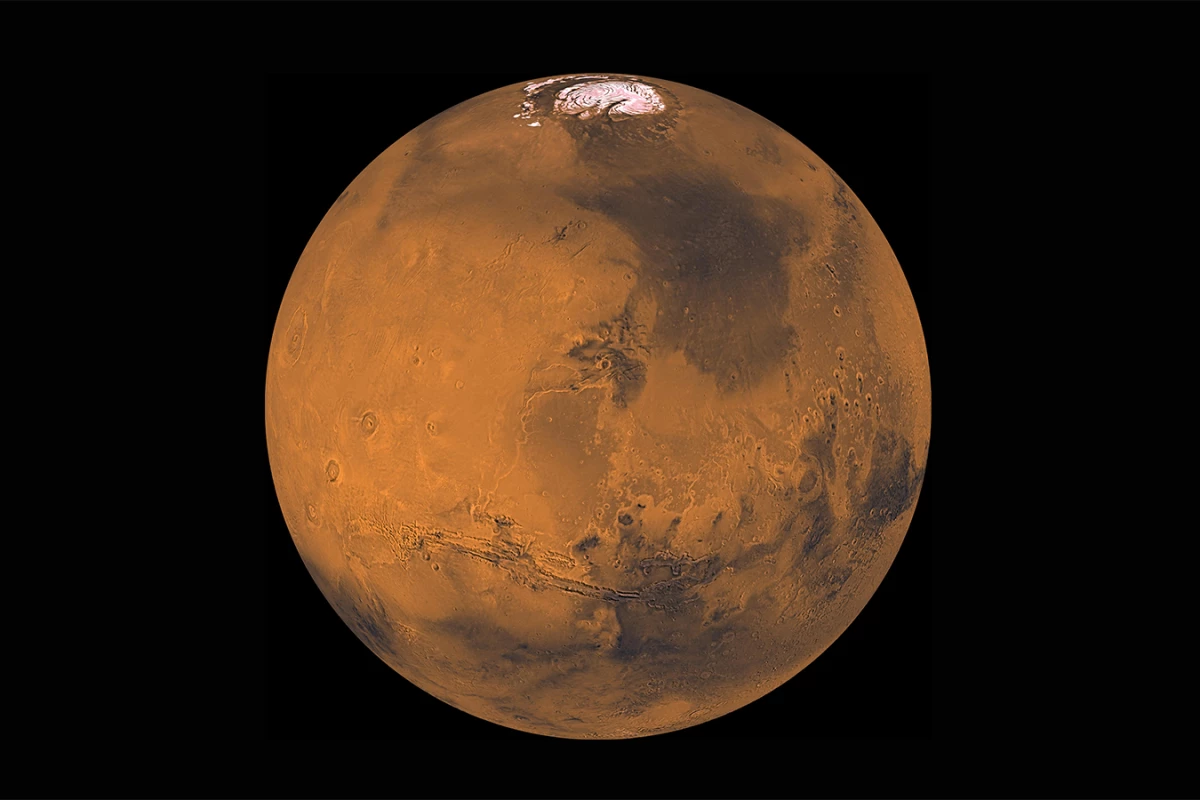
Traveling to Mars presents unique challenges, including how time is experienced relative to Earth. Research conducted by scientists at the National Institute of Standards and Technology (NIST) reveals that time on Mars progresses approximately 477 microseconds faster per day than on our home planet. This effect, rooted in Albert Einstein‘s Theory of Relativity, underscores the complexity of future human missions to the Red Planet.
Understanding this phenomenon requires a grasp of time dilation, which describes how time can pass at different rates depending on speed and gravitational influence. For example, when Neil Ashby and his colleague Bijunath Patla analyzed the implications of time dilation for Mars, they found that it is significantly more complex than calculations for the Moon.
Gravity and Motion: The Mars Calculations
The calculations for time on Mars are challenging due to the interplay of multiple gravitational forces. Unlike the Moon, where only the Earth, Moon, and Sun’s gravity need to be considered, Mars presents a four-body problem. The variable speed of Mars along its elliptical orbit adds another layer of intricacy.
The research team determined that time on Mars runs faster due to its distance from Earth’s gravitational influence. As a result, the discrepancy translates to an error of approximately 89 miles (143 kilometers) per day in navigation systems if not corrected. This dynamic nature of Mars’ orbit complicates the necessary adjustments for any future communication systems designed to support human colonies.
Implications for Future Exploration
As space exploration advances, the need for precise timekeeping becomes increasingly crucial. The NIST findings indicate that time on Mars does not remain constant throughout the Martian year. Fluctuations of up to 266 microseconds must be accounted for, creating a complex web of calculations for effective communication and navigation.
The implications of these findings extend beyond just theoretical physics. They are pivotal for ensuring that astronauts have accurate information while navigating on Mars. Ashby emphasized the significance of this research, stating, “It’s good to know for the first time what is happening on Mars timewise.”
This understanding not only enhances our grasp of the theory of relativity but also lays the groundwork for tackling the practical challenges of living and working on another planet. As humanity prepares for more ambitious missions to Mars, the insights gained from this research will be instrumental in shaping the future of interplanetary travel.
The study, published in The Astronomical Journal, highlights the importance of integrating these complex calculations into the design of navigation systems for Mars missions. As we look towards the stars, understanding the fundamental nature of time will remain a critical aspect of our exploration efforts.

Trump’s Pardon of Cuellar Sparks Outcry Over Justice Erosion

Urgent Debate Erupts Over Dallas City Hall’s Future Amid Calls to Sell

Urgent Advice: Navigating Friendships and Holiday Gift Dilemmas

Woman Struggles with Returning to Church After 15-Year Hiatus

Majority of Massachusetts Parents Support Proposed Cellphone Ban

Mars Missions Impacted by Time Dilation: An In-Depth Analysis

West Rowan Falcons Remain Undefeated with 51-43 Win Over Statesville

Victorian Premier Issues Historic Apology to First Peoples

iShares iBonds Dec 2026 ETF Sees Mid-Day Trading Surge

Inventor Achieves Breakthrough with 2 Billion FPS Laser Video

Community Unites for 7th Annual Into the Light Walk for Mental Health

Charlie Sheen’s New Romance: ‘Glowing’ with Younger Partner

Dua Lipa Aces GCSE Spanish, Sparks Super Bowl Buzz with Fans

Curium Group, PeptiDream, and PDRadiopharma Launch Key Cancer Trial

Former Mozilla CMO Launches AI-Driven Cannabis Cocktail Brand Fast

Mother Fights to Reunite with Children After Kidnapping in New Drama

Israel Reopens Rafah Crossing After Hostage Remains Returned

Tyler Technologies Set to Reveal Q3 Earnings on October 22
-
 Science2 months ago
Inventor Achieves Breakthrough with 2 Billion FPS Laser Video
-
 Health2 months ago
Community Unites for 7th Annual Into the Light Walk for Mental Health
-
 Top Stories2 months ago
Charlie Sheen’s New Romance: ‘Glowing’ with Younger Partner
-
 Entertainment2 months ago
Dua Lipa Aces GCSE Spanish, Sparks Super Bowl Buzz with Fans
-
 Health2 months ago
Curium Group, PeptiDream, and PDRadiopharma Launch Key Cancer Trial
-
 Top Stories2 months ago
Former Mozilla CMO Launches AI-Driven Cannabis Cocktail Brand Fast
-
 Entertainment2 months ago
Mother Fights to Reunite with Children After Kidnapping in New Drama
-
 World2 months ago
Israel Reopens Rafah Crossing After Hostage Remains Returned
-
 Business2 months ago
Tyler Technologies Set to Reveal Q3 Earnings on October 22
-

 World2 months ago
R&B Icon D’Angelo Dies at 51, Leaving Lasting Legacy
-

 Health2 months ago
North Carolina’s Biotech Boom: Billions in New Investments
-

 Health2 months ago
YouTube Launches New Mental Health Tools for Teen Users