
Science
NASA Enhances Robot Navigation in Space Using Digital Twins

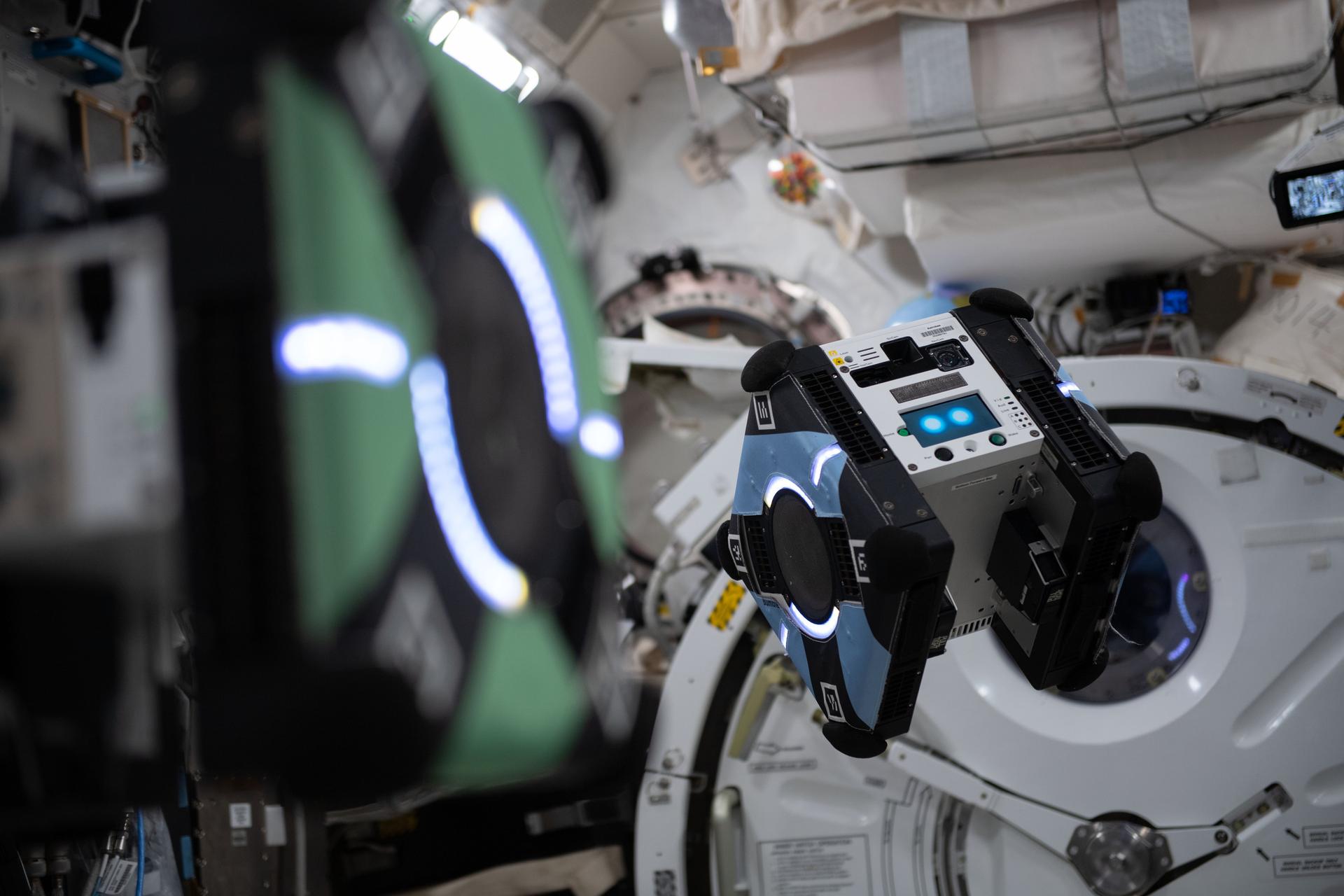
The National Aeronautics and Space Administration (NASA) has made significant strides in improving the navigation capabilities of its autonomous robots aboard the International Space Station (ISS). Through collaboration with Professor Pyojin Kim and his team at the Gwangju Institute of Science and Technology (GIST), NASA has developed a new algorithm that reduces navigation errors, allowing robots to operate effectively without constant human intervention.
This breakthrough addresses a critical issue in space exploration: terrestrial tools often fail in a microgravity environment. For instance, a standard ballpoint pen cannot write in space due to the lack of gravity, illustrating how even simple tools can become ineffective. Similarly, NASA’s free-flying robots, like Astrobee, frequently lost their orientation, leading to astronauts needing to recalibrate them and interrupt their work.
Finding Solutions in Space
Professor Kim’s team has introduced an innovative approach to robot navigation that leverages Visual-Based Navigation (VBN). Traditional navigation systems, reliant on gravity and inertial measurement units, struggle in the weightlessness of space. As Professor Kim notes, “Terrestrial navigation algorithms are designed based on gravity, making them difficult to apply directly in space where reference points are missing.” This limitation caused errors to accumulate over time, leading to significant disorientation for the robots.
To combat this issue, the researchers created a digital twin—a precise 3D replica of the ISS’s interior. By using NASA’s blueprints, they constructed a virtual model devoid of clutter, allowing robots to accurately compare real-time camera footage with the pristine images generated by the digital twin. This method effectively filters out visual noise, enabling the robot to recalibrate its position with greater accuracy.
The implementation of this digital twin technology resulted in a 1.43-degree average rotational error, a remarkable improvement that remains consistent over time. As a result, robots like Astrobee can now complete their tasks independently, freeing astronauts to focus on their essential research activities.
Broader Implications for Robotics
Professor Kim believes that the advancements made through this NASA collaboration have applications beyond space. The same visual-based orientation techniques could be utilized for drones and robots in indoor environments on Earth, where GPS signals are unreliable. “Orientation techniques based on these structural features are applicable not only to space stations but also to typical urban settings,” he stated.
The economic significance of space exploration has grown, with private companies like SpaceX revolutionizing the industry. Professor Kim emphasized the importance of NASA’s foundational role in this evolving landscape, explaining, “NASA remains the silent partner behind this private-sector explosion.” He highlighted that the agency’s decades of technology and expertise lay the groundwork for emerging startups in various sectors, including lunar mining and satellite assembly.
With a background in drone technology, Professor Kim’s journey into this collaboration was serendipitous. His internship at the NASA Ames Research Center during his doctoral studies provided valuable insights into the challenges of developing Astrobee. Researchers utilized air-bearing tables to simulate microgravity and rigorously tested the robot’s navigation capabilities.
Reflecting on his experience, Professor Kim noted NASA’s unique approach to failure, stating, “Behind every public triumph lie dozens of quiet failures.” He emphasized that the agency’s commitment to pursuing bold experiments is crucial for achieving breakthroughs.
This attitude towards research and innovation has fostered a robust ecosystem of manufacturers specializing in space-grade components, which can withstand extreme conditions. Such infrastructure not only aids NASA but also supports a wave of startups initiated by its alumni.
For those aspiring to join NASA, Professor Kim advises a focus on academic excellence, particularly in mathematics. He acknowledged that while dreaming big is essential, achieving those dreams requires hard work and competence. “The door to the global stage is always open,” he said, encouraging future researchers to build their skills diligently.
The collaboration between NASA and Professor Kim’s team exemplifies the potential for innovative solutions in space exploration. As technology continues to advance, the implications of these developments will likely extend far beyond the ISS, influencing the future of robotics both on Earth and in orbit.

How Renaissance Amputation Techniques Shaped Modern Medicine

BYU’s 1984 Holiday Bowl Triumph Redefined College Football

Israel Approves 19 New Settlements in West Bank, Raising Tensions

Invesco Dorsey Wright Technology ETF Surges Past 50-Day Average

Munetaka Murakami Signs Urgent $34M Deal with Chicago White Sox

Urgent Update: Jet-Setting Superstar Spotted at LAX Ahead of Major Event

56-Year-Old Woman Moves to France, Finds New Life Amid Challenges

Griffith Man Faces Decades in Prison After Violent Burglary

U.S. Capital Wealth Advisors Increases Exxon Mobil Stake by 3.3%

Inventor Achieves Breakthrough with 2 Billion FPS Laser Video

Charlie Sheen’s New Romance: ‘Glowing’ with Younger Partner

Community Unites for 7th Annual Into the Light Walk for Mental Health

Dua Lipa Aces GCSE Spanish, Sparks Super Bowl Buzz with Fans

Curium Group, PeptiDream, and PDRadiopharma Launch Key Cancer Trial

Former Mozilla CMO Launches AI-Driven Cannabis Cocktail Brand Fast

Mother Fights to Reunite with Children After Kidnapping in New Drama

R&B Icon D’Angelo Dies at 51, Leaving Lasting Legacy

Israel Reopens Rafah Crossing After Hostage Remains Returned
-
 Science2 months ago
Inventor Achieves Breakthrough with 2 Billion FPS Laser Video
-
 Top Stories2 months ago
Charlie Sheen’s New Romance: ‘Glowing’ with Younger Partner
-
 Health2 months ago
Community Unites for 7th Annual Into the Light Walk for Mental Health
-
 Entertainment2 months ago
Dua Lipa Aces GCSE Spanish, Sparks Super Bowl Buzz with Fans
-
 Health2 months ago
Curium Group, PeptiDream, and PDRadiopharma Launch Key Cancer Trial
-
 Top Stories2 months ago
Former Mozilla CMO Launches AI-Driven Cannabis Cocktail Brand Fast
-
 Entertainment2 months ago
Mother Fights to Reunite with Children After Kidnapping in New Drama
-
 World2 months ago
R&B Icon D’Angelo Dies at 51, Leaving Lasting Legacy
-
 World2 months ago
Israel Reopens Rafah Crossing After Hostage Remains Returned
-

 Business2 months ago
Tyler Technologies Set to Reveal Q3 Earnings on October 22
-

 Health2 months ago
YouTube Launches New Mental Health Tools for Teen Users
-
 Health2 months ago
North Carolina’s Biotech Boom: Billions in New Investments