
Science
New Framework Models Emotion as a Driving Force in Society

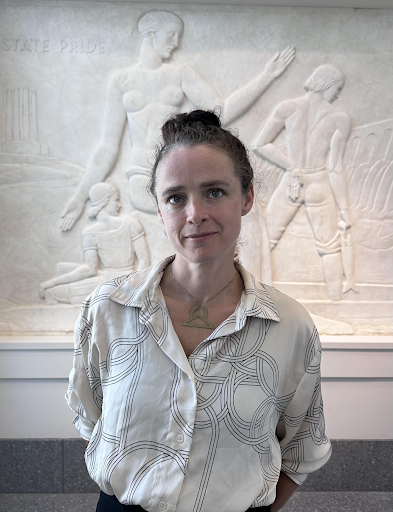
The perception of intelligence is rapidly evolving, as new research highlights the crucial role of emotion in shaping societal systems. Anaïs Daly, an artist and researcher, argues that understanding emotion is vital to the future of technology, institutions, and interpersonal communication. Her work emphasizes that emotional dynamics often influence outcomes long before data does, making it essential to model these forces effectively.
Daly’s exploration, termed Affective Ontology, seeks to quantify emotional states through a structured framework, drawing parallels to scientific advancements in other fields. She references the revolution in chemistry initiated by Henry Moseley in 1913, who reordered the periodic table by atomic numbers rather than intuitive groupings. This shift enhanced predictive capabilities, a principle Daly aims to apply to the understanding of emotions.
The foundation of Daly’s work is a newly proposed system, the Periodic Table of Affect, which organizes emotions based on a hedonic number. This number is calculated from various parameters, including frequency, intensity, relational impact, and decay profiles. By categorizing emotions as elemental units, Daly envisions a model where emotions can interact and influence each other similarly to chemical reactions.
To further analyze how emotions operate within systems, Daly employs the concept of wave functions. This approach allows for tracking the oscillation, duration, and reach of emotional events across networks. By identifying specific event types that indicate changes within emotional landscapes, Daly seeks to understand how emotional “mass” accumulates or dissipates in various contexts.
At the speculative edge of her research, Daly adapts Einstein’s mass-energy equivalence concept, proposing that emotional mass is a structured potential rather than a physical substance. In this model, the constant is represented by a proof-of-trust coefficient, reflecting the rate at which trust disseminates through a network.
Critics argue that emotions are too culturally variable to measure adequately. However, Daly points to findings in neuroscience that demonstrate distinct emotional states leave identifiable neural and physiological signatures. By leveraging insights from social network research, which reveals how emotions spread predictably within groups, Daly insists that a comprehensive framework for understanding emotions is indeed feasible.
The implications of not addressing emotional dynamics are significant. Fragile systems can falter under collective fear, while communities may fracture as trust diminishes. Daly emphasizes the necessity of treating emotions as measurable fields to design resilient systems. This approach calls for a science of affective intelligence that recognizes the complexity of emotions without oversimplifying them to mere sentiment analysis.
Achieving this vision requires collaboration across disciplines, including neuroscience, mathematics, and the arts. Daly advocates for the development of artificial intelligence frameworks that integrate emotional dynamics into their designs. Furthermore, public institutions and technology companies should recognize emotional metadata as critical indicators of societal health.
Imagine a future where technologies can detect shifting trust levels or recognize signs of emotional overload within communities. Such systems would prioritize coherence over chaos, fundamentally transforming how we interact with technology and each other. This does not necessitate machines that “feel” but rather a recognition that emotions operate with consistent principles akin to those governing physical phenomena.
In summary, to build a humane technological future, society must first comprehend the emotional fields that bind people together. As Daly asserts, emotion is not merely background noise; it is a fundamental aspect of the system itself.

Elon Musk Declares AI Will Solve US Debt Crisis in 3 Years

Shai Gilgeous-Alexander Chases Wilt Chamberlain’s Scoring Streak

Knicks Dominate Raptors 116-94, Improve Home Record to 10-1

Hallmark’s New Holiday Film ‘Christmas at the Catnip Café’ Debuts

Millville Woman Arrested After Threatening U-Haul Worker with Baton

Japan’s PM Takaichi Vows Continued Fiscal Management Amid Rising Rates

Long Island Faces Wintry Mix Tuesday Morning, Commute Disruption Expected

Blackhawks Surge to 5-3 Victory Over Ducks, Ending 5-Game Winless Streak

Stanford Study Reveals Urgent Shark Extinction Clues Today

Inventor Achieves Breakthrough with 2 Billion FPS Laser Video

Community Unites for 7th Annual Into the Light Walk for Mental Health

Charlie Sheen’s New Romance: ‘Glowing’ with Younger Partner

Dua Lipa Aces GCSE Spanish, Sparks Super Bowl Buzz with Fans

Mother Fights to Reunite with Children After Kidnapping in New Drama

Former Mozilla CMO Launches AI-Driven Cannabis Cocktail Brand Fast

Curium Group, PeptiDream, and PDRadiopharma Launch Key Cancer Trial

Tyler Technologies Set to Reveal Q3 Earnings on October 22

Israel Reopens Rafah Crossing After Hostage Remains Returned
-
 Science1 month ago
Inventor Achieves Breakthrough with 2 Billion FPS Laser Video
-
 Health2 months ago
Community Unites for 7th Annual Into the Light Walk for Mental Health
-
 Top Stories2 months ago
Charlie Sheen’s New Romance: ‘Glowing’ with Younger Partner
-
 Entertainment2 months ago
Dua Lipa Aces GCSE Spanish, Sparks Super Bowl Buzz with Fans
-
 Entertainment2 months ago
Mother Fights to Reunite with Children After Kidnapping in New Drama
-
 Top Stories1 month ago
Former Mozilla CMO Launches AI-Driven Cannabis Cocktail Brand Fast
-
 Health2 months ago
Curium Group, PeptiDream, and PDRadiopharma Launch Key Cancer Trial
-
 Business2 months ago
Tyler Technologies Set to Reveal Q3 Earnings on October 22
-
 World2 months ago
Israel Reopens Rafah Crossing After Hostage Remains Returned
-

 Health2 months ago
North Carolina’s Biotech Boom: Billions in New Investments
-

 World2 months ago
R&B Icon D’Angelo Dies at 51, Leaving Lasting Legacy
-

 Entertainment2 months ago
Red Sox’s Bregman to Become Free Agent; Tigers Commit to Skubal