
Science
New Grading System Enhances Prognosis for Pancreatic Cancer Patients

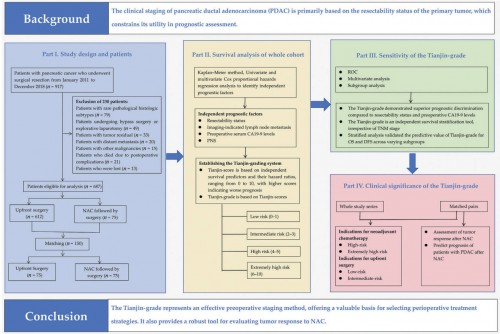
Researchers have developed a new grading system aimed at improving prognosis and treatment decisions for patients with pancreatic ductal adenocarcinoma (PDAC). The Tianjin Grading System, created by experts at the Tianjin Medical University Cancer Institute & Hospital, integrates anatomical and biological factors along with patient-specific conditions to refine risk stratification. This innovative approach addresses limitations in traditional staging systems, such as the TNM classification, which often neglect crucial biological markers.
Published in Cancer Biology & Medicine in 2025, the Tianjin Grading System was developed through an extensive retrospective study involving 687 PDAC patients who underwent surgical resection. Researchers found that incorporating elements like lymph node metastasis and serum CA19-9 levels yielded a more comprehensive prediction of patient survival compared to conventional methods.
Comprehensive Approach to Prognosis
The Tianjin Grading System categorizes patients into four distinct risk groups based on key prognostic factors: low-risk (0-1), intermediate-risk (2-3), high-risk (4-5), and extremely high-risk (6-10). Each category shows significantly different survival outcomes, emphasizing the importance of tailored treatment strategies. Notably, patients classified as high- and extremely high-risk experienced substantial benefits from neoadjuvant chemotherapy (NAC).
Dr. Jihui Hao, a lead researcher on the project, stated, “The Tianjin Grading System offers a more accurate way of predicting outcomes for PDAC patients by integrating not just anatomical factors but also biological and patient-specific conditions.” This statement underscores the system’s potential to enhance clinical decision-making, allowing healthcare providers to identify which patients may benefit most from aggressive treatments.
Implications for Clinical Practice
The incorporation of the Tianjin Grading System into clinical practice promises to significantly improve patient outcomes. By offering a more precise prognosis, the system can assist in determining whether patients should pursue upfront surgery or receive NAC. This comprehensive assessment not only aids in personalizing treatment plans but also helps avoid overtreatment in low-risk patients.
As healthcare professionals increasingly seek effective ways to manage PDAC, the Tianjin Grading System’s accessibility—utilizing standard imaging and laboratory tests—positions it as a valuable tool in diverse clinical settings. Its potential to enhance care standards, particularly in resource-limited environments, marks a significant advancement in personalized pancreatic cancer treatment.
This development is supported by funding from the Tianjin Natural Science Foundation (Grant No. 24JCYBJC00580) and highlights an important step in the ongoing fight against one of the most challenging forms of cancer.
As research continues to evolve, integrating biological markers into preoperative assessments will be crucial for advancing treatment strategies and improving survival rates among patients diagnosed with PDAC.

Punta Gorda Officials Fight Back Against Legislative Water Takeover

GMP Cytokine Market Poised for 8.4% Growth by 2031

Bethel Royals Overcome Heartbreak to Compete in D3 Quarterfinals

U.S. Forces Conduct Naval Operation, Seize Cargo Bound for Iran

iRi NYC Partners with New Year Market for Upcycled Key Charms

Duffer Brothers Unveil Major Details for ‘Stranger Things’ Season 5

L.A. Care Health Plan Partners with Local Medical Group for Community Wellness

Shark Bites Surfer in Sonoma County; Boat Capsizes, 3 Rescued

Major ‘Stranger Things’ Season 5 Volume 2 Details Unveiled NOW

Inventor Achieves Breakthrough with 2 Billion FPS Laser Video

Community Unites for 7th Annual Into the Light Walk for Mental Health

Charlie Sheen’s New Romance: ‘Glowing’ with Younger Partner

Dua Lipa Aces GCSE Spanish, Sparks Super Bowl Buzz with Fans

Curium Group, PeptiDream, and PDRadiopharma Launch Key Cancer Trial

Former Mozilla CMO Launches AI-Driven Cannabis Cocktail Brand Fast

Mother Fights to Reunite with Children After Kidnapping in New Drama

Israel Reopens Rafah Crossing After Hostage Remains Returned

R&B Icon D’Angelo Dies at 51, Leaving Lasting Legacy
-
 Science2 months ago
Inventor Achieves Breakthrough with 2 Billion FPS Laser Video
-
 Health2 months ago
Community Unites for 7th Annual Into the Light Walk for Mental Health
-
 Top Stories2 months ago
Charlie Sheen’s New Romance: ‘Glowing’ with Younger Partner
-
 Entertainment2 months ago
Dua Lipa Aces GCSE Spanish, Sparks Super Bowl Buzz with Fans
-
 Health2 months ago
Curium Group, PeptiDream, and PDRadiopharma Launch Key Cancer Trial
-
 Top Stories2 months ago
Former Mozilla CMO Launches AI-Driven Cannabis Cocktail Brand Fast
-
 Entertainment2 months ago
Mother Fights to Reunite with Children After Kidnapping in New Drama
-
 World2 months ago
Israel Reopens Rafah Crossing After Hostage Remains Returned
-
 World2 months ago
R&B Icon D’Angelo Dies at 51, Leaving Lasting Legacy
-

 Business2 months ago
Tyler Technologies Set to Reveal Q3 Earnings on October 22
-

 Health2 months ago
YouTube Launches New Mental Health Tools for Teen Users
-

 Health2 months ago
North Carolina’s Biotech Boom: Billions in New Investments