
Science
New Research Reveals Alarming Kessler Syndrome Collision Risks

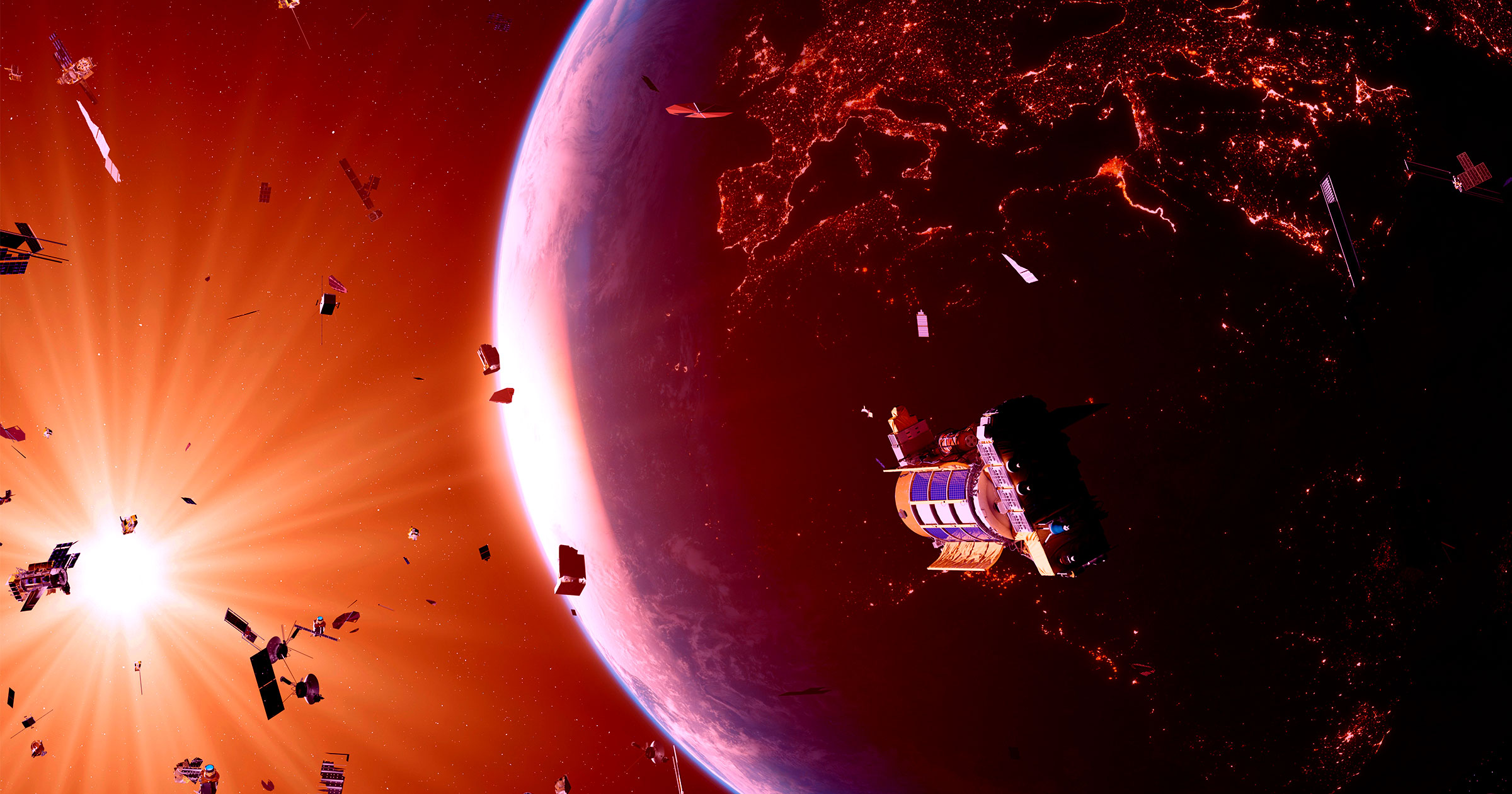
Concerns about space debris have escalated following new research from an international team of scientists. They introduced a metric known as the “Collision Realization and Significant Harm (CRASH) Clock,” which forecasts the risks associated with satellite collisions in Earth’s orbit. The study, conducted by researchers from Princeton University, the University of British Columbia, and the University of Regina, highlights how current conditions could lead to catastrophic collisions within a matter of days.
In a paper published in late October 2023, the researchers referenced a 1978 study by NASA’s Donald Kessler, which warned of the dangers of satellite collisions leading to a cascade of further incidents. This phenomenon has since been termed “Kessler syndrome.” The original paper cautioned that a single collision could trigger a series of subsequent accidents, resulting in an expanding debris field around Earth.
The newly proposed CRASH Clock aims to quantify the likelihood of such catastrophic events, taking into account the increasing number of objects in low-Earth orbit. According to the research, if no collision avoidance measures are taken, or if there is a significant loss of situational awareness—such as during a powerful solar storm—it could take just 2.8 days for a collision to occur.
The urgency of this research is underscored by a solar storm in May 2024 that forced many satellites to adjust their orbits, creating chaotic movements and increasing the uncertainty of collision avoidance maneuvers. The CRASH Clock indicates a marked deterioration in orbital safety; in 2018, the clock showed 121 days until a catastrophic collision, but that figure has since plummeted to less than three days.
“While collisional cascades can take decades to centuries to develop, a single collision could create substantial stress on the orbital environment immediately,” the authors noted. They compared the potential long-term effects of a major collision to the Exxon Valdez oil spill, emphasizing that satellite operations could continue but with a heightened risk of damage.
The surge in satellite launches has significantly contributed to this risk. Since 2018, the number of satellites in low-Earth orbit has nearly doubled, with estimates suggesting it will reach over 24,000 by 2025, up from 13,700 in 2019. Much of this increase is attributed to SpaceX, which recently celebrated the launch of its 10,000th Starlink satellite. As of October 30, 2023, approximately 9,000 of these satellites remain operational, accounting for over 60 percent of all active satellites currently orbiting the Earth.
While designed to burn up upon reentry, there are growing concerns that the sheer number of satellites poses a significant collision risk. On the same day as the new study’s release, SpaceX reported losing contact with one of its Starlink satellites due to a mishap, underscoring the dangers associated with operating large constellations.
In addition to collision risks, experts warn that satellite constellations disrupt astronomical observations and could release harmful pollutants, such as aluminum oxides, during reentry. These pollutants pose a threat to the Earth’s upper atmosphere and ozone layer, prompting calls for stricter regulations and oversight in satellite operations.
As the number of objects in Earth’s orbit continues to rise, the significance of the CRASH Clock becomes increasingly apparent. The research underscores the urgent need for improved strategies to manage the growing challenges of space debris and ensure the safety of future space exploration efforts.

Draymond Green Ejected in Urgent Clash Against Suns

Packers QB Jordan Love Injured After Head Hit, Evaluated for Concussion

Developers Shift to Podman for Enhanced Container Management

Ohio Doctor Charged with Forcing Abortion Pill on Girlfriend

UPS Essential for Your Home Server: Protect Data Now!

U.S. Seizes Oil Tanker Near Venezuela in Major Escalation

DIY Tech Enthusiast Creates Skylight Calendar Clone for Family

Trump Declares Naval Blockade on Venezuela, Igniting Constitutional Debate

BMW Shares Surge Past 200-Day Moving Average on Strong Trading Day

Inventor Achieves Breakthrough with 2 Billion FPS Laser Video

Charlie Sheen’s New Romance: ‘Glowing’ with Younger Partner

Community Unites for 7th Annual Into the Light Walk for Mental Health

Dua Lipa Aces GCSE Spanish, Sparks Super Bowl Buzz with Fans

Curium Group, PeptiDream, and PDRadiopharma Launch Key Cancer Trial

Former Mozilla CMO Launches AI-Driven Cannabis Cocktail Brand Fast

Mother Fights to Reunite with Children After Kidnapping in New Drama

R&B Icon D’Angelo Dies at 51, Leaving Lasting Legacy

Israel Reopens Rafah Crossing After Hostage Remains Returned
-
 Science2 months ago
Inventor Achieves Breakthrough with 2 Billion FPS Laser Video
-
 Top Stories2 months ago
Charlie Sheen’s New Romance: ‘Glowing’ with Younger Partner
-
 Health2 months ago
Community Unites for 7th Annual Into the Light Walk for Mental Health
-
 Entertainment2 months ago
Dua Lipa Aces GCSE Spanish, Sparks Super Bowl Buzz with Fans
-
 Health2 months ago
Curium Group, PeptiDream, and PDRadiopharma Launch Key Cancer Trial
-
 Top Stories2 months ago
Former Mozilla CMO Launches AI-Driven Cannabis Cocktail Brand Fast
-
 Entertainment2 months ago
Mother Fights to Reunite with Children After Kidnapping in New Drama
-
 World2 months ago
R&B Icon D’Angelo Dies at 51, Leaving Lasting Legacy
-
 World2 months ago
Israel Reopens Rafah Crossing After Hostage Remains Returned
-

 Business2 months ago
Tyler Technologies Set to Reveal Q3 Earnings on October 22
-

 Health2 months ago
YouTube Launches New Mental Health Tools for Teen Users
-

 Entertainment2 months ago
Red Sox’s Bregman to Become Free Agent; Tigers Commit to Skubal