
Science
Researchers Claim First Direct Evidence of Dark Matter

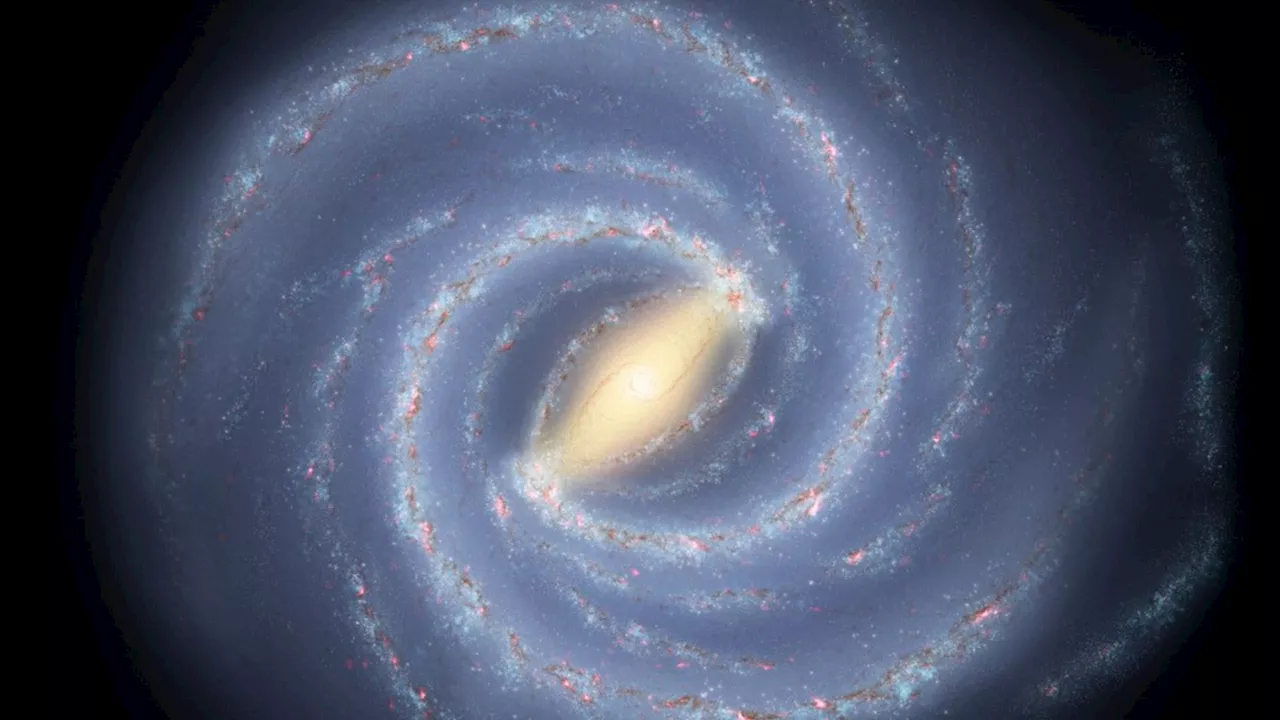
A team from the University of Tokyo has announced a groundbreaking development in astrophysics, suggesting they have gathered the first direct evidence of dark matter. This finding, based on observations from NASA’s Fermi Gamma-ray Space Telescope, could indicate that humanity has, for the first time, effectively “seen” what has long been considered invisible. Dark matter, which is believed to constitute approximately 85% of the universe’s mass, has only been inferred through its gravitational effects on visible matter.
The researchers focused their analysis on the center of the Milky Way, a region theorized to harbor a high concentration of dark matter. Their data revealed an unexpected surge of high-energy gamma rays, specifically photons with an energy of 20 gigaelectronvolts. According to Professor Tomonori Totani from the Department of Astronomy at the University of Tokyo, the detected gamma rays closely match the theoretical predictions for annihilation events involving Weakly Interacting Massive Particles (WIMPs), which are the leading candidates for dark matter.
Unraveling the Mystery of Dark Matter
The concept of dark matter dates back to the early 1930s, when Swiss astronomer Fritz Zwicky observed that galaxies in the Coma cluster were moving at speeds that could not be accounted for by visible mass alone. He proposed the existence of “dunkle Materie,” or dark matter, which acts as an invisible glue holding galaxies together. Over the years, the scientific community has come to accept that dark matter is integral to our understanding of the universe, yet direct evidence has remained elusive.
Dark matter does not interact with light; it neither absorbs, reflects, nor emits it, making it challenging to detect. The prevailing theory suggests that WIMPs, if they exist, could annihilate each other upon collision, producing high-energy gamma rays in the process. The recent findings from the University of Tokyo provide a compelling argument for this hypothesis, as the intensity and energy of the gamma rays detected align with theoretical predictions for WIMP annihilation.
The research team specifically identified a “halo-like” structure of gamma rays extending toward the galactic core, which further supports the existence of a dark matter halo in that region. Professor Totani remarked, “We detected gamma rays with an extremely large amount of energy, closely matching the shape expected from the dark matter halo.”
Scientific Scrutiny and Future Research
While the findings are promising, the scientific community remains cautiously optimistic. The results, published in the Journal of Cosmology and Astroparticle Physics on November 25, 2023, will undergo intense scrutiny from independent research groups. Professor Totani emphasized the necessity of further validation, stating that additional evidence would be required to confirm the findings. Specifically, researchers aim to detect the same 20 GeV gamma-ray signal from other dark matter-rich locations, such as dwarf galaxies orbiting the Milky Way.
The potential implications of this discovery are significant. If confirmed, it would not only provide substantial evidence for the existence of dark matter but also suggest that it may consist of a new type of particle, one that is not included in the current standard model of particle physics. This breakthrough could pave the way for new theories and understandings in both astronomy and particle physics.
As researchers continue to explore the cosmos, the possibility of finally unveiling the universe’s greatest secret appears to be on the horizon. The excitement surrounding this discovery reflects a pivotal moment in the ongoing quest to understand the fundamental nature of our universe.

Millville Woman Arrested After Threatening U-Haul Worker with Baton

Japan’s PM Takaichi Vows Continued Fiscal Management Amid Rising Rates

Long Island Faces Wintry Mix Tuesday Morning, Commute Disruption Expected

Blackhawks Surge to 5-3 Victory Over Ducks, Ending 5-Game Winless Streak

Stanford Study Reveals Urgent Shark Extinction Clues Today

Church Members Unite After Devastating Thanksgiving Fire

Brock Purdy Shines with Hip-Hop Flair in 49ers’ 26-8 Win

Repurposed Drug Shows Promise in Reversing Alzheimer’s in Mice

Rams Suffer Humbling Loss, Fall from NFC’s Top Position

Inventor Achieves Breakthrough with 2 Billion FPS Laser Video

Community Unites for 7th Annual Into the Light Walk for Mental Health

Charlie Sheen’s New Romance: ‘Glowing’ with Younger Partner

Dua Lipa Aces GCSE Spanish, Sparks Super Bowl Buzz with Fans

Mother Fights to Reunite with Children After Kidnapping in New Drama

Former Mozilla CMO Launches AI-Driven Cannabis Cocktail Brand Fast

Curium Group, PeptiDream, and PDRadiopharma Launch Key Cancer Trial

Tyler Technologies Set to Reveal Q3 Earnings on October 22

Israel Reopens Rafah Crossing After Hostage Remains Returned
-
 Science1 month ago
Inventor Achieves Breakthrough with 2 Billion FPS Laser Video
-
 Health2 months ago
Community Unites for 7th Annual Into the Light Walk for Mental Health
-
 Top Stories2 months ago
Charlie Sheen’s New Romance: ‘Glowing’ with Younger Partner
-
 Entertainment2 months ago
Dua Lipa Aces GCSE Spanish, Sparks Super Bowl Buzz with Fans
-
 Entertainment2 months ago
Mother Fights to Reunite with Children After Kidnapping in New Drama
-
 Top Stories1 month ago
Former Mozilla CMO Launches AI-Driven Cannabis Cocktail Brand Fast
-
 Health2 months ago
Curium Group, PeptiDream, and PDRadiopharma Launch Key Cancer Trial
-
 Business2 months ago
Tyler Technologies Set to Reveal Q3 Earnings on October 22
-
 World2 months ago
Israel Reopens Rafah Crossing After Hostage Remains Returned
-

 Health2 months ago
North Carolina’s Biotech Boom: Billions in New Investments
-

 World2 months ago
R&B Icon D’Angelo Dies at 51, Leaving Lasting Legacy
-

 Entertainment2 months ago
Red Sox’s Bregman to Become Free Agent; Tigers Commit to Skubal