
Science
Scientists Develop Microrobot for Future Medical Applications

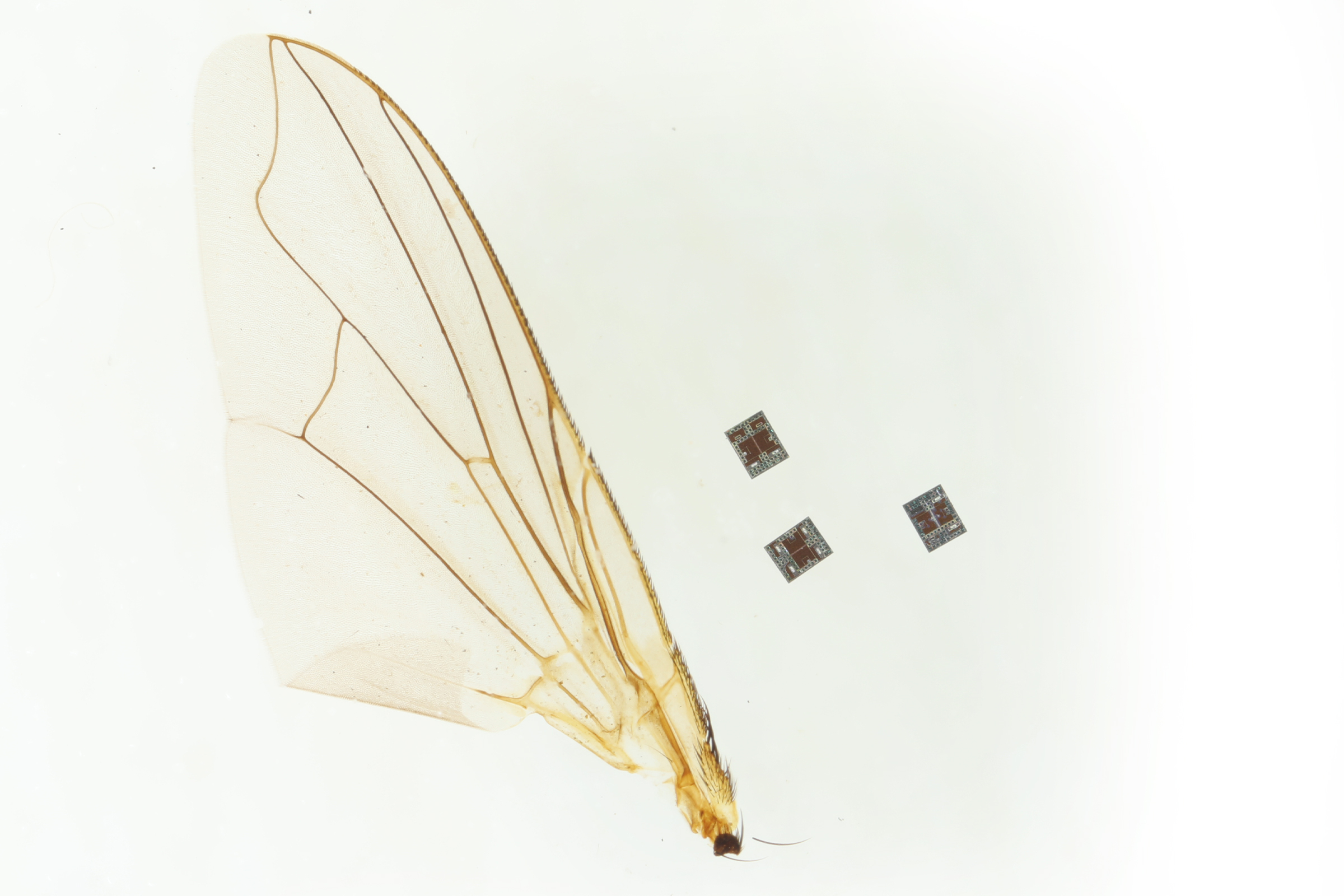
Researchers from the University of Pennsylvania and the University of Michigan have created a groundbreaking microrobot capable of navigating through the human body. This innovative device, described in the journal Science Robotics, measures less than a grain of salt and is equipped with a computer, motor, and sensors. While it does not reach the nanoscopic scale often depicted in science fiction, it marks a significant advancement towards developing tiny robots for medical applications.
The microrobot is the first of its kind that can sense, think, and act independently, according to coauthor Marc Miskin, an assistant professor of electrical and systems engineering at UPenn. Although the technology is still in experimental stages and not yet suitable for human use, coauthor David Blaauw from U-M expressed optimism that practical applications could emerge within the next decade.
Traditionally, scientists have struggled to create microrobots that can operate autonomously at such small scales. Most existing designs require external control, limiting their ability to interact with their environment. This dependency results in a narrow range of pre-programmed behaviors, which diminishes their potential effectiveness in real-world situations.
Miskin noted the significance of creating a robot at the micron scale, stating, “Every living thing is basically a giant composite of 100-micron robots.” This observation highlights the importance of this size range in biological systems. The researchers’ microrobot resembles a microchip, constructed from materials like silicon, platinum, and titanium, and is encased in a protective layer of glass to safeguard it against bodily fluids.
The microrobot is powered by solar cells, which convert light into energy for its onboard computer and propulsion system. Its propulsion works through the generation of a flow in surrounding water particles, allowing the robot to swim. While its processing speed is considerably slower than that of modern laptops, it is sufficient for the microrobot to respond to environmental changes such as temperature variations.
According to the team, the microrobot’s size and energy capabilities are comparable to those of unicellular microorganisms. Importantly, the device is designed for communication with human operators. Miskin explained, “We can send messages down to it telling it what we want it to do,” and it can respond with information about its observations and activities.
Looking ahead, researchers aim to develop inter-microrobot communication systems. Blaauw described this as the “next holy grail,” emphasizing the potential for these robots to work together in medical applications.
The work of the UPenn and U-M teams represents a significant milestone in the field of robotics and biomedical engineering. Although practical applications remain years away, the development of such microrobots could revolutionize medical procedures by enabling targeted treatments and repairs within the human body.

ISIS Ambush Kills Two U.S. Soldiers, One Interpreter in Syria

Urgent: Human Remains Discovered in Van Cortlandt Park, Bronx

Urgent: I-70 Eagle Airport Interchange Project Relaunched for 2029

Minneapolis Shelter Extends Hours Amid Frigid Weekend Temperatures

TSA Transfers Passenger Data to ICE, Sparking Outrage and Legal Action

New Research Uncovers Stem Cell Role in Myelodysplastic Syndrome

CIF State Championship Football Results: Folsom and Others Triumph

Belarus Releases 123 Political Prisoners After U.S. Sanctions Deal

Rosen Law Firm Investigates Nidec Corporation for Securities Claims

Inventor Achieves Breakthrough with 2 Billion FPS Laser Video

Charlie Sheen’s New Romance: ‘Glowing’ with Younger Partner

Community Unites for 7th Annual Into the Light Walk for Mental Health

Dua Lipa Aces GCSE Spanish, Sparks Super Bowl Buzz with Fans

Curium Group, PeptiDream, and PDRadiopharma Launch Key Cancer Trial

Former Mozilla CMO Launches AI-Driven Cannabis Cocktail Brand Fast

Israel Reopens Rafah Crossing After Hostage Remains Returned

Mother Fights to Reunite with Children After Kidnapping in New Drama

R&B Icon D’Angelo Dies at 51, Leaving Lasting Legacy
-
 Science2 months ago
Inventor Achieves Breakthrough with 2 Billion FPS Laser Video
-
 Top Stories2 months ago
Charlie Sheen’s New Romance: ‘Glowing’ with Younger Partner
-
 Health2 months ago
Community Unites for 7th Annual Into the Light Walk for Mental Health
-
 Entertainment2 months ago
Dua Lipa Aces GCSE Spanish, Sparks Super Bowl Buzz with Fans
-
 Health2 months ago
Curium Group, PeptiDream, and PDRadiopharma Launch Key Cancer Trial
-
 Top Stories2 months ago
Former Mozilla CMO Launches AI-Driven Cannabis Cocktail Brand Fast
-
 World2 months ago
Israel Reopens Rafah Crossing After Hostage Remains Returned
-
 Entertainment2 months ago
Mother Fights to Reunite with Children After Kidnapping in New Drama
-
 World2 months ago
R&B Icon D’Angelo Dies at 51, Leaving Lasting Legacy
-

 Business2 months ago
Tyler Technologies Set to Reveal Q3 Earnings on October 22
-

 Health2 months ago
YouTube Launches New Mental Health Tools for Teen Users
-

 Health2 months ago
North Carolina’s Biotech Boom: Billions in New Investments