
Science
Scientists Discover “Fire Amoeba” Thriving in Extreme Heat

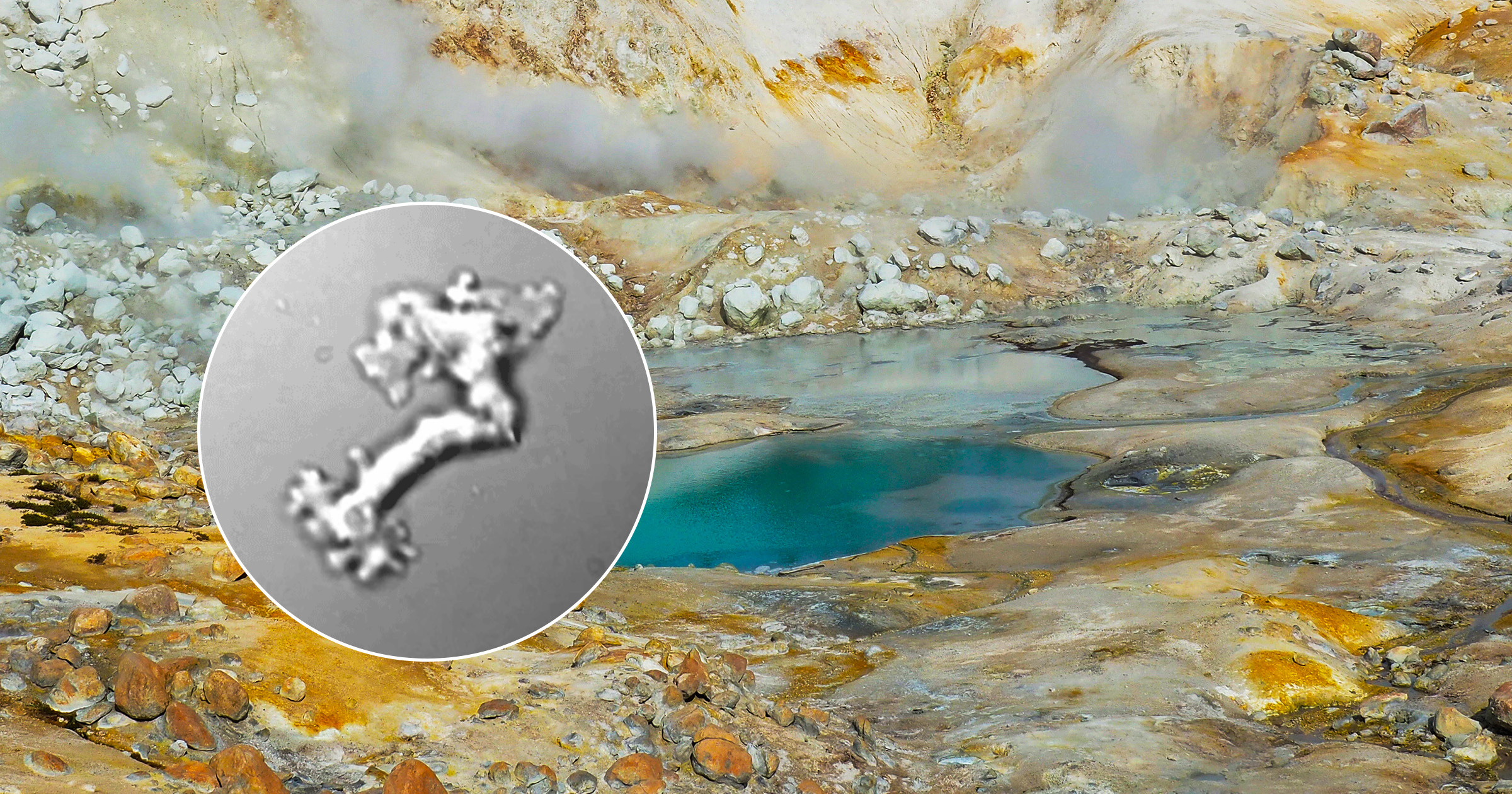
In a groundbreaking discovery, scientists from the United States and Europe have identified a remarkable single-celled organism that can survive in extreme temperatures. Found in Lassen Volcanic National Park in California, this newly identified species, named Incendiamoeba cascadensis or “fire amoeba,” can thrive in waters reaching a scorching 145.4 degrees Fahrenheit (63 degrees Celsius). This revelation not only sets a new record for the upper temperature tolerance of complex organisms but also challenges existing beliefs about the limits of life on Earth.
Lassen Volcanic National Park is characterized by its geothermal features, including boiling water pools and bubbling mud, where temperatures can hit a blistering 464 degrees Fahrenheit (240 degrees Celsius). These conditions pose a lethal threat to most forms of life, yet the fire amoeba flourishes in this hostile environment. According to the research published in the journal Nature, the organism’s resilience opens new avenues for understanding life in extreme conditions.
Unveiling the Fire Amoeba
The discovery of Incendiamoeba cascadensis challenges the prevailing notion that only prokaryotes, such as bacteria and archaea, can endure extreme heat. While prokaryotes can survive in temperatures ranging from 149 to 221 degrees Fahrenheit, the fire amoeba, a eukaryote, defies expectations. Eukaryotes, which include animals, plants, and fungi, typically have a lower thermal tolerance, with most exhibiting fatal reactions above 109.4 degrees Fahrenheit (43 degrees Celsius). Prior to this finding, the maximum temperature limit for hardy eukaryotic organisms was believed to be between 131 and 140 degrees Fahrenheit (55 to 60 degrees Celsius).
The research team, led by Angela Oliverio from Syracuse University, discovered the amoeba in a hot spring with neutral pH levels, contrasting sharply with the acidic pools prevalent in the park. Initially, the water samples showed no signs of life under the microscope. However, when nutrients were added and the temperature was gradually increased, the previously unknown amoeba began to move and replicate. Remarkably, the organism continued to thrive even at temperatures of 145.4 degrees Fahrenheit.
At temperatures exceeding 158 degrees Fahrenheit (70 degrees Celsius), the amoeba enters a dormant state known as encystment, where it forms a protective cyst. This adaptation allows it to withstand extreme environmental conditions until more favorable temperatures return.
Implications for Science and Beyond
Analyzing the genome of the fire amoeba revealed an abundance of genes related to proteostasis, genome stability, and environmental sensing. These findings suggest sophisticated mechanisms enabling the organism to maintain cellular integrity under extreme conditions. The study’s co-author, Beryl Rappaport, described the discovery as a significant advancement in understanding what is possible for eukaryotic cells.
The implications of this research extend beyond the boundaries of Earth. The survival capabilities of Incendiamoeba cascadensis may provide insights into potential life forms on other planets, particularly in extreme environments like Mars. As scientists continue to explore the universe, the possibility of discovering similar heat-tolerant organisms on other celestial bodies raises intriguing questions about the resilience of life.
Furthermore, the proteins found within the fire amoeba could have practical applications in biotechnology, particularly in developing thermostable proteins for various industries. This discovery not only enriches our understanding of life’s adaptability but also opens new avenues for scientific exploration and innovation.
As research continues, the scientific community remains optimistic about finding additional high-temperature-loving eukaryotes. “We looked in one stream. Maybe we got extremely lucky, and there’s nothing else out there, but we really don’t think that’s the case,” Oliverio remarked, highlighting the potential for future discoveries in unexplored thermal environments.
In summary, the identification of the fire amoeba is a significant milestone in microbiology, pushing the boundaries of what is known about life in extreme conditions and igniting curiosity about the possibilities that lie beyond our planet.

Advanced Excel Tricks Unlocked: Transform Your Workflow NOW

USC, Oregon Shine in Early Signing Period; Colorado Struggles

Google Enhances NotebookLM with Deep Research Mode for Users

User Swaps Obsidian for Affine; Claims Major Productivity Boost

Transform Thrifting into Thoughtful Gifts This Holiday Season

Judge Orders Return of Man Deported by Trump Administration

Scientists Discover “Fire Amoeba” Thriving in Extreme Heat

Spring-Ford Boys Basketball Triumphs Over Wissahickon 59-48

Russian Drone and Missile Strikes Disrupt Ukraine’s Energy Sector

Inventor Achieves Breakthrough with 2 Billion FPS Laser Video

Community Unites for 7th Annual Into the Light Walk for Mental Health

Charlie Sheen’s New Romance: ‘Glowing’ with Younger Partner

Dua Lipa Aces GCSE Spanish, Sparks Super Bowl Buzz with Fans

Curium Group, PeptiDream, and PDRadiopharma Launch Key Cancer Trial

Mother Fights to Reunite with Children After Kidnapping in New Drama

Former Mozilla CMO Launches AI-Driven Cannabis Cocktail Brand Fast

Israel Reopens Rafah Crossing After Hostage Remains Returned

Tyler Technologies Set to Reveal Q3 Earnings on October 22
-
 Science2 months ago
Inventor Achieves Breakthrough with 2 Billion FPS Laser Video
-
 Health2 months ago
Community Unites for 7th Annual Into the Light Walk for Mental Health
-
 Top Stories2 months ago
Charlie Sheen’s New Romance: ‘Glowing’ with Younger Partner
-
 Entertainment2 months ago
Dua Lipa Aces GCSE Spanish, Sparks Super Bowl Buzz with Fans
-
 Health2 months ago
Curium Group, PeptiDream, and PDRadiopharma Launch Key Cancer Trial
-
 Entertainment2 months ago
Mother Fights to Reunite with Children After Kidnapping in New Drama
-
 Top Stories2 months ago
Former Mozilla CMO Launches AI-Driven Cannabis Cocktail Brand Fast
-
 World2 months ago
Israel Reopens Rafah Crossing After Hostage Remains Returned
-
 Business2 months ago
Tyler Technologies Set to Reveal Q3 Earnings on October 22
-

 World2 months ago
R&B Icon D’Angelo Dies at 51, Leaving Lasting Legacy
-

 Health2 months ago
North Carolina’s Biotech Boom: Billions in New Investments
-

 Entertainment2 months ago
Red Sox’s Bregman to Become Free Agent; Tigers Commit to Skubal