
Science
Scientists Uncover Ancient Populations and Cosmic Wonders

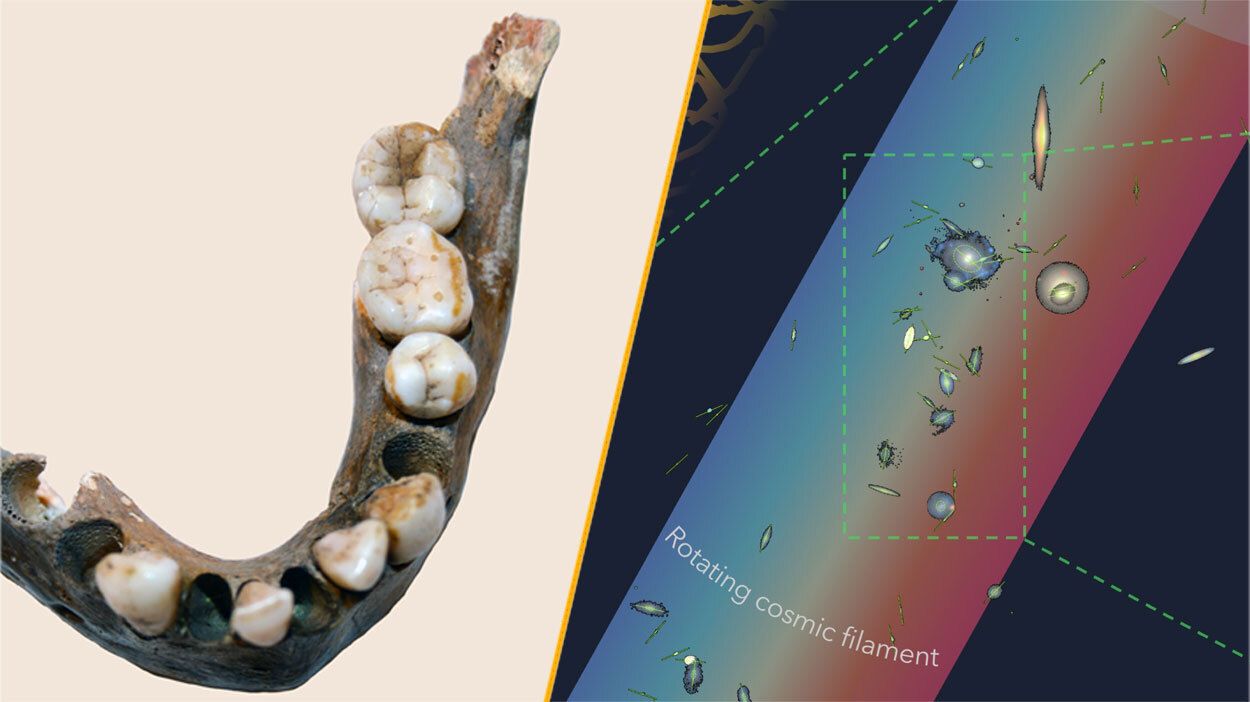
This week, significant scientific discoveries have emerged, revealing insights into ancient human populations, cosmic phenomena, and modern environmental challenges. Researchers have made strides in understanding a human population that remained genetically isolated for an astonishing 100,000 years. Meanwhile, astronomers have identified the largest spinning structure in the known universe, located 140 million light-years away.
In southern Africa, the study of human remains found near the Limpopo River unveiled a population that lived more than 1,400 years ago. These skeletons, which date back up to 10,000 years, exhibit a genetic makeup markedly distinct from modern humans. According to the researchers, this group represents “an extreme end of human genetic variation,” highlighting the profound diversity within our species.
On the other side of the globe, archaeologists in China have uncovered a remarkable pit filled with skulls near a 4,000-year-old city. The discovery has raised questions, as nearly all the skulls belong to males, deviating from typical human sacrificial patterns observed in other regions. Similarly puzzling is an elaborate tomb in Greece, dating back 2,700 years, which contained a woman adorned with an upside-down crown.
In a separate development, a long-term environmental project in China has prompted unintended consequences. The Great Green Wall, aimed at combating desertification through extensive tree planting, has inadvertently altered rainfall and evaporation patterns across the country. A recent analysis indicates that these changes have led to decreased water levels in some of China’s most densely populated areas.
Research this week also revisited the record for the world’s hottest temperature, set in Death Valley in 1913. New findings suggest that human error may have contributed to this extreme measurement. Additionally, a potential collapse of a key Atlantic current in Europe could result in centuries of drought, prompting concerns about future climate stability.
Turning our attention to the cosmos, the interstellar comet 3I/ATLAS has sparked interest with its unique features. Observations from the Joan Oró Telescope in northeastern Spain revealed that the comet exhibits spiral jets, which may indicate the presence of “ice volcanoes.” The comet’s rapid heating as it approaches the sun suggests that ice is sublimating off its surface, aligning it with other celestial bodies in our solar system.
In technological advancements, researchers at MIT have developed a novel method to extract drinking water from the air. This innovative approach employs sound waves to efficiently harvest water vapor, achieving results in just minutes, a significant improvement over traditional methods reliant on evaporation.
As science continues to advance, these remarkable discoveries not only deepen our understanding of human history and the universe but also highlight the intricate interplay between our actions and the environment. The implications of this research extend far beyond academic interest, influencing our approach to sustainability, climate change, and the preservation of our planet.

O’Dowd Triumphs Over Chico in Thrilling 5-AA NorCal Title Clash

Urgent Study Reveals Baby Ants Call for Death When Sick

Trump Closes Venezuela Airspace Amid Escalating Drug Tensions

Family Tensions Rise Over Thanksgiving Friendsgiving Plans

Scientists Uncover Ancient Populations and Cosmic Wonders

Hoisington and St. John Shine in High School Basketball Showdowns

Utah Mammoth Defeat Vancouver Canucks 4-1 Behind Stenlund’s Performance

Tulane Green Wave Triumphs in American Conference Championship

ROBO Global Healthcare ETF Shares Dip 0.7% Amid Low Trading Volume

Inventor Achieves Breakthrough with 2 Billion FPS Laser Video

Community Unites for 7th Annual Into the Light Walk for Mental Health

Charlie Sheen’s New Romance: ‘Glowing’ with Younger Partner

Dua Lipa Aces GCSE Spanish, Sparks Super Bowl Buzz with Fans

Curium Group, PeptiDream, and PDRadiopharma Launch Key Cancer Trial

Mother Fights to Reunite with Children After Kidnapping in New Drama

Former Mozilla CMO Launches AI-Driven Cannabis Cocktail Brand Fast

Israel Reopens Rafah Crossing After Hostage Remains Returned

Tyler Technologies Set to Reveal Q3 Earnings on October 22
-
 Science2 months ago
Inventor Achieves Breakthrough with 2 Billion FPS Laser Video
-
 Health2 months ago
Community Unites for 7th Annual Into the Light Walk for Mental Health
-
 Top Stories2 months ago
Charlie Sheen’s New Romance: ‘Glowing’ with Younger Partner
-
 Entertainment2 months ago
Dua Lipa Aces GCSE Spanish, Sparks Super Bowl Buzz with Fans
-
 Health2 months ago
Curium Group, PeptiDream, and PDRadiopharma Launch Key Cancer Trial
-
 Entertainment2 months ago
Mother Fights to Reunite with Children After Kidnapping in New Drama
-
 Top Stories2 months ago
Former Mozilla CMO Launches AI-Driven Cannabis Cocktail Brand Fast
-
 World2 months ago
Israel Reopens Rafah Crossing After Hostage Remains Returned
-
 Business2 months ago
Tyler Technologies Set to Reveal Q3 Earnings on October 22
-

 Health2 months ago
North Carolina’s Biotech Boom: Billions in New Investments
-

 World2 months ago
R&B Icon D’Angelo Dies at 51, Leaving Lasting Legacy
-

 Entertainment2 months ago
Red Sox’s Bregman to Become Free Agent; Tigers Commit to Skubal