
Science
Sick Ant Pupae Signal for Their Own Destruction to Save Colony

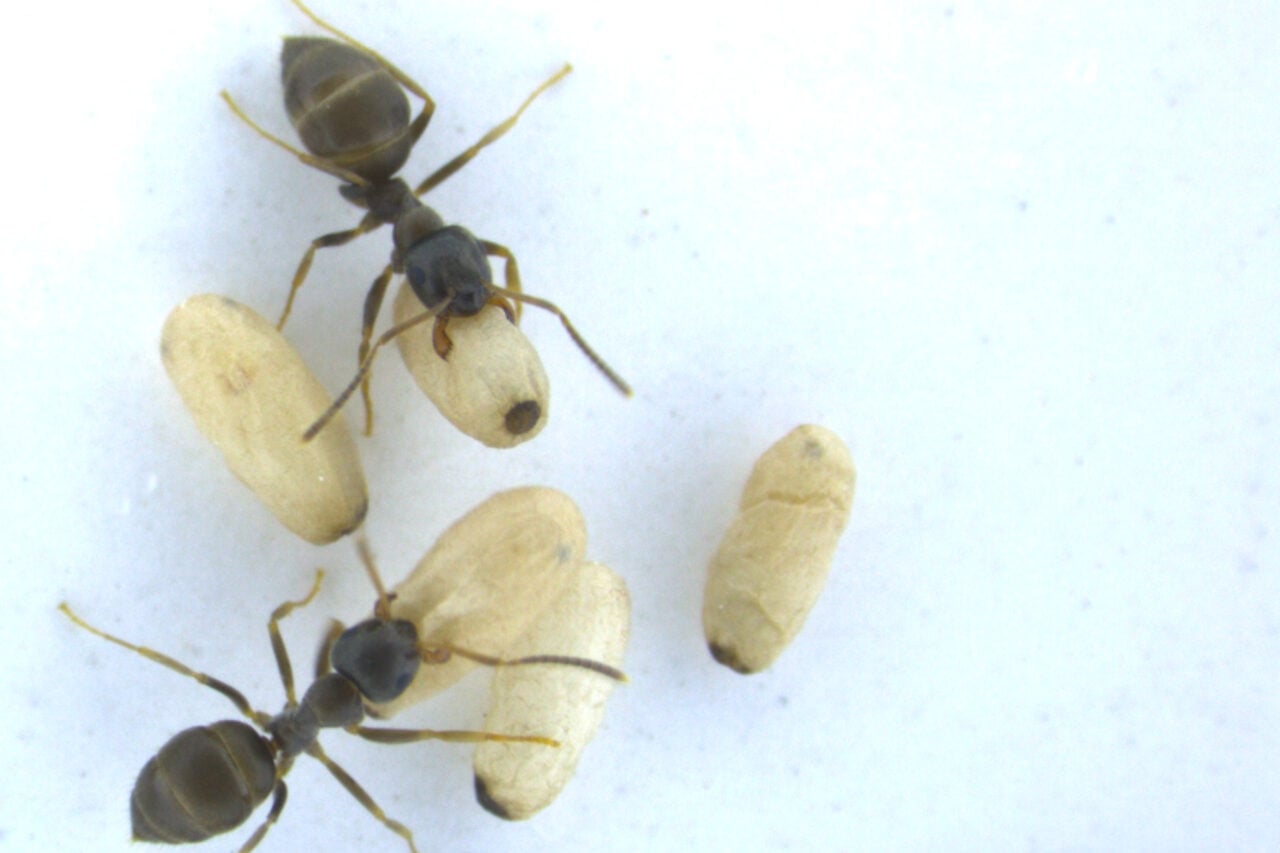
New research reveals that terminally ill baby ants, specifically the pupae of the Lasius neglectus species, actively signal their nestmates to kill them. This drastic measure potentially safeguards the rest of the colony from infection. The findings, published on March 15, 2024, in the journal Nature Communications, contribute to the understanding of ant colonies as cohesive units rather than mere collections of individuals.
Sick pupae emit a chemical signal prompting adult ants to destroy them. This behavior highlights the complexities of ant social structures, where the concept of a colony functions as a “superorganism.” According to the researchers, sick individuals often conceal their illness to avoid social exclusion, unlike adults who typically leave the colony to prevent spreading disease.
In this study, the research team found that pupae, which are encased in cocoons and cannot leave, resort to a self-destructive strategy. They produce a chemical signal that encourages worker ants to take action. As Sylvia Cremer, co-author of the study and group leader at the Institute of Science and Technology Austria (ISTA), explained, “Adult ants that approach death leave the nest to die outside the colony. Yet, this is only possible for mobile individuals.”
When worker ants detect the signal, they remove the pupae from their cocoons, puncture them, and inject them with formic acid. This antimicrobial substance acts as a disinfectant, effectively killing both the pathogens and the pupae. Previous research confirmed that worker ants can recognize sick pupae but did not clarify whether this recognition stemmed from passive cues or intentional signaling.
To explore this further, the researchers infected Lasius neglectus ants with a fungal pathogen. The sick pupae produced a modified body odor that signaled adult ants to eliminate them. This chemical was only emitted by sick pupae in proximity to adult workers, indicating it is not merely an immune response related to infection.
The study highlighted that the signal from terminally ill pupae resembles the way human cells communicate with immune cells, releasing cues that prompt destruction of infected cells. As Erika Dawson, the first author of the study and a behavioral ecologist at ISTA, pointed out, this behavior appears altruistic but is also beneficial for the pupae. By warning their colony of potential infection, they help maintain overall colony health and increase the chances of passing on their genes through future generations.
Interestingly, the researchers observed that queen pupae did not emit the chemical signal. Queens possess stronger immune systems and can manage infections independently. In contrast, worker pupae lack this capability and thus resort to signaling when their condition becomes critical. This strategic communication ensures that healthy pupae are not unnecessarily harmed while allowing the colony to respond effectively to real threats.
The study provides significant insights into the complex social dynamics within ant colonies, illustrating how individual actions can benefit the collective. As Cremer concluded, “This precise coordination between the individual and colony level is what makes this altruistic disease signaling so effective.”

Lisa Rinna Stuns at 2025 British Fashion Awards with Bold Transformation

Tax Pressure Forces Boomers to Stay Put, Impacting Housing Market

Tax Burden Drives Boomers to Hold Homes for Inheritance

Sick Ant Pupae Signal for Their Own Destruction to Save Colony

College Basketball Showdown: Top Teams Clash After Thanksgiving

Putin Accuses EU Leaders of Sabotaging Peace Talks, Threatens War

SEC Chair Paul Atkins Criticizes Biden Over Financial Regulations

Damaging Videos Resurface, Hegseth’s Alleged Illegal Order Exposed

Noem Urges Trump for Immediate Travel Ban on Multiple Countries

Inventor Achieves Breakthrough with 2 Billion FPS Laser Video

Community Unites for 7th Annual Into the Light Walk for Mental Health

Charlie Sheen’s New Romance: ‘Glowing’ with Younger Partner

Dua Lipa Aces GCSE Spanish, Sparks Super Bowl Buzz with Fans

Curium Group, PeptiDream, and PDRadiopharma Launch Key Cancer Trial

Mother Fights to Reunite with Children After Kidnapping in New Drama

Former Mozilla CMO Launches AI-Driven Cannabis Cocktail Brand Fast

Tyler Technologies Set to Reveal Q3 Earnings on October 22

Israel Reopens Rafah Crossing After Hostage Remains Returned
-
 Science1 month ago
Inventor Achieves Breakthrough with 2 Billion FPS Laser Video
-
 Health2 months ago
Community Unites for 7th Annual Into the Light Walk for Mental Health
-
 Top Stories2 months ago
Charlie Sheen’s New Romance: ‘Glowing’ with Younger Partner
-
 Entertainment2 months ago
Dua Lipa Aces GCSE Spanish, Sparks Super Bowl Buzz with Fans
-
 Health2 months ago
Curium Group, PeptiDream, and PDRadiopharma Launch Key Cancer Trial
-
 Entertainment2 months ago
Mother Fights to Reunite with Children After Kidnapping in New Drama
-
 Top Stories2 months ago
Former Mozilla CMO Launches AI-Driven Cannabis Cocktail Brand Fast
-
 Business2 months ago
Tyler Technologies Set to Reveal Q3 Earnings on October 22
-
 World2 months ago
Israel Reopens Rafah Crossing After Hostage Remains Returned
-

 Health2 months ago
North Carolina’s Biotech Boom: Billions in New Investments
-

 World2 months ago
R&B Icon D’Angelo Dies at 51, Leaving Lasting Legacy
-

 Entertainment2 months ago
Red Sox’s Bregman to Become Free Agent; Tigers Commit to Skubal