
Science
Trump Administration Disrupts U.S. Research Pact, Funding Plummets

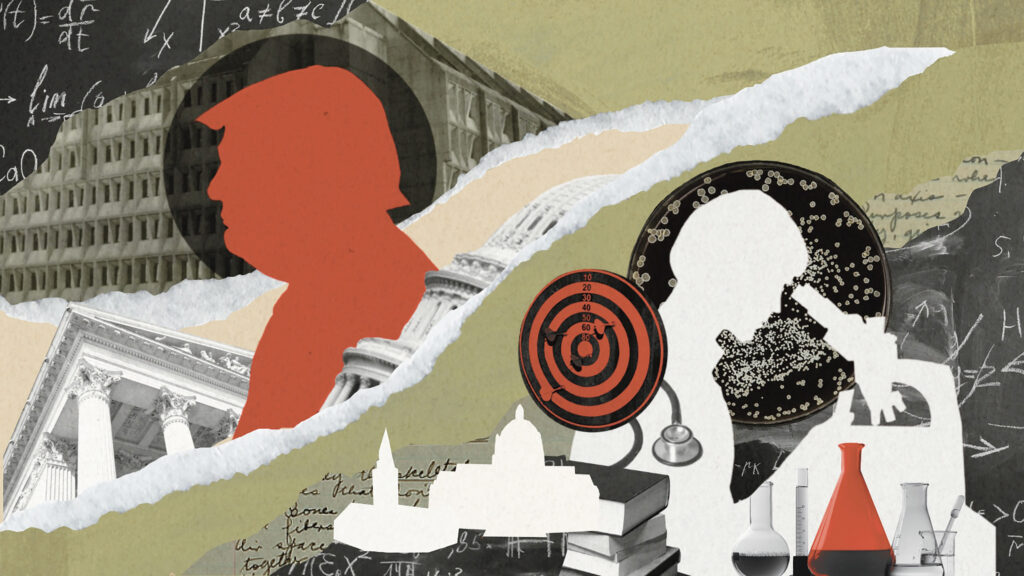
The Trump administration’s recent actions have significantly disrupted the longstanding research partnership between the U.S. government and academic institutions. As a result, many researchers are grappling with reduced funding and a climate of uncertainty about the future of their work. In 2025, the landscape of scientific research in the United States will be marked by a noticeable decline in grant availability, raising concerns about the trajectory of innovation in the country.
Analyses reveal that funding from the National Institutes of Health (NIH) has undergone a considerable shift. While the total amount of grant money remained stable, the number of awards issued from January to September 2025 fell by 11.6% compared to the previous year. This decline represents an 8.2% drop relative to the average of the preceding nine years. The shift is attributed to the administration’s strategy of funding multiyear grants upfront, which has limited the resources available for new projects.
The impact of these funding changes is widespread, affecting crucial areas such as vaccine research and studies on health disparities, both of which have been targets of the current administration. Furthermore, the NIH has also seen reductions in new grants aimed at addressing cancer, Alzheimer’s disease, and HIV/AIDS—fields that typically enjoy bipartisan support. The analysis indicates that the number of high-risk, high-reward grants, designed to encourage innovative scientific exploration, also decreased from 406 in 2024 to 364 in 2025.
Consequences for Academic Institutions
The consequences of this volatile funding climate extend beyond immediate financial implications. Many academic institutions, even those not directly targeted by the administration’s policies, are adopting defensive measures. Institutions have begun freezing hiring, laying off staff, and scaling back graduate training programs. Initial data from the National Student Clearinghouse Research Center shows that enrollments in Ph.D. programs in life and biomedical sciences flatlined in the fall of 2025, marking a significant shift from previous trends.
A notable decline in early-career grant awards, which support graduate students and postdoctoral researchers, has emerged as a troubling trend. The number of these awards fell to its lowest level since 2016, signaling a potential long-term impact on the next generation of scientists. This loss of funding and support has left many researchers questioning the reliability of the U.S. government as a partner in the pursuit of scientific advancements for public benefit.
Shifting Perspectives on the Research Landscape
The turmoil surrounding research funding has elicited a range of responses from experts in the field. Shirley Tilghman, a molecular biologist and former president of Princeton University, expressed concern about the implications of these changes. She noted the potential for unintended consequences, stating, “The intention was to punish elite universities, it was not to destroy the scientific capacity of the United States, but that’s what they’re doing.”
In contrast, officials within the administration view these changes as an opportunity for reform. They aim to revamp the infrastructure of federal funding distribution, which they argue has been stagnant for too long. Some scientific leaders outside the administration see the potential for this upheaval to eliminate bureaucratic inertia and foster more effective use of federal resources.
Despite differing perspectives, there is a consensus among many researchers that the relationship between government and academia has been irrevocably altered. Larry Tabak, who served as the NIH’s principal deputy director until early 2025, remarked, “Whatever comes next is never going to be what it used to be. The genie is out of the bottle.”
As the research community navigates this uncertain terrain, the long-term implications of these funding changes remain to be seen. The erosion of trust in government support may have lasting effects on the United States’ position as a leader in scientific innovation. The challenge now lies in finding a path forward that restores confidence and enables researchers to pursue their vital work in service of public health and knowledge.

Urgent Proposal for 54 Affordable Condos in West Hartford

Fanatics Launches Urgent Prediction Market: Fanatics Markets Live Now

Trump Administration Disrupts U.S. Research Pact, Funding Plummets

Leader Electronics Unveils v8.2 Software for Enhanced Live Production

Mystery Surrounds Gruesome Deaths of Soviet Students in Siberia

Channing Capital Management Expands Stake in TopBuild Corp. by 28.1%

Prince Harry Returns to Colbert with Playful ‘King for a Day’ Clip

Trump Administration Disrupts U.S. Research Funding Landscape

Family Faces $5,000 Loss Over Surprise Vacation Refusal

Inventor Achieves Breakthrough with 2 Billion FPS Laser Video

Community Unites for 7th Annual Into the Light Walk for Mental Health

Charlie Sheen’s New Romance: ‘Glowing’ with Younger Partner

Dua Lipa Aces GCSE Spanish, Sparks Super Bowl Buzz with Fans

Curium Group, PeptiDream, and PDRadiopharma Launch Key Cancer Trial

Mother Fights to Reunite with Children After Kidnapping in New Drama

Israel Reopens Rafah Crossing After Hostage Remains Returned

Tyler Technologies Set to Reveal Q3 Earnings on October 22

Former Mozilla CMO Launches AI-Driven Cannabis Cocktail Brand Fast
-
 Science2 months ago
Inventor Achieves Breakthrough with 2 Billion FPS Laser Video
-
 Health2 months ago
Community Unites for 7th Annual Into the Light Walk for Mental Health
-
 Top Stories2 months ago
Charlie Sheen’s New Romance: ‘Glowing’ with Younger Partner
-
 Entertainment2 months ago
Dua Lipa Aces GCSE Spanish, Sparks Super Bowl Buzz with Fans
-
 Health2 months ago
Curium Group, PeptiDream, and PDRadiopharma Launch Key Cancer Trial
-
 Entertainment2 months ago
Mother Fights to Reunite with Children After Kidnapping in New Drama
-
 World2 months ago
Israel Reopens Rafah Crossing After Hostage Remains Returned
-
 Business2 months ago
Tyler Technologies Set to Reveal Q3 Earnings on October 22
-
 Top Stories2 months ago
Former Mozilla CMO Launches AI-Driven Cannabis Cocktail Brand Fast
-

 Health2 months ago
North Carolina’s Biotech Boom: Billions in New Investments
-

 Entertainment2 months ago
Red Sox’s Bregman to Become Free Agent; Tigers Commit to Skubal
-

 World2 months ago
R&B Icon D’Angelo Dies at 51, Leaving Lasting Legacy