
Top Stories
Blue Origin’s New Glenn Booster Lands at Port Canaveral, A Historic First

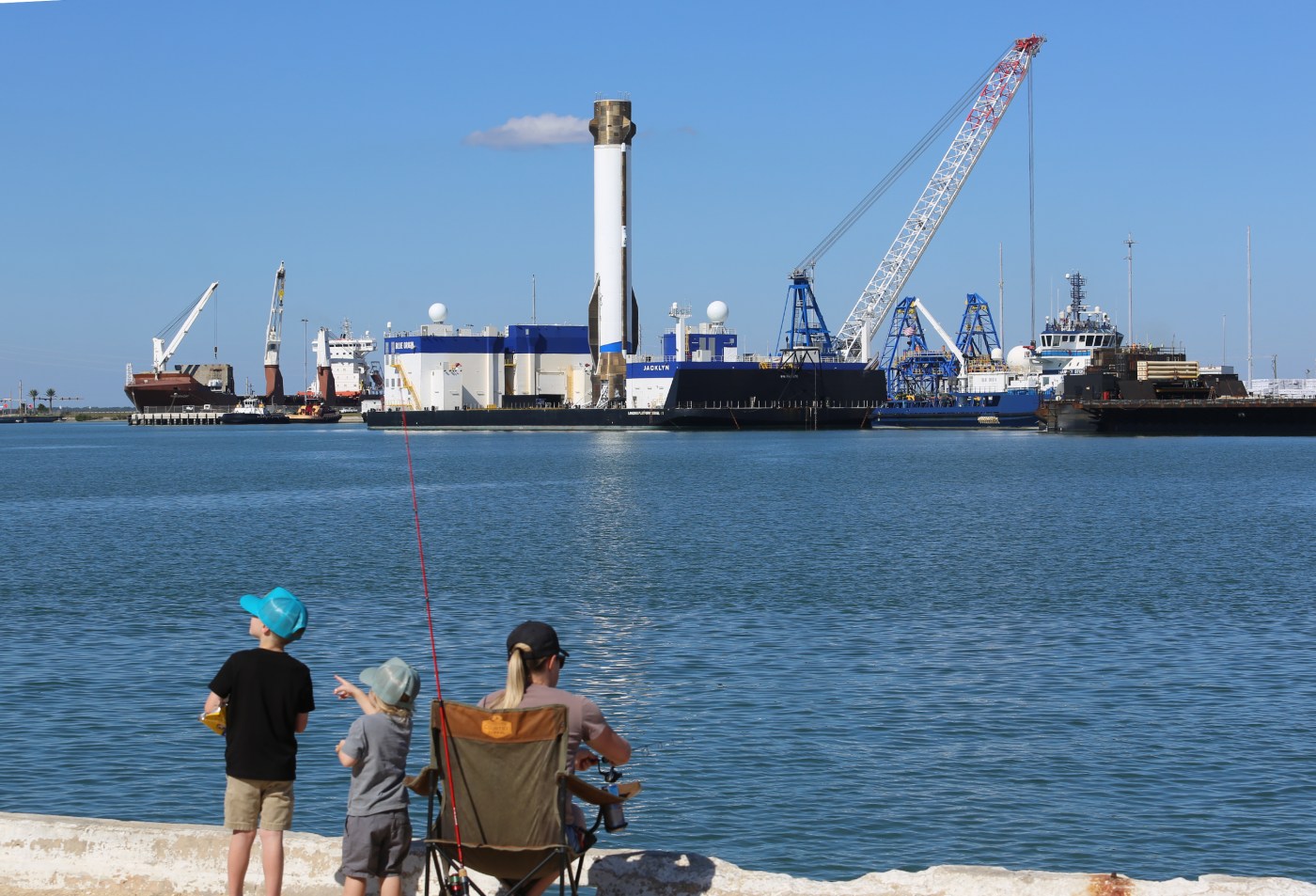
UPDATE: Blue Origin’s first-ever recovered first-stage booster for the New Glenn rocket has arrived at Port Canaveral, marking a significant milestone in space exploration. The booster, named “Never Tell Me The Odds,” landed successfully on the recovery vessel Jacklyn just five days after its launch on the NG-2 mission for NASA.
This momentous event occurred on November 18, 2025, and is a game-changer in the space industry. The New Glenn booster, towering at 189 feet with a 23-foot diameter, dwarfs SpaceX’s Falcon 9 boosters, which stand at 135 feet and feature a 12-foot diameter. The arrival of this massive booster has drawn attention, as it stands out against the backdrop of Port Canaveral’s skyline filled with cranes and cargo ships.
The booster successfully landed on the Jacklyn, located approximately 375 miles downrange, and was greeted by a scene of excitement at Port Canaveral. The vessel, resembling a trophy, showcased Blue Origin’s achievements in rocket recovery, a feat SpaceX first accomplished nearly a decade ago.
“This marks a pivotal moment for Blue Origin,” said Jeff Bezos, founder of the company, as he celebrated the arrival of the booster. “We are committed to advancing spaceflight and making it accessible.”
Blue Origin’s New Glenn rocket had its initial launch in January, but the first booster could not land due to engine relighting issues. The successful recovery now puts Blue Origin in a competitive position with SpaceX, which has successfully recovered boosters 535 times and reused them 500 times.
The New Glenn rocket’s combined height at launch reaches 322 feet, showcasing its heavy-lift capabilities. Blue Origin aims to reuse its New Glenn boosters up to 25 times, with several stages already constructed at its manufacturing site in Merritt Island, adjacent to the Kennedy Space Center Visitor Complex.
Looking ahead, Blue Origin is preparing for its next mission to send the uncrewed Blue Moon Mark 1 lunar lander to the moon. Originally targeting a launch before the end of this year, plans may now shift to early 2026.
As this story develops, the implications for commercial space travel and exploration are profound. Blue Origin’s success in booster recovery highlights a new era of space innovation and competition, promising exciting advancements in the industry.
Stay tuned for more updates as Blue Origin continues its journey and strives to make space travel more sustainable and accessible for future generations.

Millville Woman Arrested After Threatening U-Haul Worker with Baton

Japan’s PM Takaichi Vows Continued Fiscal Management Amid Rising Rates

Long Island Faces Wintry Mix Tuesday Morning, Commute Disruption Expected

Blackhawks Surge to 5-3 Victory Over Ducks, Ending 5-Game Winless Streak

Stanford Study Reveals Urgent Shark Extinction Clues Today

Church Members Unite After Devastating Thanksgiving Fire

Brock Purdy Shines with Hip-Hop Flair in 49ers’ 26-8 Win

Repurposed Drug Shows Promise in Reversing Alzheimer’s in Mice

Rams Suffer Humbling Loss, Fall from NFC’s Top Position

Inventor Achieves Breakthrough with 2 Billion FPS Laser Video

Community Unites for 7th Annual Into the Light Walk for Mental Health

Charlie Sheen’s New Romance: ‘Glowing’ with Younger Partner

Dua Lipa Aces GCSE Spanish, Sparks Super Bowl Buzz with Fans

Mother Fights to Reunite with Children After Kidnapping in New Drama

Former Mozilla CMO Launches AI-Driven Cannabis Cocktail Brand Fast

Curium Group, PeptiDream, and PDRadiopharma Launch Key Cancer Trial

Tyler Technologies Set to Reveal Q3 Earnings on October 22

Israel Reopens Rafah Crossing After Hostage Remains Returned
-
 Science1 month ago
Inventor Achieves Breakthrough with 2 Billion FPS Laser Video
-
 Health2 months ago
Community Unites for 7th Annual Into the Light Walk for Mental Health
-
 Top Stories2 months ago
Charlie Sheen’s New Romance: ‘Glowing’ with Younger Partner
-
 Entertainment2 months ago
Dua Lipa Aces GCSE Spanish, Sparks Super Bowl Buzz with Fans
-
 Entertainment2 months ago
Mother Fights to Reunite with Children After Kidnapping in New Drama
-
 Top Stories1 month ago
Former Mozilla CMO Launches AI-Driven Cannabis Cocktail Brand Fast
-
 Health2 months ago
Curium Group, PeptiDream, and PDRadiopharma Launch Key Cancer Trial
-
 Business2 months ago
Tyler Technologies Set to Reveal Q3 Earnings on October 22
-
 World2 months ago
Israel Reopens Rafah Crossing After Hostage Remains Returned
-
 Health2 months ago
North Carolina’s Biotech Boom: Billions in New Investments
-

 World2 months ago
R&B Icon D’Angelo Dies at 51, Leaving Lasting Legacy
-

 Entertainment2 months ago
Red Sox’s Bregman to Become Free Agent; Tigers Commit to Skubal