
Top Stories
Dell’s $6.25B Initiative Sparks Controversy Over Wealth Disparity

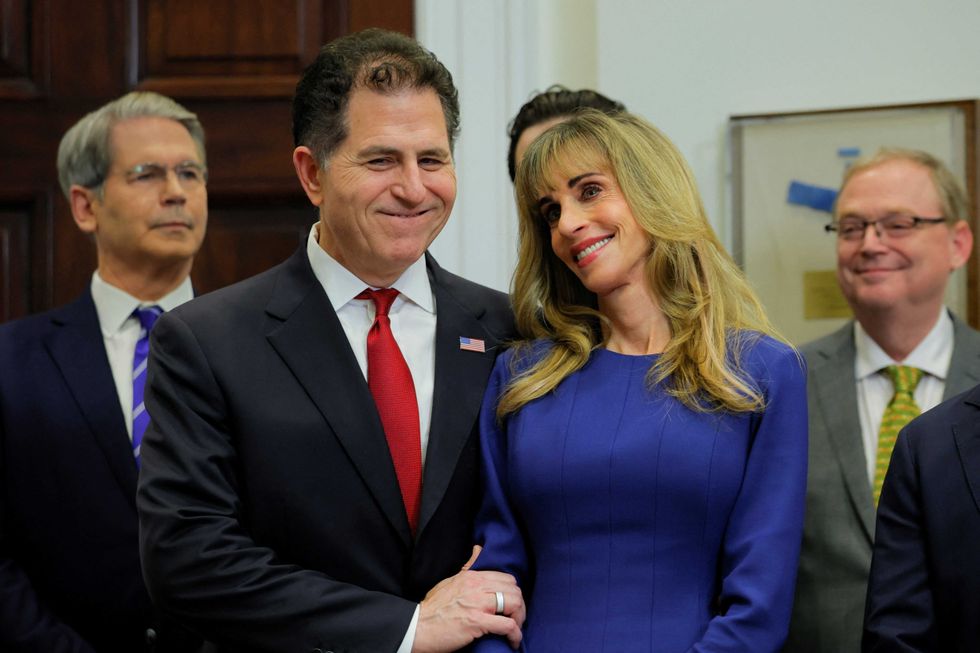
BREAKING: Silicon Valley billionaire Michael Dell and his wife, philanthropist Susan Dell, have announced a controversial plan to invest $6.25 billion in individual investment accounts for 25 million American children. This initiative, revealed on Tuesday, has ignited fierce debate over its potential impact, with critics arguing it primarily benefits the wealthy.
Advocates acknowledge that while a direct cash investment can help some families, the National Women’s Law Center (NWLC) has raised concerns about whether this investment will serve the intended purpose. “While we support direct investments in families, the Trump Accounts being hailed by the White House do not meet most families’ needs,” stated Amy Matsui, NWLC’s vice president of income security and child care. She emphasized that these accounts risk becoming “another tax shelter for the wealthiest.”
The Dells’ announcement follows President Donald Trump signing the One Big Beautiful Bill into law, which includes a provision for investment accounts for every child born in the U.S. between January 2025 and December 2028. Each child will receive a $1,000 initial investment from the government. The Dells’ contribution aims to extend this benefit to children up to age 10 born before 2025, potentially impacting around 80% of children born between 2016 and 2024.
Critics point out that the Dells’ gift translates to just $250 per child, a figure many deem insufficient for meaningful financial support. “What can that money realistically do in terms of providing for a child’s future?” questioned Jim Vorel in a recent article. He underscored concerns about whether families can consistently invest in these accounts, especially as many households live paycheck to paycheck.
The success of these accounts hinges on whether families can contribute further, with allowances of up to $2,500 per year without tax implications. “Do you know many families in 2025 that would describe themselves as having a spare $5,000 per year to invest?” Vorel asked, reflecting widespread financial struggles in the U.S.
Responses to the Dells’ initiative have been mixed, with some lauding it as a significant charitable act while others, like Jonathan Cohn of Progressive Mass, argue that billionaire donations should not replace public funding. “The government should not be funding only what can secure the sympathies of erratic rich people,” he said.
The NWLC criticized the Trump Accounts as emblematic of the administration’s pro-natalist policies, which they argue fail to offer substantial support for struggling families. “If the White House were serious about supporting families, it would advocate for investments in childcare and undoing cuts to essential programs,” concluded Matsui.
As this story develops, the implications of the Dells’ investment and the broader policy surrounding the Trump Accounts remain to be seen. The urgency for a comprehensive approach to family support continues to resonate as millions of American families navigate economic challenges.
Stay tuned for further updates on this developing story.

Urgent Update: Ogdensburg Airport Unveils $25M Renovation Today

Dell’s $6.25B Initiative Sparks Controversy Over Wealth Disparity

Cornell Scientists Unveil Sustainable Method for Hydrogen Peroxide Production

JPMorgan Reaffirms Buy Rating for Amazon, Target Price Set at $305

American Eagle Outfitters Reports $91.3 Million Q3 Profit

Royal Bank of Canada Maintains Buy Rating for Alphabet Stock

Miley Cyrus Engaged to Maxx Morando After Four-Year Romance

New Study Reveals Sleep’s Critical Role in Brain Injury Recovery

Snow Disrupts Commute in WNY, Flu Cases Surge Across New York

Inventor Achieves Breakthrough with 2 Billion FPS Laser Video

Community Unites for 7th Annual Into the Light Walk for Mental Health

Charlie Sheen’s New Romance: ‘Glowing’ with Younger Partner

Dua Lipa Aces GCSE Spanish, Sparks Super Bowl Buzz with Fans

Curium Group, PeptiDream, and PDRadiopharma Launch Key Cancer Trial

Mother Fights to Reunite with Children After Kidnapping in New Drama

Former Mozilla CMO Launches AI-Driven Cannabis Cocktail Brand Fast

Tyler Technologies Set to Reveal Q3 Earnings on October 22

Israel Reopens Rafah Crossing After Hostage Remains Returned
-
 Science1 month ago
Inventor Achieves Breakthrough with 2 Billion FPS Laser Video
-
 Health2 months ago
Community Unites for 7th Annual Into the Light Walk for Mental Health
-
 Top Stories2 months ago
Charlie Sheen’s New Romance: ‘Glowing’ with Younger Partner
-
 Entertainment2 months ago
Dua Lipa Aces GCSE Spanish, Sparks Super Bowl Buzz with Fans
-
 Health2 months ago
Curium Group, PeptiDream, and PDRadiopharma Launch Key Cancer Trial
-
 Entertainment2 months ago
Mother Fights to Reunite with Children After Kidnapping in New Drama
-
 Top Stories2 months ago
Former Mozilla CMO Launches AI-Driven Cannabis Cocktail Brand Fast
-
 Business2 months ago
Tyler Technologies Set to Reveal Q3 Earnings on October 22
-
 World2 months ago
Israel Reopens Rafah Crossing After Hostage Remains Returned
-

 Health2 months ago
North Carolina’s Biotech Boom: Billions in New Investments
-

 Entertainment2 months ago
Red Sox’s Bregman to Become Free Agent; Tigers Commit to Skubal
-

 World2 months ago
R&B Icon D’Angelo Dies at 51, Leaving Lasting Legacy