
Top Stories
Doctor Who’s “Heaven Sent” Turns 10: A Masterpiece Rediscovered

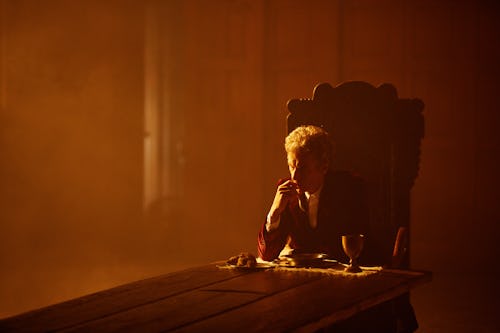
URGENT UPDATE: Today marks the 10th anniversary of one of television’s most profound episodes, “Heaven Sent,” from the iconic series Doctor Who. A groundbreaking hour of storytelling that has so far gone unnoticed by mainstream audiences, this episode has been praised for its deep exploration of grief and mortality.
In “Heaven Sent,” the 12th Doctor, portrayed by Peter Capaldi, navigates a nightmarish labyrinth, pursued by a monstrous figure known as The Veil. This episode is not just a thrilling sci-fi narrative; it dives deep into the human experience of loss. The Doctor’s battle against despair reflects our own struggles with grief, resonating profoundly with viewers.
As the Doctor grapples with the recent death of his companion Clara (played by Jenna Coleman), he finds himself trapped in a castle that symbolizes his emotional turmoil. The episode’s creator, Steven Moffat, stated, “All of us are locked in a castle of grief sometime.” His words encapsulate the essence of this episode, which has been described as a “masterpiece” by critics and fans alike.
Despite its acclaim, “Heaven Sent,” which first aired in November 2015, has failed to gain recognition outside of dedicated Doctor Who circles. It received a Hugo Award nomination but lost to an episode of Jessica Jones, and has not yet appeared on most “Best TV Episodes” lists. This oversight raises questions about how we value art that challenges us—a theme central to this very episode.
The emotional weight of “Heaven Sent” is reinforced by its unique storytelling style. The Doctor’s journey is revealed to be a cycle of grief, where he must face the same pain over and over again. A twist in the narrative shows that he is caught in a time loop, making the stakes even higher—he must confront his grief head-on to break free.
In a striking visual style, director Rachel Talalay delivered an episode filled with haunting imagery, drawing comparisons to cinematic classics like Ingmar Bergman’s “The Seventh Seal.” The episode’s success lies in its ability to transform abstract concepts of death and grief into a tangible narrative, urging viewers to contemplate their own experiences.
As “Heaven Sent” reaches its decade mark, fans and critics alike are calling for a reevaluation of its place in television history. The episode serves as a reminder that the best sci-fi often reflects our deepest fears and challenges us to confront them.
What happens next for “Heaven Sent”? As audiences rediscover this hidden gem, discussions are likely to reignite about its profound themes and masterful execution. The question remains: when will it finally receive the recognition it so richly deserves?
In a world where the Doctor must wait through eternity to confront his past, perhaps it’s time for viewers to engage with this unforgettable episode. The legacy of “Heaven Sent” is not just a personal journey for the Doctor, but a universal exploration of what it means to love, lose, and ultimately, to endure.
As we reflect on this anniversary, it’s clear that “Heaven Sent” is not just a standout episode of Doctor Who—it’s a compelling piece of television that deserves a place in the spotlight. Share your thoughts and join the conversation about this critically acclaimed episode that continues to resonate.

Engineering Legend Professor Ted de Winter Passes at 93

The Game Reacts to Celeste Rivas’ Death, Calls for Justice

Global Psoriasis Rates Climb Steadily, Especially in Wealthy Areas

$500,000 Grant Fuels Development of Children’s Imagination Station

OMERS Administration Corp Increases Stake in Qualcomm by 2.4%

ISOLDE Celebrates a Decade of Advances in Nuclear Research

OMERS Boosts Stake in Merck as Institutional Investors Rally

Widespread Snowstorm Hits Western New York Tonight

Cyber Monday Deals Under $25: Shop Must-Have Gifts NOW

Inventor Achieves Breakthrough with 2 Billion FPS Laser Video

Community Unites for 7th Annual Into the Light Walk for Mental Health

Charlie Sheen’s New Romance: ‘Glowing’ with Younger Partner

Dua Lipa Aces GCSE Spanish, Sparks Super Bowl Buzz with Fans

Mother Fights to Reunite with Children After Kidnapping in New Drama

Former Mozilla CMO Launches AI-Driven Cannabis Cocktail Brand Fast

Tyler Technologies Set to Reveal Q3 Earnings on October 22

Curium Group, PeptiDream, and PDRadiopharma Launch Key Cancer Trial

Israel Reopens Rafah Crossing After Hostage Remains Returned
-
 Science1 month ago
Inventor Achieves Breakthrough with 2 Billion FPS Laser Video
-
 Health2 months ago
Community Unites for 7th Annual Into the Light Walk for Mental Health
-
 Top Stories2 months ago
Charlie Sheen’s New Romance: ‘Glowing’ with Younger Partner
-
 Entertainment2 months ago
Dua Lipa Aces GCSE Spanish, Sparks Super Bowl Buzz with Fans
-
 Entertainment2 months ago
Mother Fights to Reunite with Children After Kidnapping in New Drama
-
 Top Stories2 months ago
Former Mozilla CMO Launches AI-Driven Cannabis Cocktail Brand Fast
-
 Business2 months ago
Tyler Technologies Set to Reveal Q3 Earnings on October 22
-
 Health2 months ago
Curium Group, PeptiDream, and PDRadiopharma Launch Key Cancer Trial
-
 World2 months ago
Israel Reopens Rafah Crossing After Hostage Remains Returned
-

 World2 months ago
R&B Icon D’Angelo Dies at 51, Leaving Lasting Legacy
-

 Entertainment2 months ago
Red Sox’s Bregman to Become Free Agent; Tigers Commit to Skubal
-

 Health2 months ago
North Carolina’s Biotech Boom: Billions in New Investments