
Top Stories
Urgent Study Reveals Baby Ants Call for Death When Sick

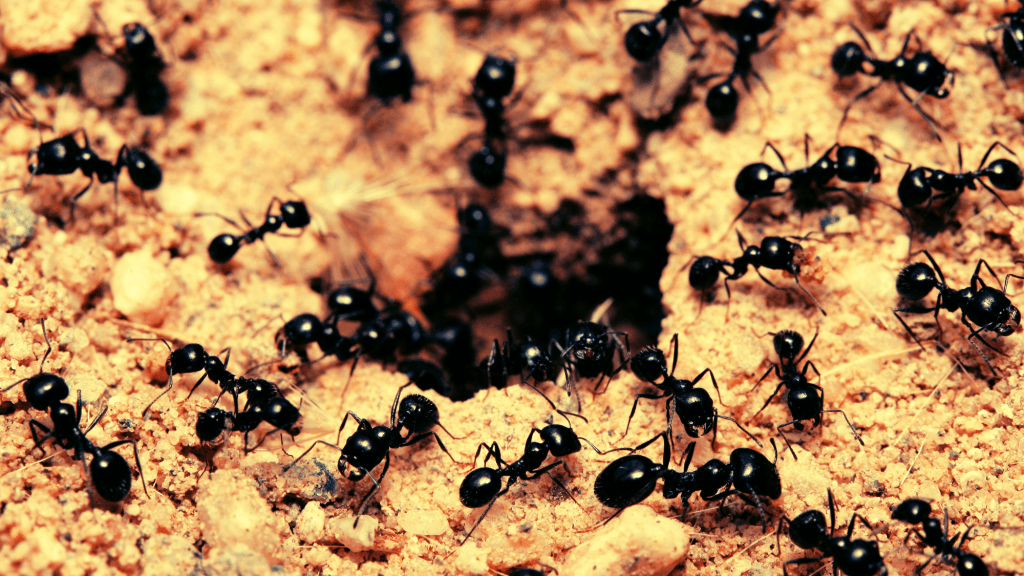
BREAKING: New research confirms that baby ants exhibit a shocking behavior when they are fatally sick: they actively signal for death. This unsettling discovery, published in Nature Communications, reveals that infected young ants release a chemical signal prompting older workers to remove them from the colony before they pose a health risk.
Led by behavioral ecologist Erika Dawson from the Institute of Science and Technology Austria, the study focuses on the species Lasius neglectus, a small black garden ant known for its dense nesting habits, which create a prime environment for disease spread. “An ant colony is a perfect place for a disease outbreak to occur because there are thousands of ants crawling over each other,” Dawson stated.
The findings highlight a grim survival strategy: adult worker ants manage their infection risk by leaving the nest to die. However, young ants, still sealed within cocoons, lack this ability. Instead, they must signal for help when infected with deadly pathogens, which is a stark illustration of self-sacrifice for the colony’s survival.
Researchers previously suspected that sick pupae emitted a unique odor that prompted workers to intervene. Their experiments confirmed this hypothesis: when healthy pupae were exposed to the scent of sick ones, workers destroyed the healthy ants as well. This suggests that the chemical signal is a deliberate call for removal, not merely a byproduct of infection.
Dawson described the process as brutal yet efficient, stating, “Workers bite holes in the pupae and insert poison,” effectively killing both the pathogen and the ant. This behavior illustrates the complexity of ant colonies as collective entities where some members recognize their threat to the whole and request an end to their suffering.
Interestingly, queen pupae do not emit this distress signal. Further testing indicated that queens possess stronger immune defenses and often recover, thus negating the need for such a chemical plea. This reveals an intriguing aspect of ant biology: not all members of the colony adhere to the same survival strategies.
The implications of this research are profound. It offers a glimpse into the harsh realities of colony life and survival, where some individuals willingly sacrifice themselves for the greater good. Ants have been perfecting these survival tactics for over 100 million years, and this study adds a new layer to our understanding of their social structures and behaviors.
As scientists continue to explore the intricacies of ant colonies, the shocking behavior of these baby ants is sure to provoke further discussion and research. What does this mean for our understanding of collective behavior in other species? The findings are not just a testament to the resilience of ants, but also raise ethical questions about survival and sacrifice in the animal kingdom.
Stay tuned for more updates as this research unfolds, and consider sharing this shocking revelation with others interested in the fascinating world of ants.

Experts Reveal 4 Urgent Tips to Tackle the Sunday Scaries NOW

New Insights on ‘Taxi Cab Theory’ Challenge Dating Norms Today

Urgent: Grab These Must-Have Hanukkah Essentials Before Dec. 14!

Scientists Unveil Ancient Civilizations and Cosmic Discoveries

Analysts Set Price Target for Mullen Group at C$17.22

Flooding Crisis in Asia Claims Over 1,750 Lives Amid Heavy Rains

Wall Street Zen Downgrades LeMaitre Vascular to Hold Rating

Vote Now: Who is HYBE’s Most Handsome Idol-Actor for 2025?

Female Chemist Pioneers Drug for Childhood Leukemia Remission

Inventor Achieves Breakthrough with 2 Billion FPS Laser Video

Community Unites for 7th Annual Into the Light Walk for Mental Health

Charlie Sheen’s New Romance: ‘Glowing’ with Younger Partner

Dua Lipa Aces GCSE Spanish, Sparks Super Bowl Buzz with Fans

Curium Group, PeptiDream, and PDRadiopharma Launch Key Cancer Trial

Mother Fights to Reunite with Children After Kidnapping in New Drama

Former Mozilla CMO Launches AI-Driven Cannabis Cocktail Brand Fast

Israel Reopens Rafah Crossing After Hostage Remains Returned

Tyler Technologies Set to Reveal Q3 Earnings on October 22
-
 Science2 months ago
Inventor Achieves Breakthrough with 2 Billion FPS Laser Video
-
 Health2 months ago
Community Unites for 7th Annual Into the Light Walk for Mental Health
-
 Top Stories2 months ago
Charlie Sheen’s New Romance: ‘Glowing’ with Younger Partner
-
 Entertainment2 months ago
Dua Lipa Aces GCSE Spanish, Sparks Super Bowl Buzz with Fans
-
 Health2 months ago
Curium Group, PeptiDream, and PDRadiopharma Launch Key Cancer Trial
-
 Entertainment2 months ago
Mother Fights to Reunite with Children After Kidnapping in New Drama
-
 Top Stories2 months ago
Former Mozilla CMO Launches AI-Driven Cannabis Cocktail Brand Fast
-
 World2 months ago
Israel Reopens Rafah Crossing After Hostage Remains Returned
-
 Business2 months ago
Tyler Technologies Set to Reveal Q3 Earnings on October 22
-

 Health2 months ago
North Carolina’s Biotech Boom: Billions in New Investments
-

 World2 months ago
R&B Icon D’Angelo Dies at 51, Leaving Lasting Legacy
-

 Entertainment2 months ago
Red Sox’s Bregman to Become Free Agent; Tigers Commit to Skubal