
Top Stories
Urgent Warning: Our Perception of Forests Is Severely Distorted

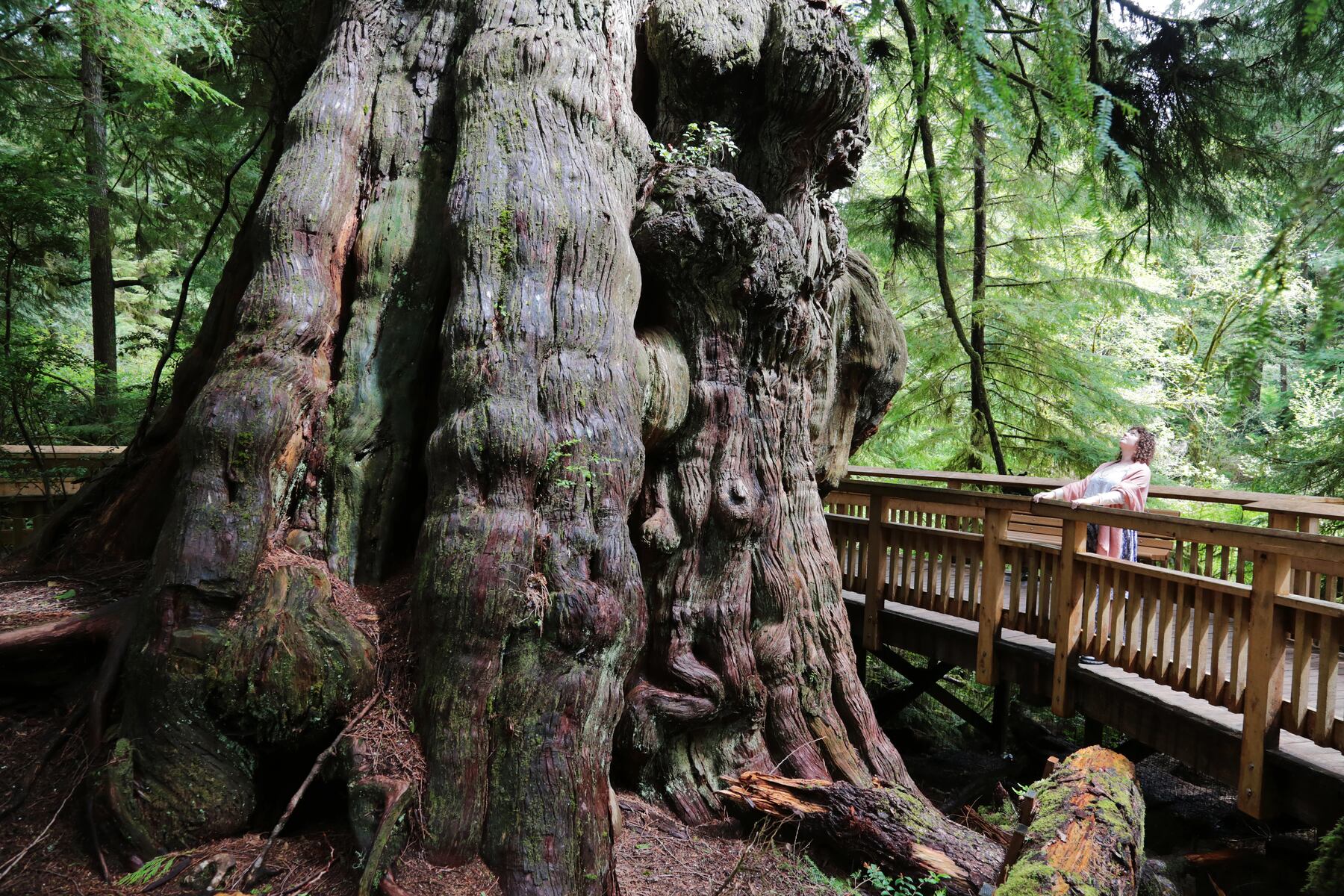
UPDATE: A striking new podcast episode reveals that our understanding of forests has been fundamentally altered, highlighting an urgent need for conservation awareness. Environmental educator Ross Reid, known as “Nerdy About Nature,” unveils shocking insights about the stark differences between old-growth and second-growth forests in a recent episode of the Peak Northwest podcast.
According to Reid, when you stand before a towering Douglas fir in an Oregon forest, you might believe you are witnessing an ancient ecosystem. However, Reid warns that what many perceive as impressive forest landscapes are merely remnants of their former glory. “It’s this concept known as shifting baseline syndrome,” Reid explains. “Each generation accepts a diminished version of nature as ‘normal.’”
This psychological phenomenon raises urgent questions: If we can no longer recognize what we’ve lost, how can we protect it? Reid emphasizes the drastic changes in our forests over the last century and how they impact conservation efforts.
In the podcast, Reid draws attention to specific features that differentiate second-growth forests from their older counterparts. “Pit mound topography is a concept in an old-growth forest where older trees fall over naturally, creating undulating terrain,” Reid states. In contrast, many Pacific Northwest second-growth forests are flat and lack the rich ecological complexity found in older ecosystems.
Reid also highlights critical habitat loss, noting that bears in British Columbia rely on hollowed-out cavities in ancient Western red cedar trees for denning—habitats that take centuries to form. The industrial forestry practices of today have not only transformed the appearance of our forests but have also fundamentally altered their ecological functions.
“Second-growth forests managed for timber production lack the structural complexity, genetic diversity, and ecological relationships that mature forests naturally develop,” Reid warns. This alarming trend should resonate with anyone who loves hiking and exploring Oregon’s natural beauty.
Listeners are encouraged to reconsider their perceptions of familiar landscapes, looking beyond the size of trees to the subtler ecological signs that distinguish truly ancient forests.
For those interested in learning more, listen to the full episode of the Peak Northwest podcast on Apple, Spotify, YouTube, or your preferred podcast platform. Hosts Jamie Hale and Chiara Profenna guide listeners through some of the Pacific Northwest’s greatest natural destinations and conservation challenges.
This urgent message about the changing perception of our forests calls for immediate action and awareness. Share this article to spread the word about the critical need for forest conservation today.

Texas Tech Stuns No. 3 Duke with Last-Second Comeback Victory

Urgent: High School Sports Scores and Matchups for Dec. 20

Powerball Jackpot Hits $1.5 Billion: Winning Numbers Tonight!

Epstein Survivor Slams Trump Admin for ‘Indefensible’ Error

Draymond Green Ejected in Urgent Clash Against Suns

Packers QB Jordan Love Injured After Head Hit, Evaluated for Concussion

Developers Shift to Podman for Enhanced Container Management

Ohio Doctor Charged with Forcing Abortion Pill on Girlfriend

UPS Essential for Your Home Server: Protect Data Now!

Inventor Achieves Breakthrough with 2 Billion FPS Laser Video

Community Unites for 7th Annual Into the Light Walk for Mental Health

Charlie Sheen’s New Romance: ‘Glowing’ with Younger Partner

Dua Lipa Aces GCSE Spanish, Sparks Super Bowl Buzz with Fans

Curium Group, PeptiDream, and PDRadiopharma Launch Key Cancer Trial

Former Mozilla CMO Launches AI-Driven Cannabis Cocktail Brand Fast

Mother Fights to Reunite with Children After Kidnapping in New Drama

R&B Icon D’Angelo Dies at 51, Leaving Lasting Legacy

Israel Reopens Rafah Crossing After Hostage Remains Returned
-
 Science2 months ago
Inventor Achieves Breakthrough with 2 Billion FPS Laser Video
-
 Health2 months ago
Community Unites for 7th Annual Into the Light Walk for Mental Health
-
 Top Stories2 months ago
Charlie Sheen’s New Romance: ‘Glowing’ with Younger Partner
-
 Entertainment2 months ago
Dua Lipa Aces GCSE Spanish, Sparks Super Bowl Buzz with Fans
-
 Health2 months ago
Curium Group, PeptiDream, and PDRadiopharma Launch Key Cancer Trial
-
 Top Stories2 months ago
Former Mozilla CMO Launches AI-Driven Cannabis Cocktail Brand Fast
-
 Entertainment2 months ago
Mother Fights to Reunite with Children After Kidnapping in New Drama
-
 World2 months ago
R&B Icon D’Angelo Dies at 51, Leaving Lasting Legacy
-
 World2 months ago
Israel Reopens Rafah Crossing After Hostage Remains Returned
-

 Business2 months ago
Tyler Technologies Set to Reveal Q3 Earnings on October 22
-

 Health2 months ago
YouTube Launches New Mental Health Tools for Teen Users
-

 Entertainment2 months ago
Red Sox’s Bregman to Become Free Agent; Tigers Commit to Skubal