
World
Flooding Crisis in Asia Claims Over 1,750 Lives Amid Heavy Rains

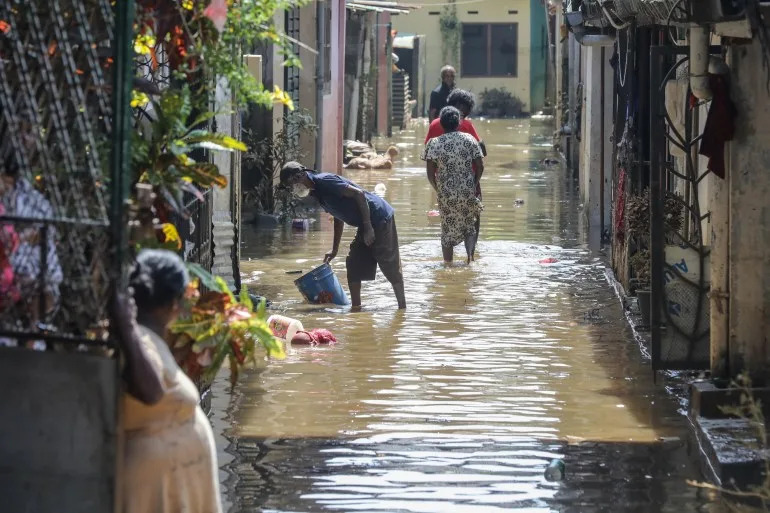
Severe flooding and landslides in parts of Asia have resulted in over 1,750 deaths as rescue teams and volunteers race to assist millions affected by this climate-driven disaster. The hardest-hit countries include Indonesia, Sri Lanka, and Thailand, where heavy rainfall has intensified recovery efforts.
As of February 3, 2024, Indonesia has reported at least 867 fatalities, with an additional 521 individuals still unaccounted for. This data comes from the disaster-stricken Aceh Province on the island of Sumatra, which has seen over 800,000 people displaced. In Sri Lanka, the government confirmed 607 deaths and 214 missing, marking this situation as the most severe natural disaster the country has faced, according to President Anura Kumara Dissanayake. Thailand has also suffered, with at least 276 fatalities, while two deaths each were reported in Malaysia and Vietnam due to landslides triggered by the rains.
In Indonesia, survivors are grappling with the aftermath of the flash floods and landslides that struck last week. The country’s meteorological agency has warned that Aceh could experience “very heavy rain” through the weekend, which poses further risks. Governor Muzakir Manaf has indicated that response teams are still searching for victims in “waist-deep” mud.
The situation is dire, with starvation emerging as a critical threat in remote and inaccessible areas. “Many people need basic necessities. Many areas remain untouched in the remote areas of Aceh,” Manaf told reporters. He emphasized that “people are not dying from the flood, but from starvation.”
Entire villages in the Aceh Tamiang region have been obliterated, with Manaf noting that “the Aceh Tamiang region is completely destroyed from top to bottom.”
In Sri Lanka, where more than 2 million people—nearly 10 percent of the population—have been impacted, authorities have warned of continued heavy rains that could trigger new landslides. The Disaster Management Centre (DMC) reported that over 71,000 homes have been damaged, with nearly 5,000 homes completely destroyed.
Climate Change and Deforestation Exacerbate Disaster
The recent flooding has been exacerbated by simultaneous weather events, including two typhoons and a cyclone, which brought unprecedented rainfall to the region. Experts indicate that these extreme weather patterns are becoming increasingly likely due to climate change.
Illegal logging, particularly connected to global demand for palm oil, has also intensified the flooding’s impact in Sumatra. Photographs from the region reveal logs washed downstream, illustrating the consequences of deforestation. Indonesia faces one of the highest annual rates of forest loss, attributed to mining, plantations, and wildfires.
In response to the ongoing crisis, Indonesia’s Forestry Minister Raja Juli Antoni announced the revocation of logging licenses for 20 companies, covering an area of 750,000 hectares (approximately 1.8 million acres), including regions impacted by the floods. Furthermore, Environment Minister Hanif Faisol Nurofiq has ordered an immediate halt to operations by palm oil, mining, and power plant companies situated upstream from affected areas.
Febi Dwirahmadi, the Indonesian programme coordinator for the Centre for Environment and Population Health at Griffith University in Australia, explained that rainforest cover acts like a sponge, absorbing water during heavy rainfall. With the ongoing deforestation worsening climate change, there is little to mitigate the impact of such heavy rains as they flow into waterways.
The long-term recovery from this catastrophe will depend not only on immediate relief efforts but also on addressing the underlying environmental issues that have contributed to the severity of these disasters. The plight of affected communities underscores the urgent need for comprehensive strategies to combat climate change and prevent future tragedies.

Two Traders Launch $5 Million Investment Fund from Discord Chat

24-Year-Old Stanford Dropout Secures $64M for AI Math Startup

Vanity Fair Ends Collaboration with Olivia Nuzzi Amid Controversy

Dodge & Cox Reduces Stake in SLB Limited Amid Market Adjustments

Delight in the Orange Breakfast Ring for Festive Gatherings

Herriot Tabuteau Divests 49,252 Shares of Axsome Therapeutics

Zonta Club of Auburn Champions Action Against Domestic Violence

Sampo and First Acceptance: A Comparative Analysis of Financial Strength

Couples Shift Focus to Emotional Milestones Over Traditional Bases

Inventor Achieves Breakthrough with 2 Billion FPS Laser Video

Community Unites for 7th Annual Into the Light Walk for Mental Health

Charlie Sheen’s New Romance: ‘Glowing’ with Younger Partner

Dua Lipa Aces GCSE Spanish, Sparks Super Bowl Buzz with Fans

Mother Fights to Reunite with Children After Kidnapping in New Drama

Curium Group, PeptiDream, and PDRadiopharma Launch Key Cancer Trial

Former Mozilla CMO Launches AI-Driven Cannabis Cocktail Brand Fast

Israel Reopens Rafah Crossing After Hostage Remains Returned

Tyler Technologies Set to Reveal Q3 Earnings on October 22
-
 Science2 months ago
Inventor Achieves Breakthrough with 2 Billion FPS Laser Video
-
 Health2 months ago
Community Unites for 7th Annual Into the Light Walk for Mental Health
-
 Top Stories2 months ago
Charlie Sheen’s New Romance: ‘Glowing’ with Younger Partner
-
 Entertainment2 months ago
Dua Lipa Aces GCSE Spanish, Sparks Super Bowl Buzz with Fans
-
 Entertainment2 months ago
Mother Fights to Reunite with Children After Kidnapping in New Drama
-
 Health2 months ago
Curium Group, PeptiDream, and PDRadiopharma Launch Key Cancer Trial
-
 Top Stories2 months ago
Former Mozilla CMO Launches AI-Driven Cannabis Cocktail Brand Fast
-
 World2 months ago
Israel Reopens Rafah Crossing After Hostage Remains Returned
-
 Business2 months ago
Tyler Technologies Set to Reveal Q3 Earnings on October 22
-

 Health2 months ago
North Carolina’s Biotech Boom: Billions in New Investments
-

 World2 months ago
R&B Icon D’Angelo Dies at 51, Leaving Lasting Legacy
-

 Entertainment2 months ago
Red Sox’s Bregman to Become Free Agent; Tigers Commit to Skubal