
World
Mitch McConnell’s New Law Threatens Future of Hemp Industry

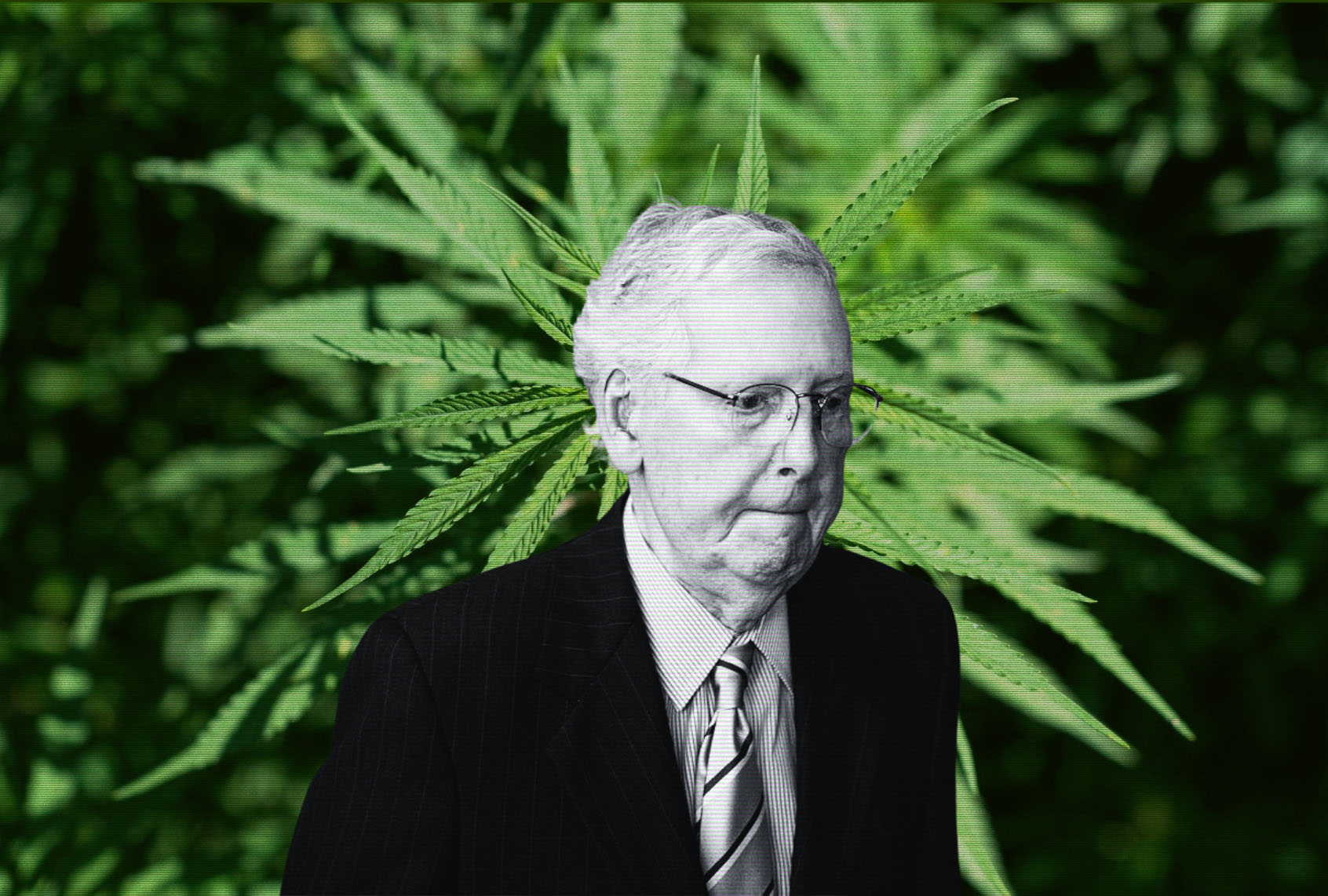
American hemp farmers are facing a significant challenge following the passage of a provision that bans certain intoxicating hemp products. This measure, included in the recent government funding deal, has alarmed industry leaders who warn that the future of the hemp sector hangs in the balance.
Under the new law, which is set to take effect in 2024, the total amount of THC allowed per container of hemp-derived products is limited to 0.4 milligrams. This threshold is considerably lower than the THC levels found in many adult-use cannabis products, which can be as high as 20%. The provision specifically targets psychoactive compounds like delta-8 THC, a cannabinoid that has gained popularity for its psychoactive effects but is derived from hemp.
Lukas Gilkey, co-founder and CEO of Hometown Hero, a hemp business based in Austin, Texas, expressed deep concern over the implications of the law. He stated, “We’re now looking at a potential 0.4 milligram per container THC limit, which effectively would outlaw full-spectrum chapstick, pet treats — I mean, a lot of things that are not necessarily psychoactive.” This limitation, he argues, could lead to the demise of many businesses in the rapidly growing hemp industry.
Impact on the Hemp Market
The hemp industry has flourished since the passage of the 2018 Farm Bill, which legalized hemp cultivation in the United States. According to Whitney Economics, the hemp-derived cannabinoid market exceeded $28 billion in sales in 2023, supporting approximately 328,000 jobs and generating roughly $13 billion in wages. The recent legislative changes raise questions about the sustainability of this growth.
Mitch McConnell, the Republican Senator from Kentucky, has played a pivotal role in both the legalization of hemp and the introduction of the new law banning intoxicating hemp products. In an email, McConnell explained that the law aims to “restore the original intent” of the 2018 legislation. He noted that some companies have exploited loopholes to create products with unnaturally high THC levels, which he claims undermines the integrity of the hemp industry.
Despite these assertions, industry leaders like Gilkey are mobilizing to fight the new regulations. He stated, “I do not believe this will hold. This industry is very large, and there are a lot of well-funded companies that are already putting together strategies to fight this.”
Challenges and Opportunities Ahead
The hemp sector now finds itself navigating a complex landscape influenced by both the alcohol and state-level marijuana lobbies. The alcohol industry has been advocating for stricter regulations on hemp products, viewing them as competition. Conversely, the marijuana industry has generally welcomed such regulations, as they operate under different regulatory frameworks in states where cannabis is legalized.
Farmers like Ann Guager, who runs Caprock Family Farms in Texas, remain hopeful, believing that public support for hemp products will sway lawmakers. Guager emphasized the importance of advocacy, stating, “We know that speaking up and calling your lawmakers and taking the time to let people know that these products really do help people and change people’s lives.”
Experts in drug law, such as Robert Mikos from Vanderbilt University, caution that while optimism exists within the hemp industry, lawmakers may believe that the 2018 legalization of psychoactive hemp products was a misstep. Mikos commented, “I don’t think Congress is trying to destroy the industrial hemp market… but if the bill does end up destroying the hemp industry, it would be yet another unintended consequence of this.”
As the hemp industry braces for the potential impact of the new law, the future remains uncertain. The enforcement of these regulations will largely fall to state governments, which may choose to continue allowing hemp products that federal law now categorizes as marijuana. The evolving situation highlights the ongoing debate about the regulation of hemp and its psychoactive derivatives, as stakeholders seek clarity and stability in a rapidly changing market.

ChatGPT Surges to 800 Million Users in Just 3 Years!

Im Si Wan’s Viral Photos Spark Heated Debate Online

Cyber Monday 2025 Deals: Limited-Time Savings on Top Items!

SoftBank and Yaskawa Join Forces to Develop Advanced Office Robots

Analysts Set Price Target of $25.11 for Ingram Micro Shares

Winter Storm Hits Northern Pennsylvania; Drivers Urged to Stay Off Roads

Wall Street Analysts Adjust Ratings for Deere & Company Stock

Josh Brolin Reflects on Friendship with Donald Trump Before New Film

Dallas Pension Crisis Escalates as Board Rejects City’s Plan

Inventor Achieves Breakthrough with 2 Billion FPS Laser Video

Community Unites for 7th Annual Into the Light Walk for Mental Health

Charlie Sheen’s New Romance: ‘Glowing’ with Younger Partner

Dua Lipa Aces GCSE Spanish, Sparks Super Bowl Buzz with Fans

Mother Fights to Reunite with Children After Kidnapping in New Drama

Former Mozilla CMO Launches AI-Driven Cannabis Cocktail Brand Fast

Curium Group, PeptiDream, and PDRadiopharma Launch Key Cancer Trial

Tyler Technologies Set to Reveal Q3 Earnings on October 22

Israel Reopens Rafah Crossing After Hostage Remains Returned
-
 Science1 month ago
Inventor Achieves Breakthrough with 2 Billion FPS Laser Video
-
 Health2 months ago
Community Unites for 7th Annual Into the Light Walk for Mental Health
-
 Top Stories2 months ago
Charlie Sheen’s New Romance: ‘Glowing’ with Younger Partner
-
 Entertainment2 months ago
Dua Lipa Aces GCSE Spanish, Sparks Super Bowl Buzz with Fans
-
 Entertainment2 months ago
Mother Fights to Reunite with Children After Kidnapping in New Drama
-
 Top Stories1 month ago
Former Mozilla CMO Launches AI-Driven Cannabis Cocktail Brand Fast
-
 Health2 months ago
Curium Group, PeptiDream, and PDRadiopharma Launch Key Cancer Trial
-
 Business2 months ago
Tyler Technologies Set to Reveal Q3 Earnings on October 22
-
 World2 months ago
Israel Reopens Rafah Crossing After Hostage Remains Returned
-

 Health2 months ago
North Carolina’s Biotech Boom: Billions in New Investments
-

 World2 months ago
R&B Icon D’Angelo Dies at 51, Leaving Lasting Legacy
-

 Entertainment2 months ago
Red Sox’s Bregman to Become Free Agent; Tigers Commit to Skubal