
World
Mystery Surrounds Gruesome Deaths of Soviet Students in Siberia

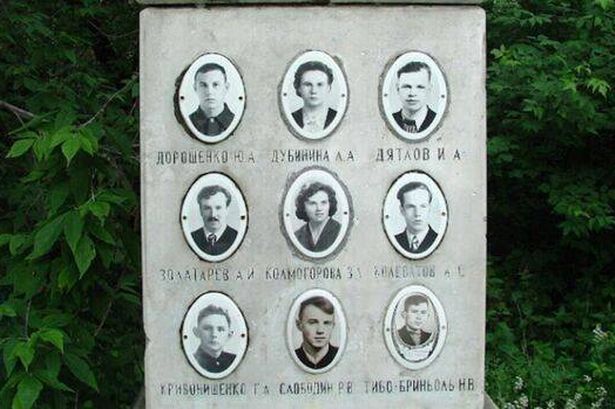
The chilling deaths of a group of Soviet students in the Siberian wilderness in January 1959 continue to baffle investigators and intrigue true-crime enthusiasts. The bodies of nine young adventurers were discovered in a remote area near Mount Ortorten, revealing gruesome injuries, including missing eyes and tongues. Despite efforts by Soviet authorities to label the incident as a tragic accident linked to hypothermia and frostbite, the brutal state of the bodies has led many to question this narrative.
This tragic tale began on a winter day in January 1959, when a group of ten friends from the Urals Polytechnic Institute set out for a week-long skiing expedition. Under the leadership of Igor Dyatlov, a fifth-year radio engineering student, the party included eight men and two women, all seasoned skiers. The group comprised Zinaida Kolmogorova, 22; Yuri Doroshenko, 21; Alexander Kolevatov, 24; Yuri Krivonischenko, 23; Rustem Slobodin, 23; Nicolas Thibeaux-Brignolle, 23; Lyudmila Dubinina, 20; and Yuri Yudin, 22, along with Semyon Zolotaryov, a 38-year-old athletics coach and World War Two veteran.
On January 23, the group boarded an overnight train from Sverdlovsk to a remote village called Vizhay. After a brief stay, they arranged for transport to the 41st lumber settlement, followed by a horse-drawn sledge to the North-2 mining outpost. At this point, Yuri Yudin made the decision to turn back, a choice that ultimately saved his life. The remaining members continued toward their destination, Mount Ortorten, which, according to the native Mansi people, carries an ominous meaning: “Don’t Go There.”
Setting up camp on the eastern slope of Kholat Syakhyl, the group carved out a shallow depression for shelter. Following this, communication with the hikers ceased entirely. When they failed to return as expected, a search and rescue team was dispatched. On February 27, 1959, the searchers made a grim discovery.
Mikhail Sharavin, one of the searchers, recalled the moment they found the first bodies. “We approached a cedar tree and when we were 20 metres away, we saw a brown spot… And when we got closer we saw two corpses lying there. The hands and the feet were reddish-brown.” The two bodies belonged to Yuri Doroshenko and Yuri Krivonischenko, who were found in their underwear, with Krivonischenko having gnawed on his own knuckle.
The search team soon located Dyatlov’s body, clothed but without shoes, lying face down in the snow. Zinaida Kolmogorova’s remains were found nearby, positioned as though she had been clawing her way back uphill to their campsite. A significant bruise on her torso suggested she had suffered a violent blow.
The harsh conditions and the bizarre injuries led to rampant speculation about the cause of death. Some suspected the Mansi people might have been involved, but local community members have consistently denied any wrongdoing. Other theories included military testing or the group falling victim to a secret experiment.
One of the most credible explanations comes from Swiss researchers Alexander Puzrin and Johan Gaume, who proposed that an avalanche may have caused the tragedy. They suggest that the students inadvertently triggered a “slab avalanche” due to the way they set up their tent. Puzrin explained, “If they hadn’t made a cut in the slope, nothing would have happened. That was the initial trigger… the katabatic wind probably drifted the snow and allowed an extra load to build up slowly.”
According to their theory, the avalanche would have caused severe trauma to some members while forcing others to flee their tent without appropriate gear, leading to hypothermia-related deaths.
The mystery surrounding the deaths of these young adventurers remains unresolved, leaving many questions unanswered as the investigation continues to capture the public’s imagination.

Urgent Proposal for 54 Affordable Condos in West Hartford

Fanatics Launches Urgent Prediction Market: Fanatics Markets Live Now

Trump Administration Disrupts U.S. Research Pact, Funding Plummets

Leader Electronics Unveils v8.2 Software for Enhanced Live Production

Mystery Surrounds Gruesome Deaths of Soviet Students in Siberia

Channing Capital Management Expands Stake in TopBuild Corp. by 28.1%

Prince Harry Returns to Colbert with Playful ‘King for a Day’ Clip

Trump Administration Disrupts U.S. Research Funding Landscape

Family Faces $5,000 Loss Over Surprise Vacation Refusal

Inventor Achieves Breakthrough with 2 Billion FPS Laser Video

Community Unites for 7th Annual Into the Light Walk for Mental Health

Charlie Sheen’s New Romance: ‘Glowing’ with Younger Partner

Dua Lipa Aces GCSE Spanish, Sparks Super Bowl Buzz with Fans

Curium Group, PeptiDream, and PDRadiopharma Launch Key Cancer Trial

Mother Fights to Reunite with Children After Kidnapping in New Drama

Israel Reopens Rafah Crossing After Hostage Remains Returned

Tyler Technologies Set to Reveal Q3 Earnings on October 22

Former Mozilla CMO Launches AI-Driven Cannabis Cocktail Brand Fast
-
 Science2 months ago
Inventor Achieves Breakthrough with 2 Billion FPS Laser Video
-
 Health2 months ago
Community Unites for 7th Annual Into the Light Walk for Mental Health
-
 Top Stories2 months ago
Charlie Sheen’s New Romance: ‘Glowing’ with Younger Partner
-
 Entertainment2 months ago
Dua Lipa Aces GCSE Spanish, Sparks Super Bowl Buzz with Fans
-
 Health2 months ago
Curium Group, PeptiDream, and PDRadiopharma Launch Key Cancer Trial
-
 Entertainment2 months ago
Mother Fights to Reunite with Children After Kidnapping in New Drama
-
 World2 months ago
Israel Reopens Rafah Crossing After Hostage Remains Returned
-
 Business2 months ago
Tyler Technologies Set to Reveal Q3 Earnings on October 22
-
 Top Stories2 months ago
Former Mozilla CMO Launches AI-Driven Cannabis Cocktail Brand Fast
-

 Health2 months ago
North Carolina’s Biotech Boom: Billions in New Investments
-

 Entertainment2 months ago
Red Sox’s Bregman to Become Free Agent; Tigers Commit to Skubal
-

 World2 months ago
R&B Icon D’Angelo Dies at 51, Leaving Lasting Legacy