
World
Nicolás Maduro’s Resilient Tenure Amidst Crisis and Controversy

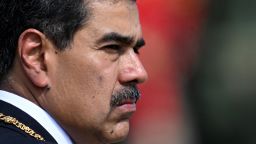
Nicolás Maduro has defied expectations during his presidency, which began in 2013 following the death of his predecessor, Hugo Chávez. Initially underestimated, Maduro has become the longest-serving president in Latin America, holding power for over twelve years amidst a backdrop of economic turmoil, political dissent, and international sanctions. His leadership style, characterized by eccentric decisions and controversial electoral practices, has led many to label his actions as “maduradas.”
In December 2012, just before his death, Chávez anointed Maduro as his successor. This endorsement was crucial, as Maduro faced significant challenges within the United Socialist Party of Venezuela (PSUV) and was not initially the preferred candidate among all factions. Nevertheless, with Chávez’s backing, Maduro secured the presidency in April 2013, albeit with a narrow victory margin of just 1.59% over opposition leader Henrique Capriles.
Despite facing ongoing protests, allegations of repression, and international isolation, Maduro has maintained a grip on power. His government has been accused of widespread human rights violations, with reports from the United Nations and the International Criminal Court (ICC) indicating systematic abuses since 2014. These findings have underscored the high human cost of his administration, with millions fleeing the country due to deteriorating living conditions and political unrest.
The Cuban Connection and Political Maneuvering
Maduro’s political ascent has been bolstered by a longstanding relationship with Cuba, which has provided crucial support throughout his tenure. His ties to the Cuban government, established during his early career as a foreign minister, have been pivotal in managing Venezuela’s strategic alliances. According to Ronal Rodríguez, a researcher at the Venezuela Observatory, Maduro’s ability to navigate the complexities of chavismo and secure Cuban backing has been a key factor in his political survival.
The Venezuelan economy, once the richest in Latin America due to its oil reserves, has suffered catastrophic declines under Maduro’s leadership. The International Monetary Fund (IMF) reports that the economy has shrunk to just 28% of its 2013 size, with oil export revenues plummeting to 20% of their previous levels. Critics argue that while US sanctions have contributed to the economic crisis, poor management and internal conflicts within the PSUV have played a significant role.
Amidst this turmoil, Maduro has consistently framed his government’s struggles as a result of external pressures, particularly from the United States. His administration has employed an anti-imperialist narrative to justify its actions and maintain support among loyalists. This narrative has resonated strongly within a segment of the population that views US sanctions as an infringement on Venezuela’s sovereignty.
Facing Increased Pressure and Future Uncertainty
As Maduro continues to navigate a complex political landscape, he now faces renewed military and diplomatic pressure from the United States. The Biden administration has maintained and intensified some of the sanctions imposed during Trump’s presidency, aiming to weaken Maduro’s hold on power. Despite these challenges, Maduro’s resilience has surprised many observers, as he has managed to remain in office despite predictions of his imminent downfall.
The 2024 elections pose another significant test for Maduro. Although he purportedly secured re-election, the results have been met with skepticism both domestically and internationally. Notably, even neighboring countries like Colombia and Brazil, led by leftist governments, did not recognize the election outcomes. This situation raises questions about the legitimacy of Maduro’s regime and its ability to sustain support amid ongoing economic hardship and political dissent.
Maduro’s survival strategy has involved a delicate balance of power within the government and military, where he has distributed responsibilities among various factions to secure loyalty. This approach has allowed him to maintain control in a volatile environment while facing intense scrutiny from both domestic and international actors.
Despite the challenges that lie ahead, Maduro’s ability to remain in power amidst significant adversity continues to illustrate the complexities of Venezuelan politics. As the nation grapples with profound crises, the question remains: Can Maduro once again defy the odds and maintain his position in the face of mounting pressure?

Albany Man Convicted for Menacing Clown Stunt with Chainsaw

Cathy Sandeen Receives $50 Million Boost Amid Enrollment Declines

Aergo’s Market Cap Hits $27.15 Million Amid Recent Trading Decline

Prime Medicine Publishes Phase 1/2 Clinical Data for PM359

Gabelli Funds Reduces Stake in Deere & Company Amid Market Changes

ITA Airways Expands US-Italy Routes with New Houston Connection

OriginTrail Price Stabilizes at $0.52 Amid Market Activity

Cathy Sandeen Gains $50M Boost; Ricardo Lara Faces Scrutiny Now

One Dead, 20 Hospitalized in Urgent California Mushroom Poisoning

Inventor Achieves Breakthrough with 2 Billion FPS Laser Video

Community Unites for 7th Annual Into the Light Walk for Mental Health

Charlie Sheen’s New Romance: ‘Glowing’ with Younger Partner

Dua Lipa Aces GCSE Spanish, Sparks Super Bowl Buzz with Fans

Curium Group, PeptiDream, and PDRadiopharma Launch Key Cancer Trial

Former Mozilla CMO Launches AI-Driven Cannabis Cocktail Brand Fast

Mother Fights to Reunite with Children After Kidnapping in New Drama

R&B Icon D’Angelo Dies at 51, Leaving Lasting Legacy

Israel Reopens Rafah Crossing After Hostage Remains Returned
-
 Science2 months ago
Inventor Achieves Breakthrough with 2 Billion FPS Laser Video
-
 Health2 months ago
Community Unites for 7th Annual Into the Light Walk for Mental Health
-
 Top Stories2 months ago
Charlie Sheen’s New Romance: ‘Glowing’ with Younger Partner
-
 Entertainment2 months ago
Dua Lipa Aces GCSE Spanish, Sparks Super Bowl Buzz with Fans
-
 Health2 months ago
Curium Group, PeptiDream, and PDRadiopharma Launch Key Cancer Trial
-
 Top Stories2 months ago
Former Mozilla CMO Launches AI-Driven Cannabis Cocktail Brand Fast
-
 Entertainment2 months ago
Mother Fights to Reunite with Children After Kidnapping in New Drama
-
 World2 months ago
R&B Icon D’Angelo Dies at 51, Leaving Lasting Legacy
-
 World2 months ago
Israel Reopens Rafah Crossing After Hostage Remains Returned
-

 Business2 months ago
Tyler Technologies Set to Reveal Q3 Earnings on October 22
-

 Health2 months ago
North Carolina’s Biotech Boom: Billions in New Investments
-
 Entertainment2 months ago
Red Sox’s Bregman to Become Free Agent; Tigers Commit to Skubal