
World
Trump Signals Commitment to Defend Taiwan Against China

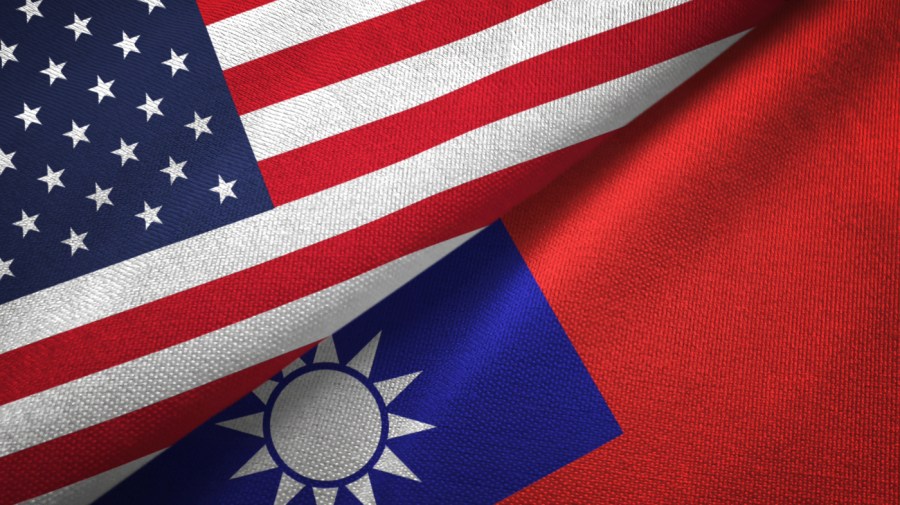
Former President Donald Trump has indicated a potential shift in U.S. foreign policy concerning Taiwan, suggesting a commitment to defend the island against increasing Chinese aggression. This announcement comes as tensions between the United States and China escalate, raising questions about the future of U.S.-Taiwan relations.
Over the past three decades, China has significantly bolstered its military capabilities, particularly in the South China Sea and around Taiwan. Beijing has made it clear that it views Taiwan as a breakaway province and has not ruled out the use of force to achieve reunification. The growing assertiveness of China in the region has generated concerns within Washington regarding its military readiness and willingness to respond to threats against Taiwan.
Trump’s statement, made during a campaign event in Washington D.C. on March 20, 2024, is seen as an effort to distinguish his foreign policy stance ahead of the upcoming 2024 presidential election. “We must stand firm against Chinese aggression,” Trump declared, underscoring his belief that a strong U.S. response is vital for protecting Taiwan and deterring further Chinese expansionism.
The implications of Trump’s remarks are significant. Analysts suggest that a clear commitment to defend Taiwan could reshape U.S. military strategy in the Pacific. The U.S. military has already been increasing its presence in the region, with joint military exercises involving Taiwanese forces and allies aimed at demonstrating solidarity and preparedness.
Trump’s approach contrasts sharply with his predecessor, Joe Biden, who has maintained a policy of strategic ambiguity regarding Taiwan. Under Biden, the U.S. has provided military support to Taiwan, including arms sales, but has stopped short of explicitly promising military intervention in the event of a conflict with China.
As tensions continue to rise, the importance of U.S. support for Taiwan remains a topic of intense debate. In a recent report, the Center for Strategic and International Studies highlighted that Taiwan’s defense capabilities are critical to maintaining stability in the region. The report emphasized that any failure to assist Taiwan could embolden China to take more aggressive actions.
While Trump’s statements resonate with a segment of the American public that favors a strong stance against China, they also raise concerns about the potential for military conflict. Experts warn that a clear commitment to defend Taiwan could provoke Beijing and lead to an escalation of tensions in the Asia-Pacific region.
In the coming months, the U.S. must navigate a complex geopolitical landscape, balancing its commitments to allies like Taiwan with the need to manage relations with China. The outcome of the 2024 election will play a pivotal role in shaping the future of U.S.-Taiwan relations and the broader strategic posture of the United States in the region.
In summary, Trump’s recent comments signal a potential pivot in U.S. foreign policy towards a more assertive stance on Taiwan. As the situation unfolds, observers will closely monitor how these developments impact the dynamics between the United States, Taiwan, and China. The stakes are high, and the world is watching.

Long Island Faces Wintry Mix Tuesday Morning, Commute Disruption Expected

Blackhawks Surge to 5-3 Victory Over Ducks, Ending 5-Game Winless Streak

Stanford Study Reveals Urgent Shark Extinction Clues Today

Church Members Unite After Devastating Thanksgiving Fire

Brock Purdy Shines with Hip-Hop Flair in 49ers’ 26-8 Win

Repurposed Drug Shows Promise in Reversing Alzheimer’s in Mice

Rams Suffer Humbling Loss, Fall from NFC’s Top Position

Trump Promises to Release MRI Results from October Scan

Tracy Davidson Transitions to Motivational Speaking After TV Career

Inventor Achieves Breakthrough with 2 Billion FPS Laser Video

Community Unites for 7th Annual Into the Light Walk for Mental Health

Charlie Sheen’s New Romance: ‘Glowing’ with Younger Partner

Dua Lipa Aces GCSE Spanish, Sparks Super Bowl Buzz with Fans

Mother Fights to Reunite with Children After Kidnapping in New Drama

Former Mozilla CMO Launches AI-Driven Cannabis Cocktail Brand Fast

Curium Group, PeptiDream, and PDRadiopharma Launch Key Cancer Trial

Tyler Technologies Set to Reveal Q3 Earnings on October 22

Israel Reopens Rafah Crossing After Hostage Remains Returned
-
 Science1 month ago
Inventor Achieves Breakthrough with 2 Billion FPS Laser Video
-
 Health2 months ago
Community Unites for 7th Annual Into the Light Walk for Mental Health
-
 Top Stories2 months ago
Charlie Sheen’s New Romance: ‘Glowing’ with Younger Partner
-
 Entertainment2 months ago
Dua Lipa Aces GCSE Spanish, Sparks Super Bowl Buzz with Fans
-
 Entertainment2 months ago
Mother Fights to Reunite with Children After Kidnapping in New Drama
-
 Top Stories1 month ago
Former Mozilla CMO Launches AI-Driven Cannabis Cocktail Brand Fast
-
 Health2 months ago
Curium Group, PeptiDream, and PDRadiopharma Launch Key Cancer Trial
-
 Business2 months ago
Tyler Technologies Set to Reveal Q3 Earnings on October 22
-
 World2 months ago
Israel Reopens Rafah Crossing After Hostage Remains Returned
-

 World2 months ago
R&B Icon D’Angelo Dies at 51, Leaving Lasting Legacy
-

 Health2 months ago
North Carolina’s Biotech Boom: Billions in New Investments
-

 Entertainment2 months ago
Red Sox’s Bregman to Become Free Agent; Tigers Commit to Skubal