
Lifestyle
John Noble Wilford, Celebrated Reporter of Moon Landing, Dies at 92

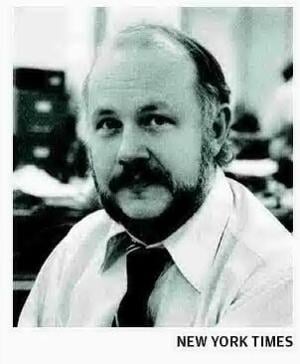
John Noble Wilford, the esteemed science reporter for The New York Times, passed away at the age of 92. Wilford was renowned for his coverage of America’s first moon landing on July 20, 1969. His reporting captured the exhilaration of that historic moment, as he conveyed the triumph of Neil Armstrong and the Apollo 11 team as they set foot on the lunar surface.
Wilford was not just a reporter; he was a storyteller who infused his articles with a sense of wonder and excitement. His work during the Apollo 11 mission exemplified his passion for space exploration. He often wrote as if he were a participant in the journey, bringing readers along with him on the adventure. His vivid descriptions and insightful analysis helped to shape public understanding of the significance of the moon landing.
Legacy of Innovation and Excellence
Throughout his career, Wilford received numerous accolades, including the prestigious Pulitzer Prize for his reporting. His contributions extended beyond the moon landing; he authored several books on space and science, which further solidified his reputation as a leading voice in the field. His dedication to scientific journalism set a high standard for future reporters and inspired many to follow in his footsteps.
Wilford’s reporting was characterized by thorough research and a nuanced understanding of complex scientific topics. He had the ability to make intricate subjects accessible to the general public, bridging the gap between the scientific community and everyday readers. This skill was particularly evident in his coverage of the space race, where he highlighted not just the technological advancements but also the human stories behind the missions.
A Life Dedicated to Exploration
Born in Washington, D.C., in 1931, Wilford developed an early interest in science and journalism. He began his career at The New York Times in the 1950s, where he quickly distinguished himself with his insightful reporting on a range of scientific topics. Wilford’s commitment to journalism extended beyond his writing; he served as a mentor to many young reporters, emphasizing the importance of integrity and accuracy in the field.
Wilford’s impact on science reporting will be felt for generations. His work not only documented a pivotal moment in human history but also inspired curiosity and enthusiasm for space exploration. As the world reflects on his contributions, it is clear that his legacy will endure, inspiring future generations to look towards the stars.
In an era marked by rapid advancements in science and technology, Wilford’s approach serves as a reminder of the power of storytelling in journalism. He not only reported the facts but also painted a picture of the future, igniting imaginations and fueling aspirations.
Wilford is survived by his family, friends, and countless readers who were touched by his words and vision. His passing marks the end of an era in journalism, but his stories will continue to inspire those who dream of exploring the unknown.

Foreign Travelers Face New U.S. Social Media Screening Rules

Alanis Morissette’s Cut Cameo in Just Friends Revealed by Director

Recognizing Symptoms: Distinguishing Between Flu and COVID-19

Funding Cuts Challenge Homeless Services in Northwest Ohio

New Social Media Requirements Proposed for Visa-Free US Travelers

Researchers Identify Key Protein Linked to Inflammatory Cell Death

Six Ohio Soccer Stars Achieve All-American Recognition

Fed Announces Rate Cut, Surprising Guidance Sparks Market Reaction

Alabama Thoroughbred Owners Urge Revival of Racing After 30 Years

Inventor Achieves Breakthrough with 2 Billion FPS Laser Video

Community Unites for 7th Annual Into the Light Walk for Mental Health

Charlie Sheen’s New Romance: ‘Glowing’ with Younger Partner

Dua Lipa Aces GCSE Spanish, Sparks Super Bowl Buzz with Fans

Curium Group, PeptiDream, and PDRadiopharma Launch Key Cancer Trial

Former Mozilla CMO Launches AI-Driven Cannabis Cocktail Brand Fast

Mother Fights to Reunite with Children After Kidnapping in New Drama

R&B Icon D’Angelo Dies at 51, Leaving Lasting Legacy

Israel Reopens Rafah Crossing After Hostage Remains Returned
-
 Science2 months ago
Inventor Achieves Breakthrough with 2 Billion FPS Laser Video
-
 Health2 months ago
Community Unites for 7th Annual Into the Light Walk for Mental Health
-
 Top Stories2 months ago
Charlie Sheen’s New Romance: ‘Glowing’ with Younger Partner
-
 Entertainment2 months ago
Dua Lipa Aces GCSE Spanish, Sparks Super Bowl Buzz with Fans
-
 Health2 months ago
Curium Group, PeptiDream, and PDRadiopharma Launch Key Cancer Trial
-
 Top Stories2 months ago
Former Mozilla CMO Launches AI-Driven Cannabis Cocktail Brand Fast
-
 Entertainment2 months ago
Mother Fights to Reunite with Children After Kidnapping in New Drama
-
 World2 months ago
R&B Icon D’Angelo Dies at 51, Leaving Lasting Legacy
-
 World2 months ago
Israel Reopens Rafah Crossing After Hostage Remains Returned
-

 Business2 months ago
Tyler Technologies Set to Reveal Q3 Earnings on October 22
-

 Health2 months ago
North Carolina’s Biotech Boom: Billions in New Investments
-

 Health2 months ago
YouTube Launches New Mental Health Tools for Teen Users