
Top Stories
South Korean Professor Warns Judicial Reforms Threaten Democracy

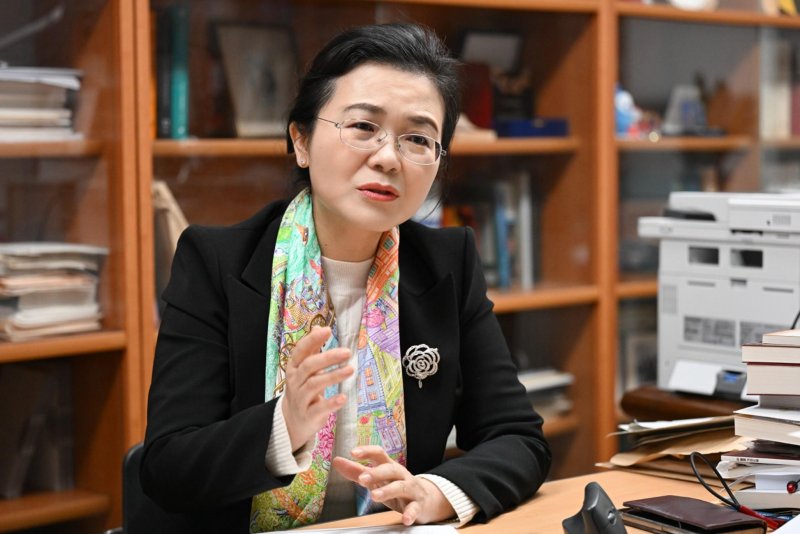
URGENT UPDATE: A prominent law professor from Korea University, Cha Jin-ah, has raised alarm bells over a proposed package of judicial reform bills in South Korea, warning that these measures could significantly undermine judicial independence. Speaking on December 17, 2023, Cha stated, “unchecked power leads to dictatorship,” as she expressed concerns over the ruling party’s agenda.
The proposed reforms, backed by South Korea’s ruling party, aim to expand the Supreme Court, create a special court for treason, and introduce new legal offenses, including a crime for “distorting the law.” Cha emphasized that while some reforms, like increasing the number of justices, could be beneficial, the speed and nature of this push raise serious questions about political motivations and the potential for long-term consolidation of power.
Cha, who has previously worked as a constitutional researcher at the Constitutional Court and advised the National Assembly, stated that increasing the Supreme Court justices by merely four would be reasonable. However, an increase of twelve justices, which would effectively double the bench, could lead to blatant political appointments.
Cha criticized the court petition system as “too naive,” questioning how the Constitutional Court would manage the influx of appeals alleging due process violations. “Can the Constitutional Court handle that?” she asked, highlighting the risks of overwhelming the judicial system.
The professor also expressed skepticism about the ruling party’s commitment to revising proposals deemed unconstitutional, such as the special court for treason. Cha warned that these changes could serve to politically target opposition figures and undermine fair trials. “Saying it will be made constitutional does not make sense,” she asserted, noting that such a court could lead to predetermined outcomes.
Additionally, Cha condemned the proposed crime of “distorting the law” as barbaric, comparing it to past punitive measures in Nazi Germany. This clause, if enacted, could lead to abuse and pressure on officials to conform to political expectations, she said.
In response to the plan to abolish the court administration office and create a judicial administration committee, Cha stated that removing judicial authority from the courts is unconstitutional. “Judicial power includes not only adjudication but also administration,” she explained, urging that any attempt to diminish this power threatens the very foundation of democracy.
With the ruling party holding the majority, Cha emphasized the critical role of public opinion in halting these proposals. “Winning an election does not mean everything the ruling party does equals the people’s will,” she warned. The upcoming decisions could shape the future of judicial independence in South Korea, making public discourse vital.
As this situation develops, observers will watch closely for the next steps in the legislative process and the response from opposition parties. The urgency of this issue cannot be overstated; the balance of power and the integrity of South Korea’s democracy hang in the balance.
Stay tuned for updates as this story unfolds and the implications for the judicial landscape in South Korea become clearer.

Floyd County Sheriff Rolls Out New Body Cameras After $22.9K Grant

Australian Police Arrest Seven in Anti-Terror Operation Following Shooting

Morgan Stanley Raises Micron Price Target to $350 Following Strong Earnings

Knicks’ Brunson and Towns Named to NBA Cup All-Tournament Team

ScottsMiracle-Gro Backs President Trump’s Cannabis Rescheduling Order

New Seafood Restaurant Oceania Fish Bar Set to Open in Walnut Creek

Candidates for Champaign Township Supervisor Set Priorities

Elon Musk Declares “Universal High Income” Is Coming Soon

Kennedy Center Renamed Trump-Kennedy Center in Unanimous Vote

Inventor Achieves Breakthrough with 2 Billion FPS Laser Video

Community Unites for 7th Annual Into the Light Walk for Mental Health

Charlie Sheen’s New Romance: ‘Glowing’ with Younger Partner

Dua Lipa Aces GCSE Spanish, Sparks Super Bowl Buzz with Fans

Curium Group, PeptiDream, and PDRadiopharma Launch Key Cancer Trial

Former Mozilla CMO Launches AI-Driven Cannabis Cocktail Brand Fast

Mother Fights to Reunite with Children After Kidnapping in New Drama

R&B Icon D’Angelo Dies at 51, Leaving Lasting Legacy

Israel Reopens Rafah Crossing After Hostage Remains Returned
-
 Science2 months ago
Inventor Achieves Breakthrough with 2 Billion FPS Laser Video
-
 Health2 months ago
Community Unites for 7th Annual Into the Light Walk for Mental Health
-
 Top Stories2 months ago
Charlie Sheen’s New Romance: ‘Glowing’ with Younger Partner
-
 Entertainment2 months ago
Dua Lipa Aces GCSE Spanish, Sparks Super Bowl Buzz with Fans
-
 Health2 months ago
Curium Group, PeptiDream, and PDRadiopharma Launch Key Cancer Trial
-
 Top Stories2 months ago
Former Mozilla CMO Launches AI-Driven Cannabis Cocktail Brand Fast
-
 Entertainment2 months ago
Mother Fights to Reunite with Children After Kidnapping in New Drama
-
 World2 months ago
R&B Icon D’Angelo Dies at 51, Leaving Lasting Legacy
-
 World2 months ago
Israel Reopens Rafah Crossing After Hostage Remains Returned
-

 Health2 months ago
YouTube Launches New Mental Health Tools for Teen Users
-

 Business2 months ago
Tyler Technologies Set to Reveal Q3 Earnings on October 22
-

 Entertainment2 months ago
Red Sox’s Bregman to Become Free Agent; Tigers Commit to Skubal