
Politics
New Law Protects Transit Workers; Nurses Seek Similar Safeguards

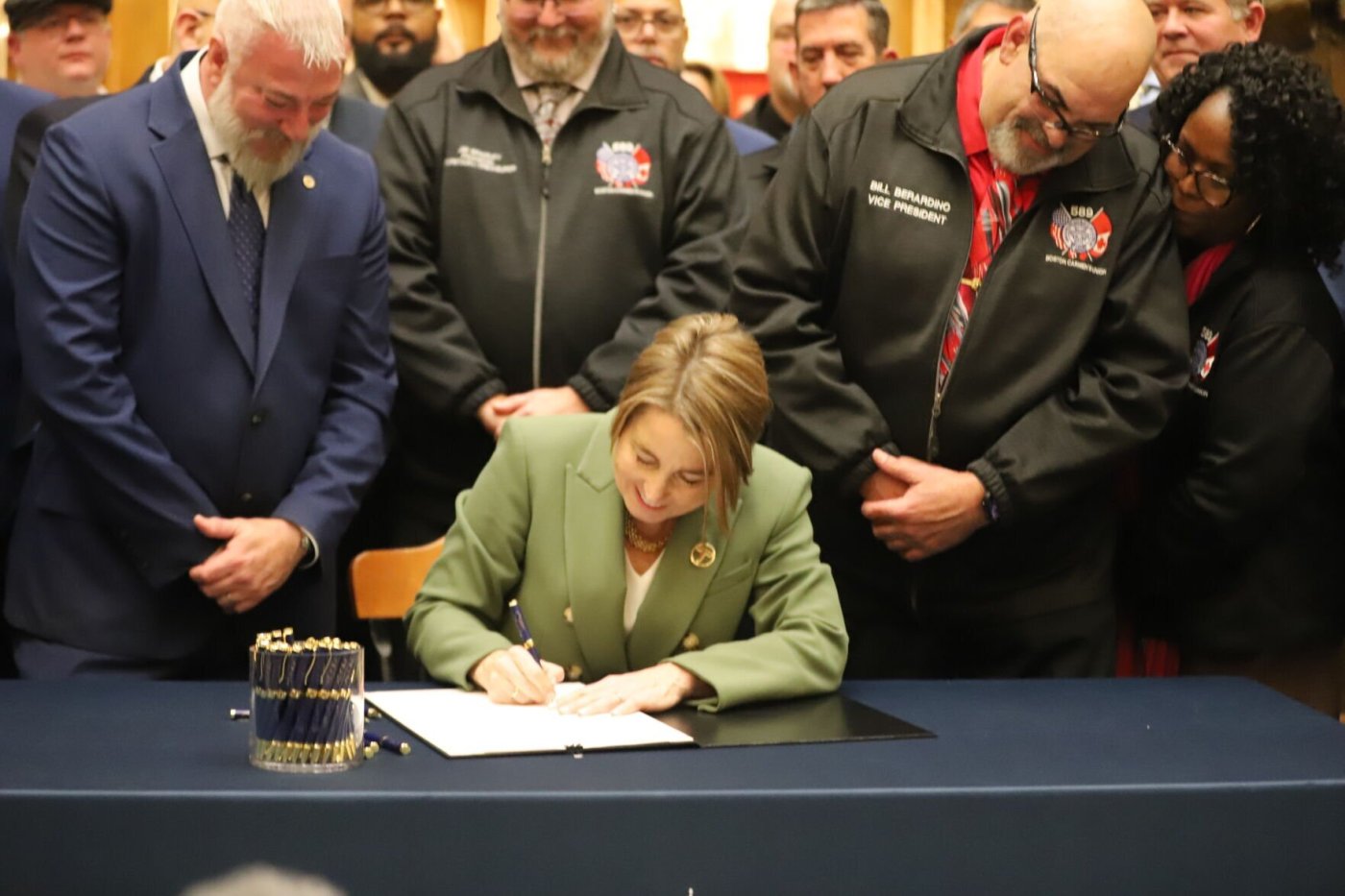
The recent enactment of a law in Massachusetts provides critical protections for transit workers, raising questions about similar safeguards for health-care employees. Governor Maura Healey signed “An Act relative to assault and battery upon a transit worker” into law, a measure that passed unanimously in both the House and Senate. This legislation ensures that transit employees, whether directly employed by public agencies or private contractors, receive heightened legal protections akin to those afforded to police officers and firefighters.
The new law recognizes specific acts of assault, including the projection of bodily fluids, as serious offenses against transit workers. Offenders could face sentences ranging from a minimum of 90 days to two and a half years in a house of correction, along with potential fines between $500 and $5,000. According to House Minority Leader Brad Jones, the Massachusetts Bay Transportation Authority (MBTA) reported over 600 assaults on its employees in 2024, highlighting the urgent need for these protections.
Governor Healey emphasized the importance of this legislation, stating, “Public transportation employees… should never be subject to any form of assault simply for doing their jobs.” Jim Evers, president of the Boston Carmen’s Union Local 589, called the passage of the law a significant victory for both operators and commuters, ensuring safety within the public transit system. The heightened penalties for assaults against transit employees will take effect on March 3.
The successful implementation of protections for transit workers draws attention to the plight of health-care professionals, particularly nurses and support staff, who also face increasing violence in their workplaces. An Act Requiring Health Care Employers to Develop and Implement Programs to Prevent Workplace Violence (H.4767/S.1718) has been proposed and passed unanimously by the House. The bill is currently awaiting action in the Senate.
House Speaker Ron Mariano articulated the necessity for these protections, stating, “Health care workers are heroes who are responsible for saving lives… we owe it to them to ensure that they are able to do their jobs without fear for their well-being.” The proposed legislation aims to implement legal protections for health-care employees harmed in the line of duty and addresses a growing crisis of workplace violence in health-care settings.
Statistics reveal a troubling trend: 91% of violent incidents in hospitals are committed by patients against staff members. Recognizing this issue, the proposed bill includes comprehensive policy reforms, mandating all hospitals to conduct facility-specific risk assessments and implement tailored violence-prevention programs. Furthermore, it seeks to introduce strict penalties for assaults on health-care workers, which are currently classified as misdemeanors.
The current legal framework often minimizes the seriousness of assaults on health-care personnel. Under existing law, if a patient kicks or punches a nurse, it is classified merely as a simple assault. The new legislation aims to change this by instituting graduated penalties for assaults on employees in the line of duty. It outlines significant consequences for various assault levels, such as:
– Assault causing bodily injury: Up to five years in state prison or up to 2.5 years in a jail, with fines up to $5,000.
– Assault causing serious bodily injury: Up to 10 years in state prison, or similar penalties as above.
Health-care workers, much like transit employees, deserve robust protections while performing their essential duties. With violence in health-care settings becoming increasingly prevalent, it is imperative for the Senate to act promptly on the House bill. Ensuring safety for nurses and other health-care providers is essential not only for their welfare but also for the quality of care they provide to patients.

Alabama Thoroughbred Owners Urge Revival of Racing After 30 Years

San Francisco Woman Delivers Baby in Waymo Self-Driving Taxi

Elon Musk Admits DOGE Efforts Were ‘Somewhat Successful’

Elon Musk Reflects on DOGE Agency’s Limited Success in New Interview

Republicans Unveil Three Health Care Proposals Amid Subsidy Concerns

UNESCO Honors Compas: Haiti’s Vibrant Musical Heritage Recognized

U.S. Proposes New Social Media Disclosure for Visa Waiver Travelers

Experience the Geminid Meteor Shower Peaking This Weekend

Duane Kuiper Misses Out on Ford C. Frick Award Again at MLB Winter Meetings

Inventor Achieves Breakthrough with 2 Billion FPS Laser Video

Community Unites for 7th Annual Into the Light Walk for Mental Health

Charlie Sheen’s New Romance: ‘Glowing’ with Younger Partner

Dua Lipa Aces GCSE Spanish, Sparks Super Bowl Buzz with Fans

Curium Group, PeptiDream, and PDRadiopharma Launch Key Cancer Trial

Former Mozilla CMO Launches AI-Driven Cannabis Cocktail Brand Fast

Mother Fights to Reunite with Children After Kidnapping in New Drama

R&B Icon D’Angelo Dies at 51, Leaving Lasting Legacy

Israel Reopens Rafah Crossing After Hostage Remains Returned
-
 Science2 months ago
Inventor Achieves Breakthrough with 2 Billion FPS Laser Video
-
 Health2 months ago
Community Unites for 7th Annual Into the Light Walk for Mental Health
-
 Top Stories2 months ago
Charlie Sheen’s New Romance: ‘Glowing’ with Younger Partner
-
 Entertainment2 months ago
Dua Lipa Aces GCSE Spanish, Sparks Super Bowl Buzz with Fans
-
 Health2 months ago
Curium Group, PeptiDream, and PDRadiopharma Launch Key Cancer Trial
-
 Top Stories2 months ago
Former Mozilla CMO Launches AI-Driven Cannabis Cocktail Brand Fast
-
 Entertainment2 months ago
Mother Fights to Reunite with Children After Kidnapping in New Drama
-
 World2 months ago
R&B Icon D’Angelo Dies at 51, Leaving Lasting Legacy
-
 World2 months ago
Israel Reopens Rafah Crossing After Hostage Remains Returned
-

 Business2 months ago
Tyler Technologies Set to Reveal Q3 Earnings on October 22
-

 Health2 months ago
YouTube Launches New Mental Health Tools for Teen Users
-

 Health2 months ago
North Carolina’s Biotech Boom: Billions in New Investments