
Science
Scientists Discover ‘Spider’ Feature on Europa’s Icy Surface

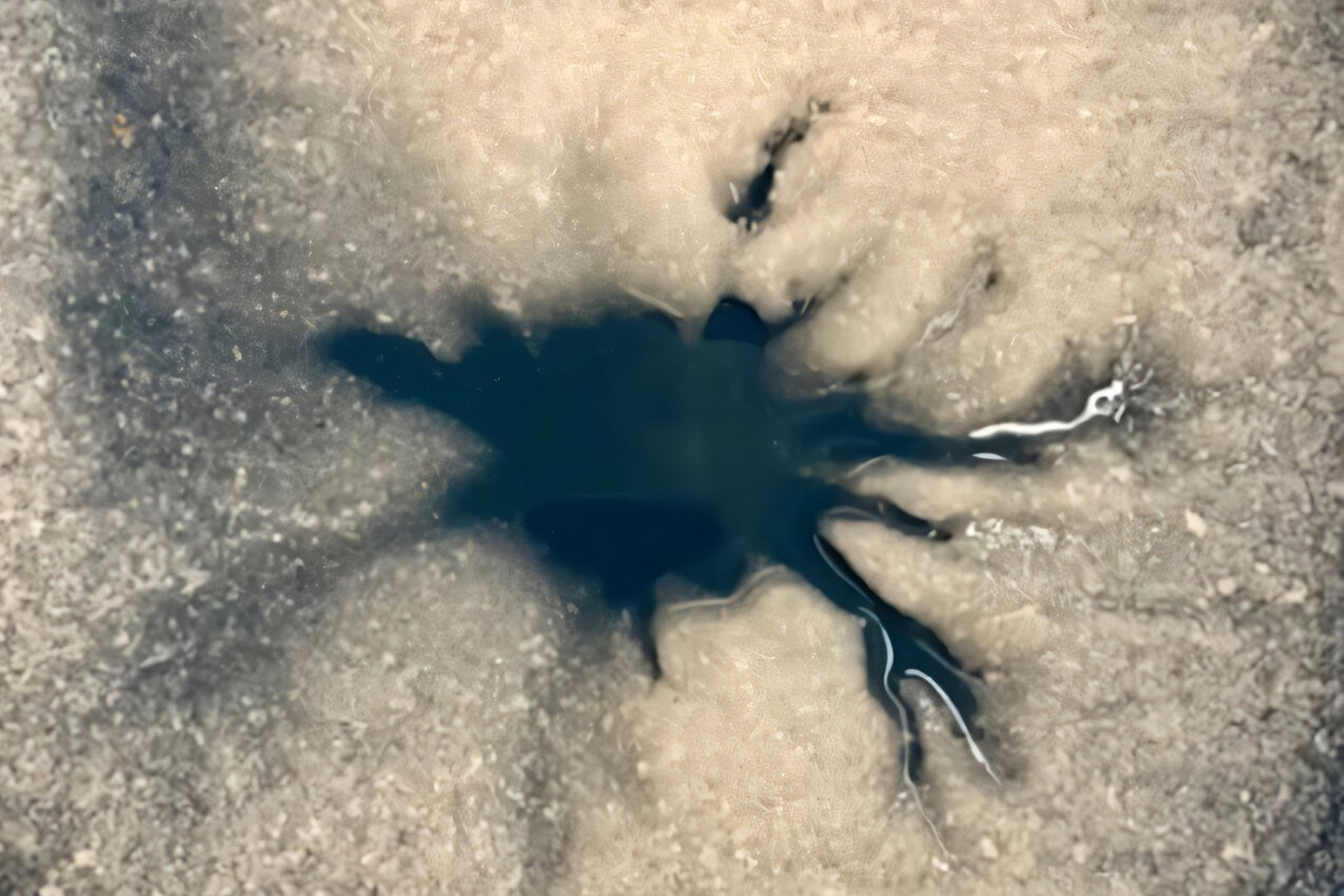
A team of planetary scientists from Ireland has identified a striking feature on the surface of Europa, one of Jupiter’s moons, that resembles a spider or an exploded asterisk. Named “Damhán Alla,” which translates from Gaelic to “spider” or “wall demon,” this discovery adds to the intrigue surrounding Europa’s potential for harboring life.
The findings, published in The Planetary Science Journal, suggest that Damhán Alla may be a result of water erupting through Europa’s icy crust. According to lead author Lauren Mc Keown, a physicist at the University of Central Florida, these surface features can provide significant insights into the subsurface processes of the moon. “If we see more of them with Europa Clipper,” she stated, referring to NASA’s upcoming space probe, “they could point to local brine pools beneath the surface.”
Insights into Europa’s Potential for Life
Europa, the smallest of Jupiter’s four Galilean moons, is a focal point for astronomers due to the possibility of a saltwater ocean beneath its icy exterior. This moon has garnered attention since the Galileo mission, which conducted 11 flybys from 1989 to 2003 and first detected the unique surface formations.
The team’s analysis of Damhán Alla, which spans approximately one kilometer, drew comparisons to formations on Earth known as lake stars. These are typically smaller, measuring a few feet across, and are formed when snow accumulates on frozen lakes, leading to holes in the ice that create radial patterns as water melts away the snow. The dendritic patterns observed on Europa indicate that similar processes may be occurring, suggesting water is breaking through the surface.
Mc Keown remarked on the beauty of lake stars, noting their prevalence on snow-covered bodies of water. “It is wonderful to think that they may give us a glimpse into processes occurring on Europa and maybe even other icy ocean worlds in our solar system,” she said.
The Implications of Europa’s Features
The hypothesis surrounding Damhán Alla posits that an impact to Europa’s icy shell allowed briny water to seep through the fractured ice. This scenario hints at the existence of a vast subsurface ocean or localized pools of water just below the surface, raising the stakes in the search for extraterrestrial life.
As the Europa Clipper mission approaches its launch, the scientific community eagerly anticipates the additional data it will provide. These findings could reshape our understanding of Europa and its potential to support life, making it one of the most intriguing bodies in our solar system.
The research highlights not only the allure of Europa but also the broader implications for studying icy worlds throughout the cosmos. The excitement surrounding these discoveries underscores a pivotal moment in planetary science, as scientists strive to unveil the mysteries hidden beneath Europa’s icy facade.

Stanford Women Rally to Defeat Cal 78-69 in Thrilling Comeback

Eight Transformative Moments from Absolute Batman Revolutionize Character

Celene’s Angels Empowers Breast Cancer Patients with Support

Discover Unique Holiday Gift Ideas for Everyone on Your List

Keene Mobilizes for Civil War: A Community’s Response

Exploring Kindness: Nature’s Silent Connections and Human Moments

Cowboys Host Vikings in Crucial Week 15 Showdown on SNF

Chiefs’ Andy Reid Reveals Locker Room Mood After Crushing Loss

Urgent Rollover for U.S. Equity Index Futures Set for December 15

Inventor Achieves Breakthrough with 2 Billion FPS Laser Video

Charlie Sheen’s New Romance: ‘Glowing’ with Younger Partner

Community Unites for 7th Annual Into the Light Walk for Mental Health

Dua Lipa Aces GCSE Spanish, Sparks Super Bowl Buzz with Fans

Curium Group, PeptiDream, and PDRadiopharma Launch Key Cancer Trial

Former Mozilla CMO Launches AI-Driven Cannabis Cocktail Brand Fast

Israel Reopens Rafah Crossing After Hostage Remains Returned

Mother Fights to Reunite with Children After Kidnapping in New Drama

R&B Icon D’Angelo Dies at 51, Leaving Lasting Legacy
-
 Science2 months ago
Inventor Achieves Breakthrough with 2 Billion FPS Laser Video
-
 Top Stories2 months ago
Charlie Sheen’s New Romance: ‘Glowing’ with Younger Partner
-
 Health2 months ago
Community Unites for 7th Annual Into the Light Walk for Mental Health
-
 Entertainment2 months ago
Dua Lipa Aces GCSE Spanish, Sparks Super Bowl Buzz with Fans
-
 Health2 months ago
Curium Group, PeptiDream, and PDRadiopharma Launch Key Cancer Trial
-
 Top Stories2 months ago
Former Mozilla CMO Launches AI-Driven Cannabis Cocktail Brand Fast
-
 World2 months ago
Israel Reopens Rafah Crossing After Hostage Remains Returned
-
 Entertainment2 months ago
Mother Fights to Reunite with Children After Kidnapping in New Drama
-
 World2 months ago
R&B Icon D’Angelo Dies at 51, Leaving Lasting Legacy
-

 Business2 months ago
Tyler Technologies Set to Reveal Q3 Earnings on October 22
-

 Health2 months ago
North Carolina’s Biotech Boom: Billions in New Investments
-

 Health2 months ago
YouTube Launches New Mental Health Tools for Teen Users