
World
Cuba’s Mercenary Export Business: A Historical Overview

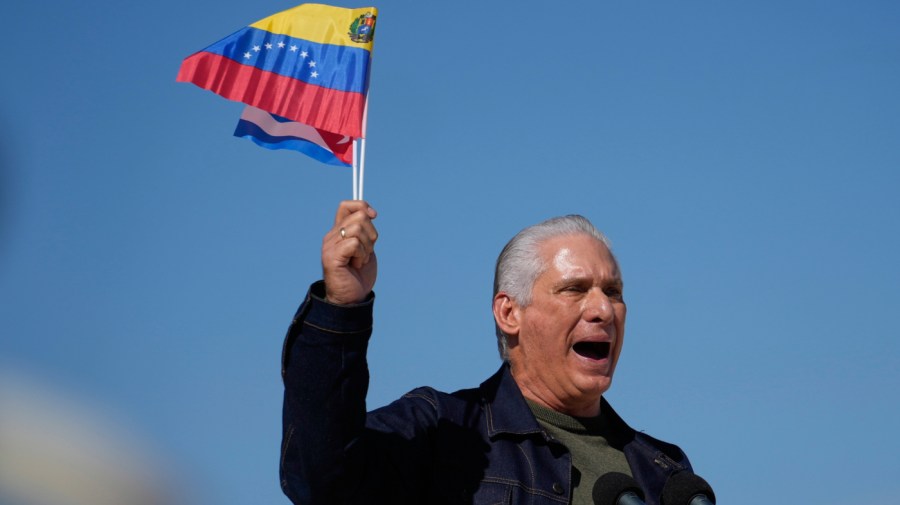
Cuba’s involvement in military operations abroad has come under scrutiny following recent developments in Venezuela. The Cuban government has long been associated with the training and deployment of military personnel to various countries, a practice that has roots extending back to the 1960s. This trend raises important questions about the motivations behind Cuba’s actions, which can be traced to power dynamics, political ideology, and financial compensation.
Cuba’s military exports began in earnest during the early years of the revolution led by Fidel Castro. The 1960s marked a period when the Cuban military supported revolutionary movements across Latin America, aiming to spread its socialist ideology. This support was not merely ideological; it also enhanced Cuba’s standing within the global political arena.
As the years progressed, Cuba’s mercenary activities shifted in response to changing political landscapes. According to the United Nations, by the 1990s, the Cuban military was deeply involved in conflicts across Africa, particularly in Angola. These missions, often framed as international solidarity efforts, served to bolster Cuba’s influence and allowed for the training of soldiers in various combat techniques.
In recent years, the focus has shifted towards regions closer to home, particularly Venezuela. The Bolivarian regime of Nicolás Maduro has been a significant recipient of Cuban military support, with thousands of Cuban soldiers reportedly stationed in the country. Their presence is often justified as a means to combat external threats and maintain the stability of the government.
The financial aspect of Cuba’s military export strategy cannot be overlooked. Reports indicate that the Cuban government receives substantial payments in exchange for sending military personnel abroad. These funds are critical for an economy that has faced numerous challenges, particularly in light of U.S. sanctions and internal economic struggles. The Cuban government has historically used these payments to support public services and maintain its political agenda.
While the Cuban military presence in Venezuela has drawn international criticism, it is part of a broader strategy that includes cooperation with other nations facing similar political challenges. As the geopolitical landscape continues to evolve, Cuba’s role as a mercenary exporter highlights the complex interplay of power, politics, and economics in international relations.
Opposition leaders and human rights organizations have raised concerns about the implications of Cuba’s military involvement in Venezuela. They argue that the Cuban military’s presence supports a regime that has been accused of widespread human rights violations. The situation underscores the ongoing tensions within the region, where external influences often complicate local governance.
Cuba’s strategy of exporting military personnel is not a new phenomenon, but it remains a critical element of its foreign policy. As the situation in Venezuela develops, the implications of Cuba’s military exports will likely continue to be a focal point for analysts and policymakers alike. The history of Cuba’s military involvement abroad serves as a reminder of the enduring complexities of international relations, where issues of power, politics, and economics intersect.

Willow Smith Stuns in Swimwear Look, Fans Go Wild on Instagram

Sprouts Launches THC Drinks Amid Federal Ban Threat

Urgent Meeting Sparks Debate Over Impact Fees in Palatka

Senate Republicans Block Resolution to Condemn Trump on Venezuela

Innovative Simulator Enhances Training for Endoscopic Cancer Surgery

Real Madrid’s Arbeloa Faces Criticism After Copa Loss to Albacete

Noah Wyle Mockingly Critiques RFK Jr. in Hilarious PSA

Imagine Lithium Shares Plummet 14.3% Amid Market Activity

Niina Petrokina Dominates Short Program, Eyes European Title Defense

Inventor Achieves Breakthrough with 2 Billion FPS Laser Video

Community Unites for 7th Annual Into the Light Walk for Mental Health

Charlie Sheen’s New Romance: ‘Glowing’ with Younger Partner

Dua Lipa Aces GCSE Spanish, Sparks Super Bowl Buzz with Fans

Mother Fights to Reunite with Children After Kidnapping in New Drama

Researchers Launch $1.25M Project for Real-Time Hazard Monitoring in Hawaiʻi

Former Mozilla CMO Launches AI-Driven Cannabis Cocktail Brand Fast

R&B Icon D’Angelo Dies at 51, Leaving Lasting Legacy

Curium Group, PeptiDream, and PDRadiopharma Launch Key Cancer Trial
-
 Science3 months ago
Inventor Achieves Breakthrough with 2 Billion FPS Laser Video
-
 Health3 months ago
Community Unites for 7th Annual Into the Light Walk for Mental Health
-
 Top Stories3 months ago
Charlie Sheen’s New Romance: ‘Glowing’ with Younger Partner
-
 Entertainment3 months ago
Dua Lipa Aces GCSE Spanish, Sparks Super Bowl Buzz with Fans
-
 Entertainment3 months ago
Mother Fights to Reunite with Children After Kidnapping in New Drama
-
 Science1 month ago
Researchers Launch $1.25M Project for Real-Time Hazard Monitoring in Hawaiʻi
-
 Top Stories3 months ago
Former Mozilla CMO Launches AI-Driven Cannabis Cocktail Brand Fast
-
 World3 months ago
R&B Icon D’Angelo Dies at 51, Leaving Lasting Legacy
-
 Health3 months ago
Curium Group, PeptiDream, and PDRadiopharma Launch Key Cancer Trial
-

 Science3 months ago
AI Gun Detection System Mistakes Doritos for Weapon, Sparks Outrage
-

 Health3 months ago
Parenting Pitfalls: 16 Small Mistakes with Long-Term Effects
-

 Entertainment3 months ago
Olivia Plath Opens Up About Her Marriage Struggles and Divorce