
World
DARPA Funds Diffraqtion’s Quantum Camera for Advanced Surveillance

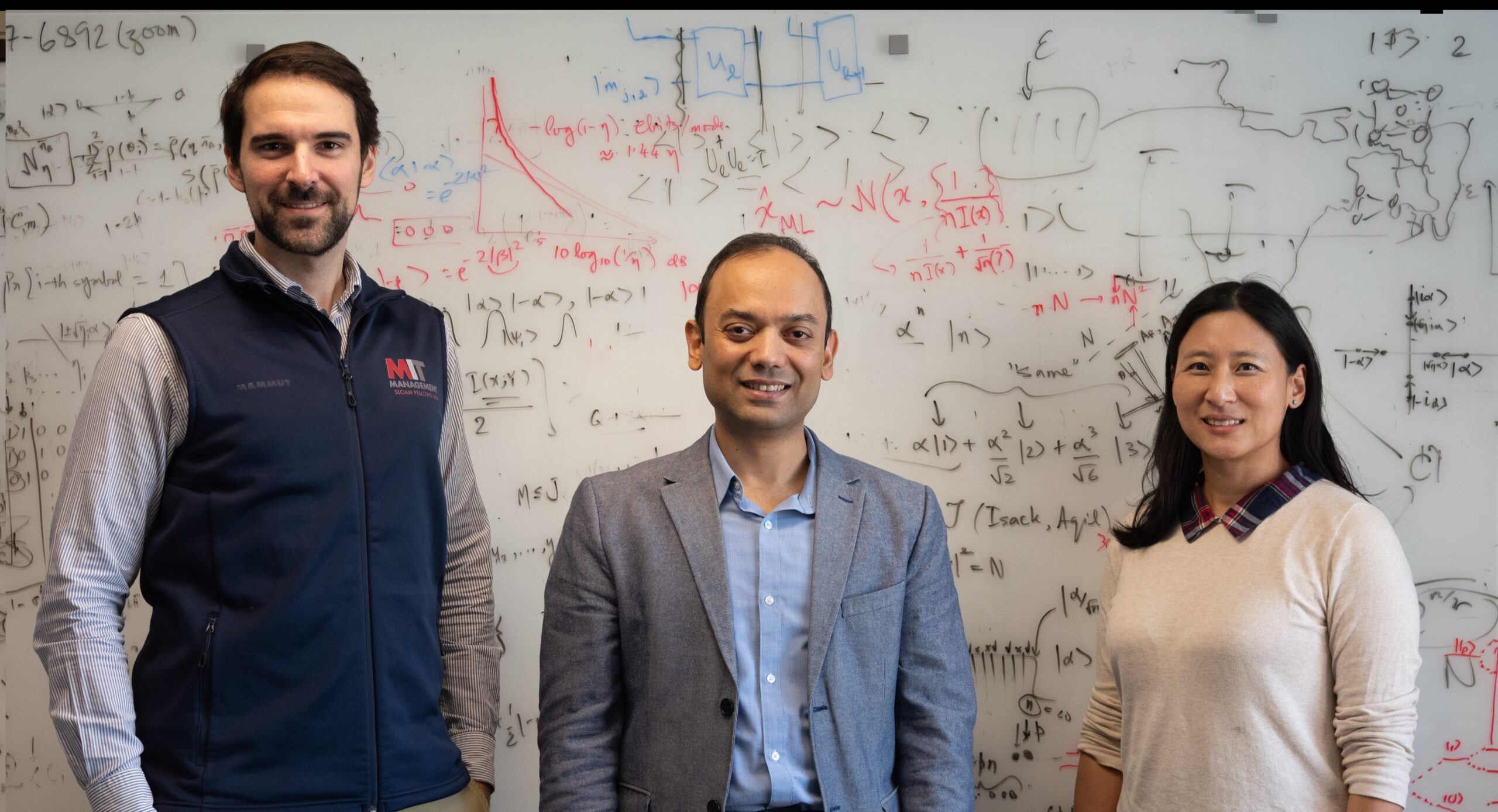
The Defense Advanced Research Projects Agency (DARPA) is investing in startup Diffraqtion to develop a groundbreaking quantum camera. This innovative technology promises to deliver near-real-time imagery with capabilities that could be up to 20 times more effective than current optical surveillance systems. The $1.5 million funding, awarded through the Direct-to-Phase II Small Business Innovation Research grant, marks the beginning of a two-year project that started in April 2023 and is expected to conclude in 2027.
The project will include on-sky demonstrations of the camera using ground-based telescopes operated by the Air Force Research Laboratory in Hawaii and the University of California Observatories Lick Observatory in Santa Cruz, California. Johannes Galatsanos, co-founder and CEO of Diffraqtion, emphasized the potential applications of the camera for both space and terrestrial surveillance. He noted that the company is collaborating with the Space Force’s Space Domain Awareness Tools, Applications and Processing Lab in Colorado Springs, Colorado, to determine optimal use cases for the technology.
Galatsanos, who has a background in artificial intelligence and quantum technology from the Massachusetts Institute of Technology (MIT) and University of Oxford, explained the versatility of the quantum camera. It can be integrated with satellites and ground-based telescopes, making it suitable for monitoring space activities, missile defense, and earth observation. He stated, “This camera is very good because it is very fast and can look at very small things,” highlighting its ability to produce high-resolution images even in daylight, a significant challenge for conventional optical systems.
The innovative imaging technology stems from previous research conducted by Saikat Guha, a quantum sensing scientist at the University of Maryland (UMD), and one of Diffraqtion’s co-founders. This research was previously supported by both DARPA and NASA, which pursued different objectives—NASA’s focus was on exoplanet detection and searching for signs of life, while DARPA concentrated on enhancing space domain awareness.
At its core, the camera employs a series of “programmable light plates” that utilize quantum algorithms to convert light into images and analytical data. This could include counting aircraft or distinguishing between nuclear warheads and decoys launched by adversaries. Following the demonstrations, Diffraqtion plans to launch its first space domain awareness satellite, named Galileo-1, in 2028. A second satellite, aimed at Earth observation and aligned with the Golden Dome initiative, is slated for a 2029 launch.
Despite being only a year out of stealth mode and currently in the pre-seed funding phase, Diffraqtion has garnered attention and investments from the venture capital community. The startup won Europe’s annual SLUSH 100 award for technology innovators, securing €1 million ($1.17 million) in November 2025, along with a $100,000 space innovation award from the US accelerator TechConnect in August 2025. To date, the company has raised a total of $4.2 million in early investment.
As Diffraqtion develops its groundbreaking technology, the potential implications for surveillance and space monitoring are vast, offering new capabilities for both military and scientific applications.

Willow Smith Stuns in Swimwear Look, Fans Go Wild on Instagram

Sprouts Launches THC Drinks Amid Federal Ban Threat

Urgent Meeting Sparks Debate Over Impact Fees in Palatka

Senate Republicans Block Resolution to Condemn Trump on Venezuela

Innovative Simulator Enhances Training for Endoscopic Cancer Surgery

Real Madrid’s Arbeloa Faces Criticism After Copa Loss to Albacete

Noah Wyle Mockingly Critiques RFK Jr. in Hilarious PSA

Imagine Lithium Shares Plummet 14.3% Amid Market Activity

Niina Petrokina Dominates Short Program, Eyes European Title Defense

Inventor Achieves Breakthrough with 2 Billion FPS Laser Video

Community Unites for 7th Annual Into the Light Walk for Mental Health

Charlie Sheen’s New Romance: ‘Glowing’ with Younger Partner

Dua Lipa Aces GCSE Spanish, Sparks Super Bowl Buzz with Fans

Mother Fights to Reunite with Children After Kidnapping in New Drama

Researchers Launch $1.25M Project for Real-Time Hazard Monitoring in Hawaiʻi

Former Mozilla CMO Launches AI-Driven Cannabis Cocktail Brand Fast

R&B Icon D’Angelo Dies at 51, Leaving Lasting Legacy

Curium Group, PeptiDream, and PDRadiopharma Launch Key Cancer Trial
-
 Science3 months ago
Inventor Achieves Breakthrough with 2 Billion FPS Laser Video
-
 Health3 months ago
Community Unites for 7th Annual Into the Light Walk for Mental Health
-
 Top Stories3 months ago
Charlie Sheen’s New Romance: ‘Glowing’ with Younger Partner
-
 Entertainment3 months ago
Dua Lipa Aces GCSE Spanish, Sparks Super Bowl Buzz with Fans
-
 Entertainment3 months ago
Mother Fights to Reunite with Children After Kidnapping in New Drama
-
 Science1 month ago
Researchers Launch $1.25M Project for Real-Time Hazard Monitoring in Hawaiʻi
-
 Top Stories3 months ago
Former Mozilla CMO Launches AI-Driven Cannabis Cocktail Brand Fast
-
 World3 months ago
R&B Icon D’Angelo Dies at 51, Leaving Lasting Legacy
-
 Health3 months ago
Curium Group, PeptiDream, and PDRadiopharma Launch Key Cancer Trial
-

 Science3 months ago
AI Gun Detection System Mistakes Doritos for Weapon, Sparks Outrage
-

 Health3 months ago
Parenting Pitfalls: 16 Small Mistakes with Long-Term Effects
-

 Entertainment3 months ago
Olivia Plath Opens Up About Her Marriage Struggles and Divorce